 5 citations
,
January 1985 in “The Journal of Dermatologic Surgery and Oncology”
5 citations
,
January 1985 in “The Journal of Dermatologic Surgery and Oncology” A man developed unusual growths after a hair transplant, which were treated successfully with no recurrence after a month.
 September 2017 in “Plastic and Reconstructive Surgery – Global Open”
 Some migraine sufferers had no more headaches after getting a hair transplant.
 September 2002 in “Dermatologic Surgery”
 The recipient site can affect the growth and survival of transplanted hair but not its thickness.
 January 2022 in “Surgical & Cosmetic Dermatology”
 Fat grafting before FUE hair transplantation effectively treats scalp scars.
 112 citations
,
May 2020 in “Nature Communications”
112 citations
,
May 2020 in “Nature Communications” Adult fibroblasts help heart cells mature and improve heart function.
 49 citations
,
January 2018 in “Theranostics”
49 citations
,
January 2018 in “Theranostics” The new skin patch with human matrix and antibiotic improves wound healing.
 36 citations
,
April 2013 in “Cell and Tissue Research”
36 citations
,
April 2013 in “Cell and Tissue Research” Bone-marrow and epidermal stem cells help heal wounds differently, with bone-marrow cells aiding in blood vessel formation and epidermal cells in hair growth.
 1 citations
,
December 2015 in “Journal of the Medical Sciences (Berkala Ilmu Kedokteran)”
1 citations
,
December 2015 in “Journal of the Medical Sciences (Berkala Ilmu Kedokteran)” Transplanting melanocyte stem cells from hair follicles can effectively treat vitiligo.

Enhanced stem cells from the placenta can reduce fat cell formation in eye disease.
 May 2020 in “Research Square (Research Square)”
 Bone marrow stem cells help heal intestines and reduce death in liver failure.
 April 2011 in “ISRN Dermatology (Print)”
 The wigs made from human hair and polypropylene were mostly well-tolerated and durable in rabbits, suggesting they could be a new option for people with extensive hair loss.
 June 2019 in “Stem Cell Research”
 Scientists created MUSIi010-A, a stem cell line from a balding man's scalp, to study hair loss and develop potential treatments.
 15 citations
,
February 2011 in “Journal of Tissue Engineering and Regenerative Medicine”
15 citations
,
February 2011 in “Journal of Tissue Engineering and Regenerative Medicine” The best method for transplanting skin cells to regenerate hair follicles is the Hemi-vascularized sandwich method, as it produces more mature follicles and promotes hair growth.
 16 citations
,
August 2019 in “Cell Proliferation”
16 citations
,
August 2019 in “Cell Proliferation” Keratinocytes help keep hair follicle cells and skin cells separate in 3D cultures, which is important for hair growth research.
 14 citations
,
April 2017 in “American Journal of Transplantation”
14 citations
,
April 2017 in “American Journal of Transplantation” Skin problems from transplant drugs are common and need careful management in organ transplant patients.
 1 citations
,
September 2023 in “Journal of Fatwa Management and Research”
1 citations
,
September 2023 in “Journal of Fatwa Management and Research” Islamic perspectives in Malaysia raise ethical concerns about using stem cells, especially from embryos, for beauty and medical treatments.
 June 2020 in “Journal of Investigative Dermatology”
 Scientists successfully grew mini hair follicles using human skin cells, which could help treat baldness.
 December 2017 in “Springer eBooks”
 Transplant patients often get skin problems, with treatments varying by condition.
 September 2025 in “Cellular and Molecular Biology”
 Intraoperative corticosteroids reduce swelling, and early care lowers folliculitis risk in hair transplant donor sites.
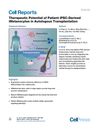 31 citations
,
April 2019 in “Cell reports”
31 citations
,
April 2019 in “Cell reports” Patient-derived melanocytes can potentially treat vitiligo by restoring skin pigmentation.
 April 2025 in “WORLD JOURNAL OF PLASTIC SURGERY”
 Stem cells improve healing of diabetic wounds.
 73 citations
,
March 2017 in “Scientific Reports”
73 citations
,
March 2017 in “Scientific Reports” Bioengineered tooth germ can restore whole teeth in dogs.
 120 citations
,
August 2008 in “The journal of investigative dermatology/Journal of investigative dermatology”
120 citations
,
August 2008 in “The journal of investigative dermatology/Journal of investigative dermatology” Cytokeratin 19 and cytokeratin 15 are key markers for monitoring the quality and self-renewing potential of engineered skin.
 1 citations
,
September 2019 in “Journal of Investigative Dermatology”
1 citations
,
September 2019 in “Journal of Investigative Dermatology” Human hair matrix cells and dermal papilla fibroblasts can form early hair follicle structures but don't produce hair shafts yet.
 19 citations
,
December 2015 in “Journal of Materials Chemistry B”
19 citations
,
December 2015 in “Journal of Materials Chemistry B” Scientists have created a method to deliver specific cells that can regenerate hair follicles, potentially offering a new treatment for hair loss.
 6 citations
,
July 2013 in “Molecular Imaging”
6 citations
,
July 2013 in “Molecular Imaging” The technique allowed noninvasive tracking of hair stem cell survival and growth, showing potential for hair loss research.
 1 citations
,
June 2013 in “Science-business Exchange”
1 citations
,
June 2013 in “Science-business Exchange” Increasing the levels of a protein called FGF9 can promote hair growth, but humans may not respond the same way due to a lack of certain cells.
 20 citations
,
January 2014 in “Journal of Cosmetics, Dermatological Sciences and Applications”
20 citations
,
January 2014 in “Journal of Cosmetics, Dermatological Sciences and Applications” Using adipose derived stem cells and growth factors in hair transplants may improve healing and hair growth.
 July 2025 in “Journal of Dermatology Research and Therapy”
 Verteporfin may improve hair regrowth and reduce scarring after hair transplants.
 208 citations
,
December 2003 in “Journal of Investigative Dermatology”
208 citations
,
December 2003 in “Journal of Investigative Dermatology” Certain cells from hair follicles can create new hair and contribute to hair growth when implanted in mice.