Search
for
Sort by
Research
630-660 / 1000+ results
research Frontal Fibrosing Alopecia – a review and a practical guide for clinicians
The article concludes that understanding Frontal Fibrosing Alopecia (FFA) is crucial for effective treatment, which includes medication like 5α-reductase inhibitors and hydroxychloroquine.
research Efficacy of systemic minoxidil and tofacitinib combination in treatment‐resistant alopecia universalis
Using minoxidil and tofacitinib together can effectively treat severe hair loss.
research Coexistence of chronic cutaneous lupus erythematosus and frontal fibrosing alopecia
A patient had both chronic cutaneous lupus erythematosus and frontal fibrosing alopecia.
research Дослідження ПРОСПЕКТ IV (ПРОСтамол: ПЕрспективи Комбінованої Терапії) у хворих на доброякісну гіперплазію передміхурової залози
"Flosin – Prostamol Uno" effectively manages BPH symptoms with fewer side effects.
research Two cases of alopecia areata treated with ruxolitinib: a discussion of ideal dosing and laboratory monitoring
Ruxolitinib effectively and safely regrows hair in alopecia patients.
research Upadacitinib in concurrent Crohn's disease, atopic dermatitis and alopecia areata: A case report
Upadacitinib improved Crohn's disease, atopic dermatitis, and alopecia areata in one patient.
research 0282 Effect of systemic immunomodulators on incidence of alopecia areata: A retrospective cohort study
Leflunomide may reduce the risk of alopecia areata, while methotrexate, cyclosporine, and rituximab may increase it.
research 1493 Dynamic changes in fibroblast subpopulations drives development of radiation-induced skin fibrosis through the fra/c-jun pathway
Radiation treatment causes skin fibrosis by increasing certain fibroblast subpopulations, but using a c-Jun inhibitor or fat grafting can reduce this effect.
research Alefacept for Alopecia Areata
Alefacept showed some effectiveness for alopecia areata but needs more research.
research Comparison of finasteride and flutamide in the treatment of idiopathic hirsutism
Finasteride and flutamide both reduce hair growth, but finasteride has fewer side effects.
research A Plain Language Summary on Ritlecitinib Treatment for Adults and Adolescents with Alopecia Areata
Ritlecitinib works well and is safe for treating alopecia areata.
research 546 Gene expression signatures and ALADIN score correlates with response of alopecia areata patients to treatment with JAK inhibitors
The ALADIN score can predict how well patients with alopecia areata will respond to JAK inhibitor treatments.
research Severe Pustular Drug Eruptions From Amivantamab: A Case Series
Amivantamab can cause severe skin eruptions and scarring, requiring drug discontinuation and early treatment.
research EVALUATION OF THE EFFICACY OF PIX LIQUIDA FOR ALOPECIA AREATA: A CASE REPORT
Pix Liquida may help treat alopecia areata.
research 260 Anti-OX40 monoclonal antibody IMG-007 exhibited clinical activity of hair regrowth, suppressed scalp inflammatory biomarkers in patients with severe alopecia areata in a Ph1b/2a study
IMG-007 helps regrow hair and reduce scalp inflammation in severe alopecia areata.
research Clinical perspective on management of key adverse events with sacituzumab govitecan
Effective management of side effects is crucial for safe use of sacituzumab govitecan in advanced breast cancer treatment.
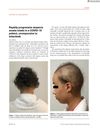
research Rapidly progressive alopecia areata totalis in a COVID‐19 patient, unresponsive to tofacitinib
A COVID-19 patient with severe hair loss did not improve with hair loss medication after stopping and restarting it due to the infection.
research A comparison of the relative efficacy of antiandrogens for the treatment of acne in hyperandrogenic women
Flutamide and CPA are more effective than finasteride for treating acne in hyperandrogenic women.
research Neoadjuvant therapy with Disitamab vedotin in treating muscle-invasive bladder cancer: A case report
Disitamab vedotin and gemcitabine effectively treated bladder cancer without major side effects.
research Ritlecitinib in Alopecia Areata: A 24‐Week Real‐World Experience Contrasting JAK Inhibitor‐Naïve and JAK Inhibitor‐Experienced Patients
Ritlecitinib effectively reduces hair loss in JAK inhibitor-naïve alopecia areata patients.
research Effective use of ustekinumab in a patient with concomitant psoriasis, vitiligo, and alopecia areata
Ustekinumab significantly improved psoriasis, vitiligo, and alopecia areata in a patient.
research Proteolysis‐targeting chimeras in cancer therapy: Targeted protein degradation for next‐generation treatment
PROTACs offer a new, precise way to treat cancer by breaking down harmful proteins.
research Follicular and epidermal alterations in patients treated with ZD1839 (Iressa), an inhibitor of the epidermal growth factor receptor
ZD1839 (Iressa) causes skin and hair side effects, treatable with tretinoin cream and minocycline.
research Response of alopecia areata of the beard to oral tofacitinib
Oral tofacitinib is a promising treatment for beard hair loss in alopecia areata.
research Upadacitinib for management of alopecia areata and rheumatoid arthritis: Letter to the editor
Upadacitinib significantly improved both rheumatoid arthritis and alopecia areata in a patient.
research Topical JAK Inhibitors for the Treatment of Alopecia Areata and Vitiligo
Topical JAK inhibitors can effectively treat alopecia areata and vitiligo by modulating immune responses.
research Efficacy and tolerability of azathioprine for neuromyelitis optica spectrum disorder: A systematic review and meta-analysis
Azathioprine can help with relapses and disability in NMOSD but has more side effects and needs more research.
research Telitacicept for systemic lupus erythematosus with post‑surgical papillary thyroid carcinoma: A case report
Telitacicept helped stabilize complement levels in a patient with lupus and thyroid cancer.
research Rational Design and Synthesis of 4-((1R,2R)-2-Hydroxycyclohexyl)-2(trifluoromethyl)benzonitrile (PF-998425), a Novel, Nonsteroidal Androgen Receptor Antagonist Devoid of Phototoxicity for Dermatological Indications
PF-998425 is a new, effective, and non-phototoxic treatment for skin conditions related to androgens.