 1 citations
,
January 2024 in “Journal of molecular structure”
1 citations
,
January 2024 in “Journal of molecular structure” The new finasteride delivery system using chitosan-based nanoniosomes shows promise for prostate cancer prevention.
January 2024 in “Updates in clinical dermatology” Frontal fibrosing alopecia is a scarring hair loss condition mainly affecting postmenopausal women, with unclear causes.
 26 citations
,
June 2018 in “Australasian Journal of Dermatology”
26 citations
,
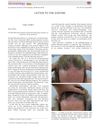
June 2018 in “Australasian Journal of Dermatology” Stopping sunscreen use on the forehead led to hair regrowth in a woman with frontal fibrosing alopecia.
4 citations
,
April 2019 in “DOAJ (DOAJ: Directory of Open Access Journals)” 5-α-reductase inhibitors, intralesional steroids, and hydroxychloroquine are the most effective treatments for frontal fibrosing alopecia.
 5 citations
,
January 2015 in “Journal of clinical & experimental dermatology research”
5 citations
,
January 2015 in “Journal of clinical & experimental dermatology research” MorrF improves hair growth better than minoxidil alone.
2 citations
,
January 2013 in “Iraqi journal of Medical Sciences” May 2021 in “Zenodo (CERN European Organization for Nuclear Research)” February 2018 in “Archivio Istituzionale della Ricerca (Universita Degli Studi Di Milano)” Ferroportin in macrophages is crucial for hair growth and skin healing by managing iron distribution.
 August 2015 in “Dermatología Argentina”
 Frontal fibrosing alopecia causes hairline recession and eyebrow loss in postmenopausal women.
 33 citations
,
January 2015 in “Journal of Cosmetic Dermatology”
33 citations
,
January 2015 in “Journal of Cosmetic Dermatology” Familial frontal fibrosing alopecia affects premenopausal women too, and early diagnosis is important, but no proven medication exists yet.
January 2012 in “Chinese Clinical Oncology” Disodium folinate can safely and effectively replace calcium folinate in colorectal cancer treatment.
2 citations
,
June 2021 in “Sultan Qaboos University medical journal” Familial frontal fibrosing alopecia is rare, mostly affects women, and often occurs between sisters or mother-daughter pairs.
 January 2022 in “Дерматологія та венерологія”
 Frontal fibrosing alopecia causes hair loss along the frontal hairline, mainly in postmenopausal women, and needs better treatments.
July 2024 in “Journal of Controlled Release” Nanostructured lipid carriers effectively deliver tofacitinib to hair follicles, reversing hair loss in alopecia areata.
 1 citations
,
May 2014 in “European Journal of Inflammation”
1 citations
,
May 2014 in “European Journal of Inflammation” A lotion with minoxidil, hydrocortisone butyrate, and 17a-estradiol can improve or stabilize Frontal Fibrosing Alopecia in some cases, but there's no universally-accepted treatment yet.
 155 citations
,
September 2008 in “British journal of dermatology/British journal of dermatology, Supplement”
155 citations
,
September 2008 in “British journal of dermatology/British journal of dermatology, Supplement” FFA is more common in postmenopausal women, can affect younger women, and may stabilize over time.
September 2023 in “Journal of the American Academy of Dermatology” Sunscreen use is linked to frontal fibrosing alopecia, especially in males.
December 2024 in “Chinese Chemical Letters” A new topical finasteride gel using nanoparticles shows promise for safe and effective hair regrowth.
July 2021 in “International Journal of Applied Pharmaceutics” The finasteride nanogel could be an effective topical treatment for hair loss.
1 citations
,
January 2019 The fenugreek seed extract gel can help with hair growth and reduce hair problems.
 3 citations
,
February 2016 in “Scandinavian journal of urology”
3 citations
,
February 2016 in “Scandinavian journal of urology” Finasteride use varies among Denmark, Finland, Norway, and Sweden, with higher usage in Finland and Sweden.
 May 2015 in “Journal of the American Academy of Dermatology”
 Certain drugs and supplements may contribute to hair loss in the frontal hairline in older women.
 July 2023 in “Journal of Drug Delivery Science and Technology”
 Finasteride niosomes were developed and found to be effective in treating hair loss, with better results than commercial minoxidil, and could be a promising topical treatment for hair loss.
 March 2024 in “Current materials science”
 Fisetin, found in fruits and vegetables, may help treat various health conditions like inflammation, diabetes, heart issues, cancer, and hair loss.
 September 2025 in “JAAD reviews.”
 Finasteride and dutasteride can improve hair loss in women, but more research is needed.
August 2019 in “Journal of the American Academy of Dermatology” Frontal fibrosing alopecia may be caused by an autoimmune reaction and hormonal imbalance.
January 2011 in “Bloomsbury Academic eBooks”  7 citations
,
May 2015 in “Journal of The American Academy of Dermatology”
7 citations
,
May 2015 in “Journal of The American Academy of Dermatology” Finasteride helps treat frontal fibrosing alopecia, improving or stabilizing the condition in many patients.
January 1999 in “Hair transplant forum international” Finasteride can help prevent future hair loss and improve hair restoration surgery results.
 June 2019 in “Reactions Weekly”