June 2026 in “British Journal of Dermatology” A rare genetic mutation in the EGFR gene caused severe skin issues and other health problems in a Slovakian girl, who is now 4 years old and receiving care.
44 citations
,
January 2017 in “Journal of Investigative Dermatology” Mutations in the KLHL24 gene cause skin blistering in epidermolysis bullosa simplex.
13 citations
,
November 1985 in “International Journal of Dermatology” The study found clear differences in lesion distribution and microscopic features among trichostasis spinulosa, keratosis pilaris, and eruptive vellus hair cysts.
November 2025 in “Journal of Investigative Dermatology” KLHL24-mutant stem cells help understand skin and heart disease.
10 citations
,
July 2001 in “PubMed” A new type of pachyonychia congenita may exist, caused by a different keratin mutation.
 March 2019 in “Nasza Dermatologia Online”
 A rare scalp condition with hair loss was correctly diagnosed and treated, leading to hair regrowth.
January 2016 in “Indian dermatology online journal” The patient has frontal fibrosing alopecia (FFA).
 September 2019 in “Journal of Investigative Dermatology”
 Scientists used stem cells to create a model of the skin disease Epidermolysis Bullosa simplex, which helped them understand its molecular mechanisms and could aid in finding treatments.
47 citations
,
April 2000 in “Experimental Dermatology” A new gene mutation causes a rare type of hair loss.
6 citations
,
October 1998 in “PubMed” Antifungal treatment can improve severe skin infections with cutaneous horns.
 September 2022 in “IP Indian journal of clinical and experimental dermatology”
 An 8-year-old girl has a rare genetic disorder causing complete, irreversible hair loss and skin bumps.
 3 citations
,
July 2004 in “SKINmed/Skinmed”
3 citations
,
July 2004 in “SKINmed/Skinmed” A 4-year-old girl was diagnosed with erythrokeratodermia variabilis after other treatments failed.
35 citations
,
January 2008 in “American Journal of Clinical Dermatology” KFSD can be linked to acne keloidalis nuchae and tufted hair folliculitis.
 5 citations
,
December 2017 in “The Journal of Dermatology”
5 citations
,
December 2017 in “The Journal of Dermatology” A new gene mutation caused a man's rare skin condition, Schöpf-Schulz-Passarge syndrome.
22 citations
,
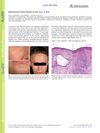
April 2013 in “International Journal of Dermatology” Frontal fibrosing alopecia can occur with lichen planus pigmentosus, needing careful diagnosis and treatment.
 1 citations
,
January 2019 in “Acta dermato-venereologica”
1 citations
,
January 2019 in “Acta dermato-venereologica” The woman's skin and hair symptoms were confirmed as frontal fibrosing alopecia, and while facial papules are common in such cases, there's no effective local treatment, but systemic treatments can help.
1 citations
,
July 2015 in “Microscopy Research and Technique” Friedreich's ataxia causes thin, weak hair with surface damage and cavities.
 January 2023 in “Indian dermatology online journal”
 A boy with Pachyonychia congenita has a confirmed gene mutation, highlighting the need for a local genetic database in India.
April 2026 in “Human Genome Variation” Long-read RNA sequencing can identify complex gene changes in IFAP syndrome.
 April 2023 in “Journal of Investigative Dermatology”
 The specific skin disease variant p.(Arg2000Trp) in plectin can cause a wide range of symptoms, which should be considered when diagnosing patients.
 40 citations
,
January 2013 in “International journal of trichology”
40 citations
,
January 2013 in “International journal of trichology” Perifollicular erythema can indicate active frontal fibrosing alopecia.
5 citations
,
May 2018 in “Veterinary dermatology” Gluconolactone products can significantly reduce skin scaling in golden retrievers with ARCI.
10 citations
,
January 1925 in “Archives of Dermatology” Trichostasis spinulosa is a rare skin condition with hair-filled plugs in hair follicles.
 31 citations
,
August 2005 in “The American Journal of Dermatopathology”
31 citations
,
August 2005 in “The American Journal of Dermatopathology” The study concluded that PKP1 is essential for skin integrity and hair growth, and its dysfunction causes the symptoms of ectodermal dysplasia/skin fragility syndrome.
1 citations
,
July 2025 in “Frontiers in Genetics” FilaggrinHigh melanomas have active FGFR signaling and weak GNA14 and Th1 signatures.
2 citations
,
January 2017 in “International Journal of Trichology” Trichoscopy can reveal specific hair and scalp changes in linear morphea.
 April 2024 in “Indian dermatology online journal”
 A rare hair follicle disorder can cause itchy, bluish-black bumps on the body.
 January 2025 in “Clinical Dermatology Review”
 Trichoscopy helps accurately diagnose Netherton syndrome, often mistaken for atopic dermatitis.
264 citations
,
October 1958 in “Archives of Dermatology” A 4-year-old girl has a rare hair condition causing fragile, short hair.