May 2015 in “Journal of the American Academy of Dermatology” New hair after alopecia areata can be thinner and change color but usually keeps the same shape.
 July 2022 in “Journal of Investigative Dermatology”
 The conclusion suggests that a new system for measuring hair loss could be created using automated analysis of photographs.
Trichoscopic examination is crucial for diagnosing congenital triangular alopecia.
 February 2026 in “Frontiers in Public Health”
 Alopecia areata is increasing globally, with disparities needing better prevention and support.
 3 citations
,
December 2013 in “Journal of Dermatology”
3 citations
,
December 2013 in “Journal of Dermatology” Scanning electron microscopy revealed four distinct hair root shapes in alopecia areata, suggesting a less invasive diagnostic method.
1 citations
,
March 2022 in “Anais brasileiros de dermatologia/Anais Brasileiros de Dermatologia” Trichoscopy helps tell apart hair loss due to alopecia areata from trichotillomania in eyebrows.
 May 2026 in “Journal of Basic and Clinical Health Sciences”
 FAGA shows varied hair thickness, while TE has more empty follicles.
55 citations
,
November 2010 in “Development” Hair follicles in mutant mice self-organize into ordered patterns within a week.
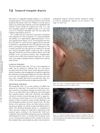 April 2012 in “Informa Healthcare eBooks”
 Temporal triangular alopecia is a lifelong condition with hairless patches on the side of the head that may be present from birth.
 13 citations
,
May 2004 in “Facial Plastic Surgery Clinics of North America”
13 citations
,
May 2004 in “Facial Plastic Surgery Clinics of North America” Surgeons need to understand natural hair patterns for better hair restoration results.
 199 citations
,
January 2004 in “The International Journal of Developmental Biology”
199 citations
,
January 2004 in “The International Journal of Developmental Biology” Hair follicle growth and development are controlled by specific genes and molecular signals.
 116 citations
,
May 2013 in “Proceedings of the National Academy of Sciences of the United States of America”
116 citations
,
May 2013 in “Proceedings of the National Academy of Sciences of the United States of America” Hair grows faster in the morning and is more vulnerable to damage from radiation due to the internal clock in hair follicle cells.
 109 citations
,
January 2011 in “Frontiers in Systems Neuroscience”
109 citations
,
January 2011 in “Frontiers in Systems Neuroscience” Choosing the right model order in brain connectivity analysis can affect the detection of differences between healthy individuals and those with seasonal affective disorder.
 82 citations
,
September 2011 in “Quality of Life Research”
82 citations
,
September 2011 in “Quality of Life Research” Choosing the right recall period for patient feedback is important for accurate data and depends on the disease, symptom changes, and patient impact.
 63 citations
,
March 1995 in “International Journal of Dermatology”
63 citations
,
March 1995 in “International Journal of Dermatology” Some drugs can cause hair loss, and stopping these drugs often leads to hair regrowth.
 62 citations
,
June 2015 in “The Journal of Dermatology”
62 citations
,
June 2015 in “The Journal of Dermatology” People with alopecia areata have more Th17 cells and fewer Treg cells, which may be key to the condition's development.
 56 citations
,
January 2001 in “Dermatology”
56 citations
,
January 2001 in “Dermatology” Teloptosis is a key point in hair loss that could help in creating prevention-focused hair care strategies.
 32 citations
,
October 2009 in “Dermatology”
32 citations
,
October 2009 in “Dermatology” Telogen effluvium is a hair loss condition with acute cases resolving quickly and chronic cases potentially lasting longer, sometimes requiring treatment.
 31 citations
,
September 2012 in “Human Brain Mapping”
31 citations
,
September 2012 in “Human Brain Mapping” People with Seasonal Affective Disorder have different brain activity in certain areas when resting.
 29 citations
,
March 2008 in “Dermatologic Surgery”
29 citations
,
March 2008 in “Dermatologic Surgery” The Cross-section Trichometer is a new tool that can measure hair quantity and detect hair loss and growth.
 27 citations
,
May 2008 in “Neuroscience”
27 citations
,
May 2008 in “Neuroscience” Finasteride given to baby rats causes anxiety-like behavior and worsens learning from punishment in adult rats.
 25 citations
,
June 2017 in “Scientific reports”
25 citations
,
June 2017 in “Scientific reports” Stress worsens Tourette symptoms by increasing allopregnanolone levels.
 24 citations
,
January 2013 in “Indian Journal of Dermatology, Venereology and Leprology”
24 citations
,
January 2013 in “Indian Journal of Dermatology, Venereology and Leprology” Hormonal treatment is effective for women with acne not helped by usual treatments, especially if they have hormonal imbalances.
 21 citations
,
March 2019 in “Experimental Dermatology”
21 citations
,
March 2019 in “Experimental Dermatology” Immune cells around hair follicles help control hair growth and could be targets for treating hair disorders.
 17 citations
,
January 2013 in “Indian Journal of Pharmacology”
17 citations
,
January 2013 in “Indian Journal of Pharmacology” High levels of the seizure medication sodium valproate can cause hair loss.
 16 citations
,
March 2000 in “Clinical Biochemistry”
16 citations
,
March 2000 in “Clinical Biochemistry” Women with hair loss had higher levels of certain hormones, suggesting a link to a condition like PCOS.
 14 citations
,
March 2017 in “Brain research”
14 citations
,
March 2017 in “Brain research” Progesterone and its byproducts control a specific receptor in the brain independently of progesterone receptors, affecting conditions related to the menstrual cycle.
 14 citations
,
January 2001 in “Clinical chemistry”
14 citations
,
January 2001 in “Clinical chemistry” Hair can be used to measure cancer-related chemicals noninvasively.
 13 citations
,
October 2010 in “Seizure”
13 citations
,
October 2010 in “Seizure” Extended-release valproate effectively reduced seizures and improved quality of life in epilepsy patients over 6 months, with some side effects.
 11 citations
,
January 2006 in “International Journal of Cosmetic Science”
11 citations
,
January 2006 in “International Journal of Cosmetic Science” Some oils can penetrate hair and reduce the stickiness between fibers, but mineral oil cannot.