17 citations
,
February 2001 in “Journal of the American Academy of Dermatology” Lithium can cause skin changes similar to mycosis fungoides.
October 2024 in “Journal of Pakistan Association of Dermatologists” This study compared scarring alopecia in 100 patients, divided into two groups: 43 with discoid lupus erythematosus (DLE) and 57 with follicular lichen planus (FLP). In DLE patients, 23.2% exhibited a moth-eaten pattern of hair loss, with no well-demarcated active borders. In contrast, all FLP patients showed a follicular moth-eaten alopecia pattern, starting as small patches that coalesced into larger areas. The study found that DLE affects more young females, while FLP is more common in young males. The prognosis for hair regrowth is more favorable in DLE compared to FLP.
 3 citations
,
February 2019 in “Animal biotechnology”
3 citations
,
February 2019 in “Animal biotechnology” The PLP2 gene affects cashmere fiber quality in goats and is linked to hair growth and loss.
 September 2024 in “Skin Research and Technology”
 AFM can help diagnose lichen planopilaris by identifying specific hair structure changes.
 13 citations
,
September 2017 in “Skin appendage disorders”
13 citations
,
September 2017 in “Skin appendage disorders” Some women with Frontal Fibrosing Alopecia also have Lichen Planopilaris, which can lead to more symptoms and affect hair outside the scalp.
14 citations
,
January 2018 in “Skin Appendage Disorders” Upper eyelid hyperpigmentation can help diagnose facial lichen planus pigmentosus in patients with frontal fibrosing alopecia.
 March 2025 in “International Journal of Trichology”
 FAPD in children may not depend on androgens and should be treated with anti-inflammatory measures and minoxidil.
 3 citations
,
May 2019 in “Journal of Cosmetic Dermatology”
3 citations
,
May 2019 in “Journal of Cosmetic Dermatology” Miliacin with polar lipids helps hair growth and improves hair loss in women.

A rare case of a woman having both lichen planus pigmentosus and classic lichen planopilaris at the same time.
2 citations
,
September 2020 in “bioRxiv (Cold Spring Harbor Laboratory)” The laser system helps study brain cell functions by precisely removing specific cells and observing changes.
 November 2023 in “Journal of cosmetic dermatology”
 The 595-nm pulsed dye laser effectively reduces symptoms of EFFC with minimal side effects.
 March 2022 in “Más dermatología”
 Chronic lupus and frontal fibrosing alopecia can occur together, but their connection is unclear.
 March 2014 in “Journal of The American Academy of Dermatology”
 Mycophenolic acid may help hair growth, a combination treatment improves hair thickness in male hair loss, and early treatment of frontal fibrosing alopecia is important.
Poly-D,L-lactic acid boosts hair growth in aged skin by activating hair follicle stem cells.
1 citations
,
August 2024 in “Anais Brasileiros de Dermatologia” Recognizing skin symptoms helps diagnose and treat frontal fibrosing alopecia.
February 2013 in “Journal of the American Academy of Dermatology” 4 citations
,
May 2009 in “Clinical and experimental dermatology” Flexural follicular lichen planus is a rare skin condition affecting body folds.
 April 2023 in “Journal of Investigative Dermatology”
 Being allergic to linalool, a common fragrance ingredient, might contribute to developing frontal fibrosing alopecia.
 86 citations
,
July 2012 in “British journal of dermatology/British journal of dermatology, Supplement”
86 citations
,
July 2012 in “British journal of dermatology/British journal of dermatology, Supplement” There may be a connection between Frontal Fibrosing Alopecia and Lichen Planus Pigmentosus, and more research is needed to confirm this.
10 citations
,
December 2008 in “Molecular Carcinogenesis” The PML protein helps prevent skin cancer in mice.
 3 citations
,
May 2022 in “Clinical and experimental dermatology”
3 citations
,
May 2022 in “Clinical and experimental dermatology” Drugs targeting EMT molecules show promise for treating lichen planopilaris.
51 citations
,
May 1984 in “Journal of the American Academy of Dermatology” Benign follicular mucinosis involves immune cells attacking hair follicles.
 September 2021 in “CRC Press eBooks”
 Fibrosing alopecia in a pattern distribution is a type of hair loss that may often be overlooked, especially in men.
 June 2020 in “Journal of Investigative Dermatology”
 The technique effectively shows how human skin and hair cells form into ball-like structures.
Fructus Ligustri Lucidi water extract helps hair growth by promoting cell survival and activating specific pathways.
 1 citations
,
October 2023 in “Skin research and technology”
1 citations
,
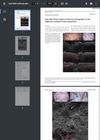
October 2023 in “Skin research and technology” LC-OCT is an effective new method for diagnosing classic lichen planopilaris.
 August 2016 in “Journal of Investigative Dermatology”
 Researchers found a new genetic mutation linked to a hair condition in a Japanese boy.
19 citations
,
May 2001 in “Endocrinology” Mrp3 may aid in wound healing and hair growth.
 May 2014 in “Clinical and Experimental Dermatology”
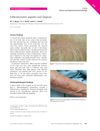
 A 70-year-old woman with a rare skin condition improved after treatment with topical steroids and acitretin.
3 citations
,
January 2017 in “Acta Dermato Venereologica” Lipid-antigen stimulation may play a role in folliculotropic mycosis fungoides.