 April 2023 in “The journal of investigative dermatology/Journal of investigative dermatology”
 Folliculotropic mycosis fungoides has unique molecular features and cell interactions that could guide targeted therapy.
 11 citations
,
August 2019 in “Journal of Molecular Histology”
11 citations
,
August 2019 in “Journal of Molecular Histology” NFIC helps rat dental cells grow and turn into bone-like cells.
 39 citations
,
July 2015 in “British Journal of Dermatology”
39 citations
,
July 2015 in “British Journal of Dermatology” The pseudo 'fringe sign' can also appear in frontal fibrosing alopecia, not just in traction alopecia, showing that this condition may be more common than thought.
20 citations
,
July 2005 in “Experimental dermatology” The fuzzy gene is crucial for controlling hair growth cycles.
17 citations
,
May 2013 in “Journal of Investigative Dermatology” Mutations in β1 integrins cause embryonic death but have milder effects on skin.
December 2012 in “Expert review of dermatology” New findings suggest the protein linked to Birt–Hogg–Dubé syndrome is important in cell signaling and could affect treatment understanding.
 54 citations
,
January 1983 in “Archives of Dermatology”
54 citations
,
January 1983 in “Archives of Dermatology” KFSD is a rare condition causing scarring hair loss, with no effective treatment known at the time of the report.
 1 citations
,
May 2023 in “Journal of neuroendocrinology”
1 citations
,
May 2023 in “Journal of neuroendocrinology” DAVID syndrome is a condition with immune system and hormone deficiencies, needing early diagnosis to avoid serious complications.
71 citations
,
January 2011 in “Orphanet Journal of Rare Diseases” IFAP syndrome is a rare genetic disorder causing skin, hair, and eye issues, with limited treatment options.
47 citations
,
September 2002 in “Journal of Bone and Mineral Research” A mutation in the vitamin D receptor causes severe resistance to vitamin D, affecting bone health but not hair growth.
 6 citations
,
August 2020 in “JCRPE”
6 citations
,
August 2020 in “JCRPE” A boy with a rare form of early puberty caused by a new gene mutation responded well to treatment aimed at reducing testosterone and preserving adult height.
 81 citations
,
January 2003 in “The FASEB Journal”
81 citations
,
January 2003 in “The FASEB Journal” Follistatin helps hair growth and cycling, while activin prevents it.
 30 citations
,
June 2021 in “British Journal of Dermatology”
30 citations
,
June 2021 in “British Journal of Dermatology” Mutations in the WNT10A gene can cause skin, hair, teeth, and other disorders, and may also affect other areas like kidney and cancer, with potential for targeted treatments.
44 citations
,
April 2013 in “Proceedings of the National Academy of Sciences of the United States of America” FGF13 gene changes cause excessive hair growth in a rare condition.
57 citations
,
August 2002 in “American Journal Of Pathology” Cathepsin L deficiency causes hair and skin issues in mice.
 June 2026 in “World Journal of Clinical Pediatrics”
 Early diagnosis and tailored treatment improve outcomes for non-nutritional rickets.
13 citations
,
April 1994 in “Baillière's clinical endocrinology and metabolism” Some people have genetic mutations that make them resistant to vitamin D, leading to rickets even with enough vitamin D intake.
October 2024 in “Developmental Dynamics” Recent advances show zebrafish can model anemia, Alx4 affects craniofacial and hair development, and mTORC1 is crucial for retinal development.
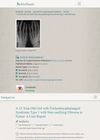 August 2022 in “Journal of Comprehensive Pediatrics”
 A girl with a rare genetic disorder had a unique bone condition, highlighting the need for careful diagnosis and suggesting the disorder might be more common than thought.
 32 citations
,
March 2014 in “PLOS ONE”
32 citations
,
March 2014 in “PLOS ONE” Mice lacking fibromodulin have disrupted healing patterns, leading to abnormal skin repair and scarring.
 August 2021 in “Journal of medical science and clinical research”
 An infant with seizures and hair loss was diagnosed with biotinidase deficiency and treated successfully with biotin.
April 2025 in “Australasian Journal of Dermatology” Daughters with affected mothers may develop frontal fibrosing alopecia early.
 September 2025 in “Digital Commons - RU (Rockefeller University)”
 Nfib in hair follicle stem cells boosts melanocyte stem cell growth and differentiation.
 2 citations
,
January 2000 in “Journal of Toxicologic Pathology”
2 citations
,
January 2000 in “Journal of Toxicologic Pathology” A single recessive gene causes sparse hair in certain Japanese White rabbits.
 June 2024 in “British Journal of Dermatology”
 A 15-year-old boy was correctly diagnosed with a rare skin condition after initially being misdiagnosed.
 10 citations
,
March 2015 in “Journal of dermatology”
10 citations
,
March 2015 in “Journal of dermatology” The boy's severe skin disorder is caused by two new mutations in his TGM1 gene.
 5 citations
,
June 2023 in “BMC genomics”
5 citations
,
June 2023 in “BMC genomics” A specific gene mutation causes long hair in Angora rabbits.
A white-tailed deer fawn in South Dakota was the first cervid found with congenital hypotrichosis, a condition causing sparse or missing hair.
January 2026 in “Indian Journal of Paediatric Dermatology” A rare case shows a possible link between Neurofibromatosis type 1 and Becker nevus due to genetic mutations.
8 citations
,
March 2011 in “Endocrine” A new gene mutation causes vitamin D-resistant rickets and hair loss in two siblings.