2 citations
,
December 2020 in “Developmental cell” Chemotherapy drugs can cause abnormal growth and changes in healthy skin and gland cells.
 1 citations
,
July 2023 in “International Journal of Molecular Sciences”
1 citations
,
July 2023 in “International Journal of Molecular Sciences” Treating fat stem cells with low oxygen boosts hair growth cell growth through specific signaling pathways.
 1 citations
,
April 2022 in “Regenerative Therapy”
1 citations
,
April 2022 in “Regenerative Therapy” Activating the GDNF-GFRα1-RET signaling pathway could potentially promote skin and limb regeneration in humans and could be used to treat hair loss and promote wound healing.
1 citations
,
March 2022 in “bioRxiv (Cold Spring Harbor Laboratory)” Biodegradable scaffolds help regenerate wounds and hair by activating the immune system.
 1 citations
,
February 2017 in “The American journal of dermatopathology/American journal of dermatopathology”
1 citations
,
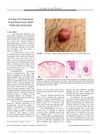
February 2017 in “The American journal of dermatopathology/American journal of dermatopathology” A man with a skin nodule was diagnosed with a rare skin condition called cutaneous focal mucinosis, which can be confused with other skin cancers.
1 citations
,
February 2016 in “Cell Transplantation” Hair follicles have a more inactive cell cycle than other skin cells, which may help develop targeted therapies for skin diseases and cancer.
 June 2026 in “Research Square”
 THBS4 helps hair grow by activating hair follicle stem cells.
August 2025 in “BMC Research Notes” iPSC lines from different tissues share a common miRNA profile, supporting their pluripotent nature.
July 2025 in “Journal of Investigative Dermatology” Laser treatment boosts hair growth by activating a key growth factor.
 April 2025 in “Cellular and Molecular Biology”
 Human dermal stem/progenitor cells can divide and differentiate more than hair follicle dermal papilla cells.
 January 2025 in “Cellular and Molecular Biology”
 The PIP5K1A gene helps cashmere growth in goats by promoting cell proliferation, and melatonin boosts its expression.
 January 2024 in “Skin appendage disorders”
 Using growth factors and microneedling shows promise for hair regrowth in Alopecia Areata, but more research is needed.
 August 2023 in “International Journal of Molecular Sciences”
 Human skin xenografting could improve our understanding of skin development, renewal, and healing.
 January 2023 in “Open veterinary journal”
 Cow blood vessel cell secretions helped heal rat burn wounds and may treat burns and hair loss.
 October 2021 in “The Egyptian Journal of Hospital Medicine ”
 Combination therapies work better than single treatments for atrophic acne scars.
 January 2019 in “Advances in stem cells and their niches”
 Skin health and repair depend on the signals between skin stem cells and their surrounding cells.
 April 2017 in “Plastic and reconstructive surgery. Global open”
 Baby and adult skin cells are different, with baby cells having more active pathways that could help grow new hair follicles.
 April 2017 in “Plastic and reconstructive surgery. Global open”
 Fetal scalp cells have more regenerative genes than adult cells, and decellularized muscle matrix is better for muscle repair than commercial alternatives.
 December 2015 in “Vascular Pharmacology”
 Different cells affect hair follicle blood vessels, endothelial cells react differently to inflammation and oxidized fats, and prasugrel better protects heart vessels during a procedure than clopidogrel.
 January 2012 in “Journal of Investigative Dermatology”
 Small molecule DMF improves psoriasis and multiple sclerosis, adult skin cells can be made to grow new hair, certain skin cells initiate hair growth, IL-17C controls gut health and can cause skin inflammation, and skin cells produce IL-17 that can lead to psoriasis.
 February 2008 in “Medical & surgical dermatology”
 Some treatments like topical oxygen and stem cells show promise for wound healing and hair growth, but evidence for modern dressings over traditional ones is limited.
January 2003 in “Jiefangjun yixue zazhi” Growth factors in skin increase with age, aiding development and healing.
 January 1989 in “Clinical and Experimental Dermatology”
 The symposium concluded that hair growth involves complex processes, including the hair follicle life cycle, the role of the dermal papilla, hair strength, pigmentation, and the impact of diseases and treatments like minoxidil on hair and skin.
March 2023 in “Chinese Journal of Dermatology” Protecting hair and scalp from sunlight may help prevent hair loss.
 788 citations
,
February 2007 in “Nature”
788 citations
,
February 2007 in “Nature” The document concludes that skin stem cells are important for hair growth and wound healing, and could be used in regenerative medicine.
 162 citations
,
July 2011 in “Biomacromolecules”
162 citations
,
July 2011 in “Biomacromolecules” Chitosan nanofiber scaffolds improve skin healing and are promising for wound treatment.
28 citations
,
October 2024 in “Advanced Materials” Artificial skin can heal wounds without scars and regenerate hair, oil, and sweat glands.
9 citations
,
February 2020 in “Materials Express” Short-peptide gel scaffolds improve burn wound healing and hair growth.
 4 citations
,
March 2018 in “Daehan han'yi hag'hoeji/Journal of Korean medicine”
4 citations
,
March 2018 in “Daehan han'yi hag'hoeji/Journal of Korean medicine” Astragalus membranaceus helps regrow hair and reduce hair loss symptoms.
 3 citations
,
January 2018 in “Methods in molecular biology”
3 citations
,
January 2018 in “Methods in molecular biology” The document concludes that skin-derived precursors can be grown and may help in hair growth and skin repair.