 April 2016 in “Journal of The American Academy of Dermatology”
 A botanical lotion can increase scalp collagen and extend hair growth phase, potentially improving hair thinning issues.
May 2026 in “Journal of Tissue Engineering” A new treatment using cell secretions can regrow hair better than minoxidil.
 April 2023 in “Journal of Investigative Dermatology”
 Platelet-rich plasma treatment is generally safe and effective for hair loss, acne scars, skin discoloration, and facial rejuvenation, but deeper injections are better and multiple treatments can increase risk of side effects.
 November 2008 in “Medical & surgical dermatology”
 A device was made in 2008 to measure hair loss severity. Other findings include: frizzy mutation in mice isn't related to Fgfr2, C/EBPx marks preadipocytes, Cyclosporin A speeds up hair growth in mice, blocking plasmin and metalloproteinases hinders healing, hyperbaric oxygen helps ischemic wound healing, amniotic membranes heal wounds better than polyurethane foam, rhVEGF165 from a fibrin matrix improves tissue flap viability and induces VEGF-R2 expression, and bFGF enhances wound healing and reduces scarring in rabbits.
3 citations
,
October 2023 in “Bioscience Biotechnology and Biochemistry” Salmon nasal cartilage proteoglycan may help hair grow.
7 citations
,
June 2017 in “Journal of Cutaneous Pathology” Cystic panfolliculoma resembles hair follicle tumors due to specific cell interactions.
11 citations
,
July 2004 in “Journal of Investigative Dermatology” Certain tyrosine kinases may regulate hair growth and could help develop hair loss treatments.
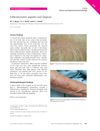 May 2014 in “Clinical and Experimental Dermatology”
 A 70-year-old woman with a rare skin condition improved after treatment with topical steroids and acitretin.
59 citations
,
March 1984 in “Journal of Investigative Dermatology”  53 citations
,
October 2012 in “The FASEB Journal”
53 citations
,
October 2012 in “The FASEB Journal” Bimatoprost, a glaucoma medication, may also help treat hair loss.
24 citations
,
June 2018 in “PubMed” Serenoa repens extract helps regrow hair and repair hair loss by activating certain cell growth pathways.
 24 citations
,
November 2019 in “Experimental Dermatology”
24 citations
,
November 2019 in “Experimental Dermatology” PPAR-γ is important for healthy hair and its problems, and more research on PPAR-γ treatments is needed.
 August 2024 in “Biomolecules & Therapeutics”
 A new compound, HTPI, promotes hair growth by protecting cells from damage and regulating energy use.
 16 citations
,
December 2016 in “Molecular Medicine Reports”
16 citations
,
December 2016 in “Molecular Medicine Reports” Platelet-rich plasma may help hair follicle cells grow by affecting certain genes and pathways.
 155 citations
,
September 2008 in “British journal of dermatology/British journal of dermatology, Supplement”
155 citations
,
September 2008 in “British journal of dermatology/British journal of dermatology, Supplement” FFA is more common in postmenopausal women, can affect younger women, and may stabilize over time.
33 citations
,
December 1999 in “Journal of Investigative Dermatology Symposium Proceedings” 39 citations
,
November 2007 in “Experimental dermatology” Human hair follicles contain a complex network of prostanoid receptors that may influence hair growth.
October 2019 in “Zenodo (CERN European Organization for Nuclear Research)” Capilcep effectively promotes hair growth and is safe, but long-term effects need more research.
January 2026 in “Journal of Aesthetic Nursing” Polynucleotides improve skin quality and are safe and effective for rejuvenation.
 81 citations
,
January 2003 in “The FASEB Journal”
81 citations
,
January 2003 in “The FASEB Journal” Follistatin helps hair growth and cycling, while activin prevents it.
 1 citations
,
September 2020 in “Journal of Dermatological Science”
1 citations
,
September 2020 in “Journal of Dermatological Science” The gene LRRC15 is more active in balding areas of the scalp compared to non-balding areas.
 22 citations
,
January 2014 in “Biological & Pharmaceutical Bulletin”
22 citations
,
January 2014 in “Biological & Pharmaceutical Bulletin” Ginsenoside F2 may help prevent hair loss and promote hair growth better than finasteride.
 June 2020 in “Journal of Investigative Dermatology”
 The technique effectively shows how human skin and hair cells form into ball-like structures.
 10 citations
,
April 2016 in “Research and reports in transdermal drug delivery”
10 citations
,
April 2016 in “Research and reports in transdermal drug delivery” Transfollicular drug delivery is promising but needs more research to improve and understand it better.
 February 2024 in “Journal of Cosmetic Dermatology”
 White hair patch repigmented and hair regrew in a balding patient after treatment with exosomes and laser.
 5 citations
,
April 2017 in “Dermatologic Surgery”
5 citations
,
April 2017 in “Dermatologic Surgery” PRP treatment satisfies 58% of female hair loss patients, with most noticing fuller, thicker hair and less shedding.
 March 2026 in “Planta Medica”
 Serenoa repens extract may help hair growth in both men and women.
 July 2026 in “International Journal of Drug Delivery Technology”
 SCLL improves finasteride delivery for better hair growth in treating hair loss.
 December 2024 in “Journal of Dental Panacea”
 QR678 Neo is more effective than PRP for hair growth and quality.
November 2016 in “The Molecular Biology Society of Japan”