 September 2021 in “CRC Press eBooks”
 Lichen planopilaris causes permanent hair loss and scarring due to damage to hair follicles and can be mistaken for other hair loss conditions.
 March 2021 in “CRC Press eBooks”
 Trichoscopy helps tell apart Lichen planopilaris and Frontal fibrosing alopecia from other hair loss conditions.
 March 2021 in “CRC Press eBooks”
 The document concludes that different patterns of hair thickness and scalp changes can help diagnose types of non-scarring hair loss.
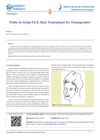
A hair transplant using hair from the back of the head and pubic area was successful in creating a feminine hairline for a male-to-female transgender person.

Different types of hair loss can be caused by hormones, stress, autoimmune disorders, illness, or nutritional deficiencies, and can be treated with medication, nutritional supplements, or hair transplantation.
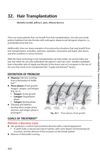 January 2018 in “Georg Thieme Verlag eBooks”
 Hair transplantation is a surgical procedure to move hair to bald areas, requires good donor hair, and results show in about a year.
 January 2018 in “Springer eBooks”
 Congenital triangular alopecia is a harmless, non-spreading hair loss condition often seen in young children.
Proper planning of the recipient area is crucial for natural-looking hair transplants.
 April 2016 in “Journal of The American Academy of Dermatology”
 Different treatments are effective for hair loss conditions, but results vary by individual factors.
 January 2016 in “Springer eBooks”
 The document concludes that there are various causes and treatments for hair loss, with hair transplantation being a notable option.
October 2015 in “CRC Press eBooks” Classifying alopecia helps diagnose and treat different types of hair loss accurately.
 January 2015 in “Hair transplant forum international”
 Up to 10% of hair loss patients might have early signs of a condition called Lichen Planopilaris.
 October 2010 in “Journal of Drugs in Dermatology”
 In 2010, Marco Toscani's team introduced a new scalpel for hair transplants that cuts parallel to hair follicles, reducing hair loss and improving on previous methods.
 January 2010 in “Elsevier eBooks”
 Hair transplantation is a treatment for hair loss mainly caused by genetics, with various techniques and potential complications, and results visible after 8-12 months.
 January 2009 in “Hair transplant forum international”
 Realistic expectations about hair density and coverage lead to higher patient satisfaction in hair transplant surgery.
 May 2004 in “Facial Plastic Surgery Clinics of North America”
 Better understanding of hair patterns and advanced techniques are crucial for improving hair restoration and removal outcomes.
January 2001 in “대한피부과학회지” Horizontal sectioning helps diagnose hair loss, but Korean follicle differences matter.
 August 1998 in “Dermatologic Surgery”
 Dr. George A. Farber recommends using follicular unit transplantation for hair restoration because it gives a more natural look and has fewer problems compared to the older miniflap technique.
 September 1997 in “Journal of The European Academy of Dermatology and Venereology”
 Examining scalp tissue under a microscope helps diagnose and understand hair loss diseases.
April 2022 in “Journal of Investigative Dermatology” Androgenetic alopecia causes hair thinning due to increased androgen activity, treatable with minoxidil and finasteride.
December 2022 in “Archives of Dermatological Research” Adding cetirizine to minoxidil improves hair growth and thickness in women with androgenetic alopecia.
 43 citations
,
March 2006 in “Seminars in Cutaneous Medicine and Surgery”
43 citations
,
March 2006 in “Seminars in Cutaneous Medicine and Surgery” Different types of hair loss have unique features under a microscope, but a doctor's exam is important for accurate diagnosis.
 47 citations
,
December 2020 in “Journal of the European Academy of Dermatology and Venereology”
47 citations
,
December 2020 in “Journal of the European Academy of Dermatology and Venereology” The document concludes that understanding and treating hair loss requires recognizing its various types and using appropriate diagnostic tools and treatments.
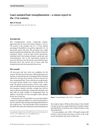 11 citations
,
June 2005 in “Journal of Cosmetic Dermatology”
11 citations
,
June 2005 in “Journal of Cosmetic Dermatology” Lasers in hair transplantation show promise but are not yet standard, with current methods causing some side effects and needles still being preferred for creating recipient sites.
 1 citations
,
October 2018 in “European Journal of Plastic Surgery”
1 citations
,
October 2018 in “European Journal of Plastic Surgery” The study found that hair transplant complications are rare, with swelling being the most common issue.
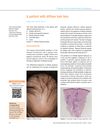 January 2015 in “Indian Dermatology Online Journal”
 The patient's hair loss is most likely due to diffuse alopecia areata.
 158 citations
,
February 2000 in “Archives of dermatology”
158 citations
,
February 2000 in “Archives of dermatology” Some people with pattern hair loss may also have scalp inflammation and scarring similar to lichen planopilaris.
 34 citations
,
July 2010 in “Expert Opinion on Drug Delivery”
34 citations
,
July 2010 in “Expert Opinion on Drug Delivery” The document concludes that there is no agreed-upon best method for measuring drug delivery within hair follicles and more research is needed to validate current techniques.
 24 citations
,
September 2014 in “Journal of the European Academy of Dermatology and Venereology”
24 citations
,
September 2014 in “Journal of the European Academy of Dermatology and Venereology” Trichoscopy is reliable for diagnosing Temporal Triangular Alopecia and can prevent unnecessary biopsies and wrong treatments.
 16 citations
,
July 2016 in “Veterinary Dermatology”
16 citations
,
July 2016 in “Veterinary Dermatology” Dermoscopy is useful for diagnosing hair loss patterns in dogs.