 153 citations
,
August 2002 in “Dermatologic Surgery”
153 citations
,
August 2002 in “Dermatologic Surgery” Follicular Unit Extraction (FUE) is a less invasive hair transplant method with minimal scarring, suitable for about 60% of patients, especially those needing fewer grafts and quicker recovery.
 83 citations
,
April 1999 in “Dermatologic Surgery”
83 citations
,
April 1999 in “Dermatologic Surgery” The research found that for a typical hair density, about 11 square centimeters of donor scalp is needed to get 800 hair grafts for transplantation.
 6 citations
,
January 2010 in “Actas Dermo-Sifiliográficas”
6 citations
,
January 2010 in “Actas Dermo-Sifiliográficas” Follicular Unit Hair Transplantation has become a less invasive procedure with natural results, suitable for certain adults with hair loss.
 4 citations
,
August 2018 in “Journal of Cosmetic Dermatology”
4 citations
,
August 2018 in “Journal of Cosmetic Dermatology” Actual harvested hair follicles were fewer and differed in type from estimated, with older patients and those with multiple transplants needing more careful planning.
 4 citations
,
January 2005 in “Elsevier eBooks”
4 citations
,
January 2005 in “Elsevier eBooks” Follicular Unit Transplantation is a precise hair restoration technique that requires careful planning and a skilled team, and Follicular Unit Extraction offers a less invasive option.
 13 citations
,
March 2012 in “The Journal of Dermatology”
13 citations
,
March 2012 in “The Journal of Dermatology” Hair transplant surgery can rebuild muscle and nerve connections, allowing transplanted hairs to stand up like normal hairs.
 11 citations
,
May 2019 in “BioMed Research International”
11 citations
,
May 2019 in “BioMed Research International” Hair transplantation effectively treats scalp scars with high success and patient satisfaction.
 10 citations
,
January 2013 in “Journal of Cutaneous and Aesthetic Surgery”
10 citations
,
January 2013 in “Journal of Cutaneous and Aesthetic Surgery” Narrower donor strips and special closure techniques in hair transplants lead to smaller scars and happier patients.
 5 citations
,
September 2003 in “Archives of Facial Plastic Surgery”
5 citations
,
September 2003 in “Archives of Facial Plastic Surgery” Follicular-unit grafting is an effective hair transplant method that looks natural and has a high success rate.
 4 citations
,
September 2016 in “PubMed”
4 citations
,
September 2016 in “PubMed” Using platelet-rich fibrin matrix with hair transplant techniques helps in hair regrowth in male baldness patients.
 3 citations
,
April 2021 in “Journal of Cosmetic Dermatology”
3 citations
,
April 2021 in “Journal of Cosmetic Dermatology” The micrometer caliper is a reliable tool for measuring hair diameter for FUE surgery.
 2 citations
,
February 2020 in “Journal of Plastic Surgery and Hand Surgery”
2 citations
,
February 2020 in “Journal of Plastic Surgery and Hand Surgery” Good-looking donor sites for hair transplants usually have higher hair density and thicker hair.
 1 citations
,
June 2017 in “Actas Dermo-Sifiliográficas”
1 citations
,
June 2017 in “Actas Dermo-Sifiliográficas” Follicular Unit Extraction (FUE) is a hair transplant method with less scarring and discomfort but requires skilled surgeons and has limitations on graft numbers per session.
 1 citations
,
January 2010 in “Elsevier eBooks”
1 citations
,
January 2010 in “Elsevier eBooks” Follicular Unit Hair Transplantation is a method for restoring hair by transplanting individual hair follicles.
 July 2026 in “Preprints.org”
 Combining fat grafting, hair transplantation, and scalp micropigmentation effectively restores appearance and improves life for burn survivors.
June 2026 in “Journal of Cutaneous and Aesthetic Surgery” Undiagnosed diabetes can lead to serious infections after surgery, but proper treatment can ensure healing.
 September 2024 in “Journal of Cutaneous and Aesthetic Surgery”
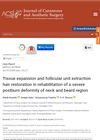
 A young man with severe neck and beard burns was successfully treated, restoring neck movement and improving skin appearance.
 December 2023 in “Clinical, cosmetic and investigational dermatology”
 The new hair transplant technique is fast, effective, and satisfying for patients with different hair types.
January 2020 in “Hair therapy & transplantation” FUE is a modern hair transplant method that avoids large scars and is good for short hair.
 January 2014 in “Journal of Cutaneous and Aesthetic Surgery”
 The document suggests that for better patient satisfaction in hair transplants, high-quality photos are needed, and using a narrow donor strip might lead to fewer grafts and dissatisfaction, but filling the scar with FUE grafts and using tranexamic acid can improve results.
17 citations
,
January 2014 in “Dermatology Online Journal” The Artas robotic system is effective and reliable for hair transplants.
 September 2025 in “Cellular and Molecular Biology”
 Intraoperative corticosteroids reduce swelling, and early care lowers folliculitis risk in hair transplant donor sites.
 39 citations
,
January 2016 in “Journal of Cutaneous and Aesthetic Surgery”
39 citations
,
January 2016 in “Journal of Cutaneous and Aesthetic Surgery” Injecting platelet-rich plasma during hair transplant surgery improves hair regrowth rate, speeds up skin recovery, and enhances hair quality.
 16 citations
,
January 2014 in “Dermatology online journal”
16 citations
,
January 2014 in “Dermatology online journal” The document concludes that Follicular Unit Extraction is an advanced, less invasive hair transplant method with fewer side effects than traditional methods.
 14 citations
,
March 2017 in “Plastic and reconstructive surgery. Global open”
14 citations
,
March 2017 in “Plastic and reconstructive surgery. Global open” Hair follicle damage happens during hair transplants and can impact success; better surgical methods are needed.
 8 citations
,
July 2010 in “Aesthetic Plastic Surgery”
8 citations
,
July 2010 in “Aesthetic Plastic Surgery” Adding more glutathione to the preservation solution doesn't reduce oxidative stress in hair transplants.
 7 citations
,
January 2019 in “Archives of Aesthetic Plastic Surgery”
7 citations
,
January 2019 in “Archives of Aesthetic Plastic Surgery” A forehead-supporting chair improves comfort and results in hair transplant surgery.
 7 citations
,
January 2017 in “International Journal of Trichology”
7 citations
,
January 2017 in “International Journal of Trichology” Hair transplant can cause hard-to-treat keloids in some patients.
 5 citations
,
September 2012 in “Dermatology Online Journal”
5 citations
,
September 2012 in “Dermatology Online Journal” Follicular Unit Extraction (FUE) hair transplant is less invasive, leaves no scars, and has quicker recovery times, but it's more time-consuming and challenging. Automation helps speed up the process and improve graft survival, reducing the need for traditional strip surgery.
 4 citations
,
June 2020 in “Journal of Cosmetic Dermatology”
4 citations
,
June 2020 in “Journal of Cosmetic Dermatology” The edge out punch is a tool that lowers the chance of damaging hair follicles during hair transplant surgery.