 June 2026 in “Frontiers in Bioengineering and Biotechnology”
 Hair follicle systems are being engineered to better mimic natural hair follicles for studying hair disorders and testing treatments.
 April 2026 in “Frontiers in Immunology”
 Blocking the CXCL12–CXCR4 axis may help treat hair loss in alopecia.

The treatment showed limited success in repigmenting hair for vitiligo-associated leukotrichia.
January 2026 in “International Journal of Molecular Sciences” Understanding molecular signals and genetics is key to improving hair regeneration therapies.
 December 2025 in “Cureus”
 Hyperbaric oxygen therapy speeds up recovery and improves outcomes in hair transplants.
 September 2025 in “PubMed”
 Mechanical stimulation and new therapies show promise for hair regrowth.
August 2025 in “Journal of Industrial and Engineering Chemistry” A new topical finasteride formulation effectively promotes hair growth with fewer side effects.
 July 2025 in “World Journal of Stem Cells”
 Stem cell-derived exosomes could be a promising new treatment for hair regrowth.
June 2024 in “Regenerative Therapy” iPSCs show promise for hair regeneration but need more research to improve reliability and effectiveness.
May 2024 in “Regenerative Therapy” Dendrobium officinale polysaccharide helps hair growth by activating the WNT signaling pathway.
 January 2024 in “International Journal of Trichology”
 FUE is effective and preferred for hair restoration, improving appearance and perceived age.
 January 2023 in “Skin Pharmacology and Physiology”
 Minor injuries to hair follicles can stimulate hair growth in mice by increasing a specific protein.
 June 2022 in “Ain Shams medical journal”
 Adding platelet rich plasma to hair transplant surgery leads to better results and more patient satisfaction.
January 2020 in “Revista Dermatológica Centro Uraga” Recognizing trichoscopic features is crucial for diagnosing various hair loss conditions.
 April 2018 in “Journal of Investigative Dermatology”
 Older hair follicle stem cells have a reduced ability to renew themselves, leading to more hair loss.
 April 2017 in “Journal of Investigative Dermatology”
 Certain microRNAs may protect against hair loss in alopecia areata and could be potential treatment targets.
 November 2013 in “Elsevier eBooks”
 Skin and hair renewal is maintained by both fast and slow cycling stem cells, with hair regrowth primarily driven by specific stem cells in the hair follicle bulge. These cells can also help heal wounds and potentially treat hair loss.
 January 2012 in “조직공학과 재생의학”
 The study found that certain three-dimensional scaffolds can help regenerate hair effectively.
October 2007 in “Springer eBooks”  June 2020 in “Journal of Investigative Dermatology”
 Leukocyte-rich platelet-rich plasma is safe and can potentially help treat scarring hair loss.
56 citations
,
September 2010 in “Veterinary pathology” Certain mouse strains develop a skin condition similar to a human hair loss disease due to genetic defects.
 56 citations
,
July 2005 in “Journal of The American Academy of Dermatology”
56 citations
,
July 2005 in “Journal of The American Academy of Dermatology” Using both vertical and transverse sections gives a better diagnosis of alopecia than using one method alone.
 7 citations
,
May 2005 in “Experimental Dermatology”
7 citations
,
May 2005 in “Experimental Dermatology” Two mouse mutations cause similar hair loss despite different skin changes.
 1 citations
,
October 2023 in “Journal of the Pakistan Medical Association”
1 citations
,
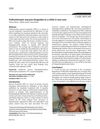
October 2023 in “Journal of the Pakistan Medical Association” Folliculotropic mycosis fungoides can occur in children and is diagnosed with specific tests, but often stays in early stages with treatment.
 March 2025 in “Forum Dermatologicum”
 Trichoscopy is crucial for accurately diagnosing fibrosing alopecia in pattern distribution.
 December 2024 in “PubMed”
 Cyclosporine effectively treated a woman's stubborn skin condition.
 April 2012 in “Informa Healthcare eBooks”
 Fibrosing alopecia in a pattern distribution is a unique hair loss condition with inflammation and scarring, resembling but distinct from common balding.
 27 citations
,
September 2008 in “British Journal of Dermatology”
27 citations
,
September 2008 in “British Journal of Dermatology” Traction may not be the only cause of cicatricial marginal alopecia.
 10 citations
,
June 2001 in “International Journal of Cosmetic Surgery and Aesthetic Dermatology”
10 citations
,
June 2001 in “International Journal of Cosmetic Surgery and Aesthetic Dermatology” Splitting single-hair grafts seems to improve perceived hair fullness without affecting growth, intact grafts grow slightly better, and the Mantis microscope is clear but slower without reducing damage to grafts.
 9 citations
,
January 2017 in “Elsevier eBooks”
9 citations
,
January 2017 in “Elsevier eBooks” Skin's epithelial stem cells are crucial for repair and maintenance, and understanding them could improve treatments for skin problems.