 3 citations
,
February 2000 in “Dermatologic Surgery”
3 citations
,
February 2000 in “Dermatologic Surgery” The document concludes that hair restoration has improved with follicular unit transplantation, making it more scientific and precise.
 2 citations
,
September 2002 in “Dermatologic Surgery”
2 citations
,
September 2002 in “Dermatologic Surgery” Each group of hair follicles on the scalp shares one muscle that helps control hair movement.
 1 citations
,
August 2008 in “Dermatologic Surgery”
1 citations
,
August 2008 in “Dermatologic Surgery” High-density hair transplants can have high survival rates with improved techniques, but lower densities might also give good results.
 May 2026 in “International Journal of Drug Delivery Technology”
 Adrenaline infiltration improves hair transplant efficiency and safety.
 January 2026 in “International Society of Hair Restoration Surgery”
 A multimodal approach successfully restored a burn victim's scalp hair over 10 years.
 August 2001 in “Dermatologic Surgery”
 The KNU implanter for hair transplants showed a high survival rate of 90%+ for transplanted hairs after 6 months, with benefits like natural hair direction and fewer scars.
 28 citations
,
November 2008 in “Facial Plastic Surgery”
28 citations
,
November 2008 in “Facial Plastic Surgery” Follicular Unit Transplantation (FUT) can give great results and patient satisfaction when done carefully and by a skilled surgeon.
 15 citations
,
June 2006 in “Journal of Plastic Reconstructive and Aesthetic Surgery”
15 citations
,
June 2006 in “Journal of Plastic Reconstructive and Aesthetic Surgery” FUT effectively treats male-pattern hair loss with high satisfaction.
 8 citations
,
February 2016 in “The American Journal of Dermatopathology”
8 citations
,
February 2016 in “The American Journal of Dermatopathology” Hair transplants can make hair follicles larger and hair shafts thicker.
 13 citations
,
November 2018 in “Annals of Plastic Surgery”
13 citations
,
November 2018 in “Annals of Plastic Surgery” Nonshaven follicular unit extraction is a good hair transplant option that doesn't require shaving and can transplant up to 3000 grafts daily.
 1 citations
,
May 2021 in “International Journal of Dermatology”
1 citations
,
May 2021 in “International Journal of Dermatology” Long hair follicular unit excision is effective for hair transplants, providing quick, natural-looking results with less pain but needs more time, staff, and skill.
 1 citations
,
September 2016 in “Indian Journal of Plastic Surgery”
1 citations
,
September 2016 in “Indian Journal of Plastic Surgery” The new hair follicle harvesting technique improves hair transplant results and makes the procedure quicker and easier to learn.
 7 citations
,
January 2017 in “International Journal of Trichology”
7 citations
,
January 2017 in “International Journal of Trichology” Hair transplant can cause hard-to-treat keloids in some patients.
 2 citations
,
November 2007 in “Hair transplant forum international”
2 citations
,
November 2007 in “Hair transplant forum international” The conclusion is that hair transplant surgery should use microscopically dissected natural hair groupings and some new terms were suggested for clarity.
 83 citations
,
April 1999 in “Dermatologic Surgery”
83 citations
,
April 1999 in “Dermatologic Surgery” The research found that for a typical hair density, about 11 square centimeters of donor scalp is needed to get 800 hair grafts for transplantation.
 2 citations
,
January 2019 in “PubMed”
2 citations
,
January 2019 in “PubMed” The study concluded that certain areas of the scalp and beard are safe for hair transplant donor sites in Indian men.
 1 citations
,
January 2014 in “Archives of Aesthetic Plastic Surgery”
1 citations
,
January 2014 in “Archives of Aesthetic Plastic Surgery” The FUE technique is effective for Asian female hairline restoration with benefits like no scar and short recovery time.
1 citations
,
January 2024 in “Updates in clinical dermatology”  8 citations
,
January 2015 in “Journal of Cutaneous Medicine and Surgery”
8 citations
,
January 2015 in “Journal of Cutaneous Medicine and Surgery” Hair restoration techniques have improved but still rely on limited donor hair, with new methods like cloning and gene therapy being explored.
 12 citations
,
February 2007 in “Facial Plastic Surgery”
12 citations
,
February 2007 in “Facial Plastic Surgery” Hair transplantation techniques have improved over 12 years, with follicular unit grafting providing more natural results and potential future advances in automation and genetics.
 3 citations
,
September 2002 in “Dermatologic Surgery”
3 citations
,
September 2002 in “Dermatologic Surgery” The evaluation system improved patient selection for hair loss surgery, leading to better results and satisfaction.
 2 citations
,
August 2011 in “Dermatologic Surgery”
2 citations
,
August 2011 in “Dermatologic Surgery” Small micropunches for hair transplants can increase density but may cause more bleeding and longer healing.
 March 2021 in “Journal of Maxillofacial and Oral Surgery”
 Beard hair can be used for hair transplants in severe alopecia cases, with minimal complications and good results.
 January 2017 in “International journal of transplantation & plastic surgery”
 Hair restoration techniques have improved over time, focusing on better results and less scarring, but skilled doctors are essential for natural-looking outcomes.
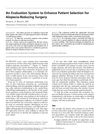 September 2002 in “Dermatologic Surgery”
 The evaluation system improves patient selection for hair loss surgery, leading to fewer but more successful surgeries.
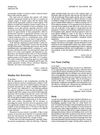 August 1998 in “Dermatologic Surgery”
 Dr. George A. Farber recommends using follicular unit transplantation for hair restoration because it gives a more natural look and has fewer problems compared to the older miniflap technique.
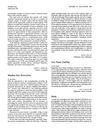 August 1998 in “Dermatologic Surgery”
 Use steroid creams without parabens and educate on hair transplant techniques to improve cosmetic surgery outcomes.
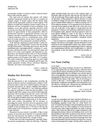 August 1998 in “Dermatologic Surgery”
 Follicular unit hair transplantation is better than Miniflap Hair Restoration due to less scarring and more natural results.
 July 1998 in “Dermatologic Surgery”
 Various techniques and tools for hair restoration were presented in 1998, including a mathematical model for donor area, use of lasers in surgery, methods for controlling grafted hair direction, and ways to increase graft yield. Satisfaction rates were around 39%, and studies showed trauma and dehydration can damage hair follicles.
Hair transplants are effective for male and female pattern baldness, have evolved in technique, and require careful planning for natural results and managing complications.