 May 2013 in “Trends in Urology & Men's Health”
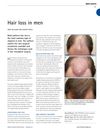
 Male-pattern hair loss is normal, often involves hormone effects on hair follicles, and can be treated with medication or surgery, but new treatments are being researched.
 January 2013 in “프로그램북(구 초록집)”
 Hair restoration surgery is improving, with less painful techniques like FUE and robotic systems, but they can be costly and require training.
 May 2005 in “Seminars in Plastic Surgery”
 Dr. Alfonso Barrera was recognized for his expertise and contributions to hair transplantation and plastic surgery.
 August 1999 in “Current Opinion in Otolaryngology & Head and Neck Surgery”
 In 1999, surgical hair restoration improved a lot, making hair look more natural with fewer procedures, thanks to better scalp treatments and a new method called follicular-unit hair grafting.
142 citations
,
June 2003 in “The journal of investigative dermatology. Symposium proceedings/The Journal of investigative dermatology symposium proceedings” Hair follicle stem cells can generate all hair cell types, skin, and sebaceous glands.
 September 2021 in “CRC Press eBooks”
 Lichen planopilaris causes permanent hair loss and scarring due to damage to hair follicles and can be mistaken for other hair loss conditions.
 15 citations
,
May 2005 in “Seminars in Plastic Surgery”
15 citations
,
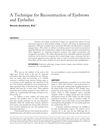
May 2005 in “Seminars in Plastic Surgery” The document concludes that hair follicular unit transplantation is an effective method for eyebrow and eyelash reconstruction, with patients happy despite needing regular trimming.
 13 citations
,
May 2004 in “Dermatologic Surgery”
13 citations
,
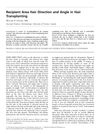
May 2004 in “Dermatologic Surgery” The paper concludes that copying the natural direction and angle of hair in transplants is key for a natural look and doesn't harm hair survival.
 June 2004 in “Dermatologic Surgery”
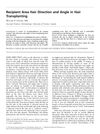
 Dr. Walter P. Unger suggests that copying a person's natural hair direction and angle during transplants leads to a more natural and fuller appearance.
 67 citations
,
September 2003 in “Plastic and Reconstructive Surgery”
67 citations
,
September 2003 in “Plastic and Reconstructive Surgery” Micrografts and minigrafts are safe and effective for hair transplantation in facial and scalp reconstruction, providing high patient satisfaction.
 2 citations
,
March 2013 in “Hair transplant forum international”
2 citations
,
March 2013 in “Hair transplant forum international” Research on "hair cloning" for hair loss shows potential for hair thickening but has not yet achieved new hair growth in humans.
20 citations
,
March 2014 in “PubMed” Hair follicle stem cell research has advanced in understanding and using these cells for hair growth and skin repair.
 20 citations
,
December 2010 in “Burns”
20 citations
,
December 2010 in “Burns” PL-FUT is an effective hair restoration method for burn victims with minimal scarring and high patient satisfaction.
May 2024 in “Al-Azhar International Medical Journal /Al-Azhar International Medical Journal” Combining PRP with FUE improves hair growth and healing better than FUE alone.
 March 2025 in “Bulletin of the Medical Institute of Continuing Education”
 FUE hair transplant is the best surgical treatment for hair loss, offering natural and lasting results.
 8 citations
,
July 2014 in “Hair transplant forum international”
8 citations
,
July 2014 in “Hair transplant forum international” Bio-enhanced hair restoration, using methods like growth factors, stem cells, and ATP, results in better hair growth and density than traditional hair transplants.
 15 citations
,
September 2016 in “Hair transplant forum international”
15 citations
,
September 2016 in “Hair transplant forum international” The "open punch" technique for hair transplantation can help reduce damage to hair grafts and may be especially useful for beginners and in cases with curly hair.
 January 2021 in “Hair transplant forum international”
 The T-Fast multi-implanter makes hair transplant surgeries quicker and cheaper.
 January 2019 in “Hair transplant forum international”
 FUE is recommended as the initial choice for hair transplant on skin grafts.
 1 citations
,
November 2009 in “Cambridge University Press eBooks”
1 citations
,
November 2009 in “Cambridge University Press eBooks” FUE is a less invasive hair restoration method with potential to become standard, offering benefits like reduced scarring and pain, but requires experience to minimize risks.
 2 citations
,
April 2018 in “Journal of Cosmetic Dermatology”
2 citations
,
April 2018 in “Journal of Cosmetic Dermatology” Tumescent fluid increases scalp hair angles, which may improve hair transplant results and reduce surgeon fatigue.
2 citations
,
January 2014 in “Journal of clinical and diagnostic research” Emerging therapies like stem cell and laser treatments show promise for hair regeneration.

Surgeons should evaluate new technologies critically, offer a range of services including non-surgical options, and be aware of marketing influences to meet patient needs and maintain a successful practice.
 September 2025 in “Modern medical technology”
 FUE with DHI effectively restores natural hair growth in difficult scalp areas.
September 2025 in “Scientific periodicals of Ukraine” FUE with DHI effectively restores natural hair growth in difficult areas.
 23 citations
,
November 2017 in “Stem cell investigation”
23 citations
,
November 2017 in “Stem cell investigation” Platelet lysate is more effective than activated autologous platelet-rich plasma or saline in improving hair growth after hair restoration surgery.
 November 2024 in “Cureus”
 Early diagnosis and personalized treatment can prevent damage from dissecting cellulitis after hair restoration surgery.
 September 2019 in “Journal of Investigative Dermatology”
 Researchers successfully used nude mice to study human hair growth, which could help with future hair research.
 April 2018 in “The journal of investigative dermatology/Journal of investigative dermatology”
 Researchers found a new way to isolate sweat glands from the scalp for study and culture.
 November 2017 in “Dermatologic Clinics”
 Men are increasingly interested in cosmetic treatments that enhance masculinity and address aging without downtime, with tailored approaches for different ethnicities and a focus on hair restoration and body contouring.