The robotic system for hair restoration surgery works well, giving similar results to manual techniques after 9 months.
 July 2013 in “Hair transplant forum international”
 Dr. James Harris successfully incorporated Follicular Unit Extraction into his hair restoration practice, offering more surgical options and achieving natural results with the help of a team approach.
March 2017 in “Hair transplant forum international” Asian men have varying hair densities, important for hair transplant success.
 January 2016 in “International journal of basic and clinical pharmacology”
 Steroid use can cause a rare eye condition called central serous retinopathy, which can lead to permanent vision damage.
 June 2025 in “Clinical Cosmetic and Investigational Dermatology”
 FUE hair transplantation is safe and effective for improving hair loss in children.
October 2025 in “Dermatologic Surgery” Twisted hair follicles can survive transplantation as well as intact ones.
 4 citations
,
January 2016 in “Dermatology practical & conceptual”
4 citations
,
January 2016 in “Dermatology practical & conceptual” A man developed a rare skin condition after a hair transplant surgery.
2 citations
,
July 2009 in “Medical hypotheses” Identifying specific hair follicle parts could lead to better hair loss treatments.
 13 citations
,
November 2018 in “Annals of Plastic Surgery”
13 citations
,
November 2018 in “Annals of Plastic Surgery” Nonshaven follicular unit extraction is a good hair transplant option that doesn't require shaving and can transplant up to 3000 grafts daily.
 3 citations
,
February 2021 in “Journal of Cosmetic Dermatology”
3 citations
,
February 2021 in “Journal of Cosmetic Dermatology” Long hair FUE, a hair transplant without shaving, is becoming more popular and surgeons should learn it.
 1 citations
,
May 2021 in “International Journal of Dermatology”
1 citations
,
May 2021 in “International Journal of Dermatology” Long hair follicular unit excision is effective for hair transplants, providing quick, natural-looking results with less pain but needs more time, staff, and skill.
 January 2024 in “Journal of cosmetic dermatology”
 Long-hair follicular unit excision improves hairline restoration results and patient satisfaction.
Robotic-assisted hair transplant is effective and less painful, but needs more evaluation for long-term results.

Suprapubic hair can be used as an extra donor source for hair transplants when scalp hair is limited.
 July 2008 in “Expert Review of Dermatology”
 Proper planning for hair transplants is crucial for natural results, with careful patient selection and strategic graft placement being key factors.
 54 citations
,
August 2009 in “Dermatologic Surgery”
54 citations
,
August 2009 in “Dermatologic Surgery” Modern hair transplants use small grafts for a natural look and drugs to prevent further loss, with high patient satisfaction.
 32 citations
,
July 2011 in “Facial Plastic Surgery”
32 citations
,
July 2011 in “Facial Plastic Surgery” New hair transplant methods offer more natural results and better graft survival, with ongoing research to increase donor hair options.
 31 citations
,
October 2017 in “Dermatologic Surgery”
31 citations
,
October 2017 in “Dermatologic Surgery” Hair transplants look natural, but the best method is debated, and PRP shows promise for hair regrowth.
 30 citations
,
October 2005 in “Journal of Investigative Dermatology Symposium Proceedings”
30 citations
,
October 2005 in “Journal of Investigative Dermatology Symposium Proceedings” The document concludes that hair transplantation is recommended for those not helped by medical treatments, but warns that high-density transplants may lower hair survival rates.
26 citations
,
January 2016 in “Journal of cutaneous and aesthetic surgery” Hair transplant combining scalp and beard hair with PRP was successful for scarring alopecia.
 25 citations
,
September 2014 in “Dermatologic Surgery”
25 citations
,
September 2014 in “Dermatologic Surgery” Hair transplants can effectively treat hair loss from CCCA in African American women if there's no inflammation.
 25 citations
,
May 2011 in “Annals of Plastic Surgery”
25 citations
,
May 2011 in “Annals of Plastic Surgery” Nonhead hair transplantation is effective for patients with limited head donor hair, but more research is needed.
 22 citations
,
January 2017 in “Indian Dermatology Online Journal”
22 citations
,
January 2017 in “Indian Dermatology Online Journal” Body hair transplants can treat baldness but differ from scalp hair and need more research on long-term results and side effects.
 15 citations
,
March 2000 in “Dermatologic Surgery”
15 citations
,
March 2000 in “Dermatologic Surgery” Hair transplantation has evolved since 1822, with significant advancements by key figures and widespread international growth.
 14 citations
,
March 2019 in “Facial Plastic Surgery Clinics of North America”
14 citations
,
March 2019 in “Facial Plastic Surgery Clinics of North America” Hair transplantation can help transgender patients affirm their gender identity.
 13 citations
,
September 2018 in “Hair transplant forum international”
13 citations
,
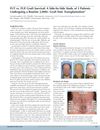
September 2018 in “Hair transplant forum international” FUE and FUT hair transplants have similar success rates, with FUE slightly better.
 12 citations
,
February 2007 in “Facial Plastic Surgery”
12 citations
,
February 2007 in “Facial Plastic Surgery” Hair transplantation techniques have improved over 12 years, with follicular unit grafting providing more natural results and potential future advances in automation and genetics.
11 citations
,
January 2018 in “Springer eBooks” The book helps surgeons improve hair transplants for Asian patients.
 10 citations
,
July 2019 in “Facial Plastic Surgery Clinics of North America”
10 citations
,
July 2019 in “Facial Plastic Surgery Clinics of North America” Facial hair transplantation has improved to give natural-looking beards and eyebrows with proper technique and patient care.
 8 citations
,
January 2003 in “Plastic and Reconstructive Surgery”
8 citations
,
January 2003 in “Plastic and Reconstructive Surgery” Hair transplants using follicular unit grafting can significantly improve appearance for men with advanced hair loss.