2 citations
,
May 2024 in “Australasian Journal of Dermatology” Early diagnosis, innovative treatments, and considering systemic conditions are crucial in dermatological care.
161 citations
,
August 2012 in “Seminars in cell & developmental biology” Hair growth and development are controlled by specific signaling pathways.
141 citations
,
May 2007 in “Cancer Research” CD34 is crucial for skin tumor development in mice.
81 citations
,
February 2016 in “Veterinary pathology” Progeroid mouse models show signs of early aging similar to humans, helping us understand aging better.
 61 citations
,
July 2011 in “PLOS ONE”
61 citations
,
July 2011 in “PLOS ONE” Spermidine may help reduce hair loss and deserves further testing as a treatment.
38 citations
,
December 2006 in “Journal of Investigative Dermatology” Keratin patterns in hair follicles help understand hair growth and potential hair and nail disorders.
28 citations
,
June 2012 in “International Journal of Molecular Medicine” Radiation damages hair stem cells and changes keratin expression, with Krt5 as a potential marker for radiation effects.
25 citations
,
January 2015 in “World journal of stem cells” Hair follicle stem cells can become different cell types and may help treat neurodegenerative disorders.
22 citations
,
May 2011 in “Molecular Biology of the Cell” Integrin-linked kinase is crucial for normal skin healing.
10 citations
,
April 2020 in “PloS one” Lack of Crif1 in hair follicle stem cells slows down hair growth in mice.
1 citations
,
December 2023 in “Biomolecules” Regulating cell death in hair follicles can help prevent hair loss and promote hair growth.
 1 citations
,
October 2022 in “Annals of Translational Medicine”
1 citations
,
October 2022 in “Annals of Translational Medicine” Cucurbitacin helps mice grow hair by blocking a protein that stops hair growth.
 April 2026 in “Amino Acids”
 Polyamines are crucial for skin tumor development, and inhibiting them can prevent tumors.
January 2026 in “Dermatologic Therapy” Folliculotropic Mycosis Fungoides requires stage-based treatment, with early stages using skin therapies and advanced stages needing aggressive treatments.
August 2025 in “American Journal of Dermatopathology” Accurate diagnosis and personalized treatment are crucial in dermatopathology.
Scalp involvement in primary cutaneous lymphomas is common and can be aggressive, requiring careful attention.
December 2023 in “Journal of clinical medicine” Some leukemia treatments can cause skin reactions similar to keratosis pilaris.
September 2023 in “JEADV Clinical Practice” Dermoscopy helps diagnose folliculotropic mycosis fungoides by identifying specific skin patterns.
FGF9 helps hair follicles grow in small-tailed Han sheep by affecting cell growth and certain signaling pathways.
January 2018 in “Contributions to management science” MicroRNAs are crucial for skin development, regeneration, and disease treatment.

The conclusion is that there's a link between high testosterone levels, insulin resistance, and certain skin conditions, regardless of obesity.
170 citations
,
November 2007 in “The journal of investigative dermatology/Journal of investigative dermatology” Skin can heal wounds without hair follicle stem cells, but it takes a bit longer.
58 citations
,
September 2019 in “EMBO Molecular Medicine” CDK4/6 inhibitors can protect hair cells from chemotherapy damage.
23 citations
,
March 2017 in “Journal of Investigative Dermatology” An artificial lipid barrier can restore hair growth in cases of SCD1 deficiency.
14 citations
,
January 2014 in “Annals of Dermatology” Some cases of folliculotropic mycosis fungoides may progress slowly and not need aggressive treatment.
8 citations
,
July 2016 in “Oncotarget” Lgr5+ stem cells do not cause skin tumors.
1 citations
,
February 2025 in “International Journal of Molecular Sciences” Enzymatic digestion is an efficient method for isolating cells from hair follicles for tissue-engineered skin.
Current hair regeneration methods show promise but face challenges in maintaining cell effectiveness and creating the right environment for hair growth.
 January 2022 in “Stem cell biology and regenerative medicine”
 The document concludes that hair follicle regeneration involves various factors like stem cells, noncoding dsRNA, lymphatic vessels, growth factors, minoxidil, exosomes, and induced pluripotent stem cells.
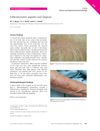 May 2014 in “Clinical and Experimental Dermatology”
 A 70-year-old woman with a rare skin condition improved after treatment with topical steroids and acitretin.