5 citations
,
January 2012 Infrared spectroscopy can analyze hair for forensic and medical insights.
 27 citations
,
March 2022 in “Forensic Toxicology”
27 citations
,
March 2022 in “Forensic Toxicology” Micro-segmental hair analysis helps detect drug use patterns and estimate drug consumption days.
 December 2025 in “International Journal For Multidisciplinary Research”
 Microscopic hair analysis is important in forensics but has limitations; new technologies are improving its accuracy.
 1 citations
,
January 2023 in “International journal of all research education and scientific methods”
1 citations
,
January 2023 in “International journal of all research education and scientific methods” Hair analysis is better than urine and blood for detecting past drug use.
4 citations
,
September 1999 in “Journal of Clinical Forensic Medicine” Caffeine in hair might help identify people, but it's not always reliable.
1 citations
,
February 1989 in “PubMed” Electrophoresis can effectively analyze hair proteins for forensic use, even after cosmetic treatments and up to 2 years of weathering.
9 citations
,
September 2010 in “Journal of Radioanalytical and Nuclear Chemistry” The woman likely died from acute arsenic poisoning, not chronic exposure.
17 citations
,
February 2022 in “Microscopy Research and Technique” Scanning electron microscopy and elemental analysis can help identify animal species by their hair patterns and elements.
 April 2026 in “Science & Justice”
 Hair analysis can confirm drug use but can't accurately measure how much was taken.
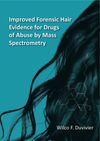
Forensic hair analysis for drugs is now more reliable and accurate.
 96 citations
,
September 2017 in “Analytica Chimica Acta”
96 citations
,
September 2017 in “Analytica Chimica Acta” Hair elemental analysis could be useful for health and exposure assessment but requires more standardization and research.
8 citations
,
October 2022 in “International Journal of Legal Medicine” Drugs in drowned bodies' hair remain stable in natural water, aiding forensic analysis.
32 citations
,
February 2018 in “Spectrochimica acta. Part A, Molecular and biomolecular spectroscopy” Cosmetic residues on individual hairs can be identified and differentiated using ATR FT-IR microspectroscopy.
June 2014 in “Toxicologie analytique et clinique/Annales de toxicologie analytique” Hair analysis can be unreliable due to external contamination and varying drug concentrations.
 27 citations
,
April 2011 in “International journal of legal medicine”
27 citations
,
April 2011 in “International journal of legal medicine” In situ DNA labeling in hair can help predict forensic DNA analysis success.
 2 citations
,
January 2013
2 citations
,
January 2013 Hair can help solve crimes by revealing personal and chemical information.
 2 citations
,
January 2017 in “Journal of Biotechnology Research Center”
2 citations
,
January 2017 in “Journal of Biotechnology Research Center” Hair dyes affect DNA analysis results, with the prepFiler kit working best for hair with follicles.
 1 citations
,
June 2012 in “Revista de la Escuela de Medicina Legal”
1 citations
,
June 2012 in “Revista de la Escuela de Medicina Legal” Microscopes are essential for telling apart human and animal hair in criminal investigations.
 11 citations
,
February 2019 in “Research and reports in forensic medical science”
11 citations
,
February 2019 in “Research and reports in forensic medical science” DNA phenotyping helps predict physical traits from DNA with varying accuracy and requires careful ethical and legal handling.
 7 citations
,
January 1990 in “Eisei kagaku”
7 citations
,
January 1990 in “Eisei kagaku” Chemical analysis of hair products on human hair can help identify specific brands and link suspects to victims.
1 citations
,
April 2009 in “Wiley Encyclopedia of Forensic Science” Microscopic hair analysis helps identify species and sometimes individuals in forensic science.
 1 citations
,
December 2024 in “Methods in molecular biology”
1 citations
,
December 2024 in “Methods in molecular biology” Hair proteins are complex and provide valuable genetic and biological information.
October 2025 in “Experimental & Molecular Medicine” Hair analysis is valuable for health and forensics but faces challenges like growth variability and contamination.
The research found that people's hair proteins vary, especially by ethnicity and body part, which could help identify individuals in forensic science.
The research found that people's hair proteins vary by individual and body part, with some differences between ethnic groups, which could help in forensics.
 1 citations
,
November 2022 in “DOAJ (DOAJ: Directory of Open Access Journals)”
1 citations
,
November 2022 in “DOAJ (DOAJ: Directory of Open Access Journals)” Male and female human hairs have different microscopic structures that can help in forensic analysis.
1 citations
,
August 1985 in “Proceedings annual meeting Electron Microscopy Society of America” SEM/EDX can analyze hair elements but struggles with trace elements, limiting its forensic use.
68 citations
,
August 2014 in “PeerJ” Human hair proteins vary by individual, body site, and ethnicity, useful for forensics.
14 citations
,
September 2017 in “Proteomics. Clinical applications” Hair protein analysis could improve medical testing and understanding of hair characteristics.
 47 citations
,
June 1996 in “International Journal of Legal Medicine”
47 citations
,
June 1996 in “International Journal of Legal Medicine” Hair analysis for drugs needs a better understanding of how drugs enter hair, considering factors like hair structure and pigmentation.