February 2024 in “Medicina” AFM can diagnose hair disorders by revealing detailed hair surface changes.
 January 2015 in “Springer eBooks”
 Hair damage shows as fragility, dullness, and discoloration, varies by ethnicity, and is worsened by cosmetic procedures and diseases.
 10 citations
,
May 2010 in “Journal of The American Academy of Dermatology”
10 citations
,
May 2010 in “Journal of The American Academy of Dermatology” A 38-year-old African American woman has a rare condition that prevents her from growing long hair.
 14 citations
,
January 1985 in “International Journal of Dermatology”
14 citations
,
January 1985 in “International Journal of Dermatology” The cause of alopecia areata was unknown, and while various treatments existed, no best treatment was agreed upon.
 1 citations
,
June 1938 in “New England journal of medicine/The New England journal of medicine”
1 citations
,
June 1938 in “New England journal of medicine/The New England journal of medicine” Hair analysis can offer clues about a person, but individual differences limit making precise identifications.
 7 citations
,
November 2013 in “Pediatric and Developmental Pathology”
7 citations
,
November 2013 in “Pediatric and Developmental Pathology” Over half of the children had abnormal hair under a microscope, with many having genetic hair conditions.
 December 2025 in “IP Indian Journal of Clinical and Experimental Dermatology”
 Hair shaft disorders often indicate genetic or systemic issues and are managed by minimizing damage.
 33 citations
,
September 2012 in “Australasian Journal of Dermatology”
33 citations
,
September 2012 in “Australasian Journal of Dermatology” Chemotherapy can cause hair changes similar to alopecia areata, which might lead to misdiagnosis.
 May 2017 in “InTech eBooks”
 Trichoscopy and trichogram are useful for diagnosing hair and scalp conditions.
 November 2019 in “Harper's Textbook of Pediatric Dermatology”
 Understanding normal hair growth and loss in children is key to diagnosing and treating hair disorders.
 21 citations
,
May 1996 in “Current problems in dermatology”
21 citations
,
May 1996 in “Current problems in dermatology” Detailed patient history and physical exams are crucial for diagnosing hair loss.
 19 citations
,
June 2009 in “Seminars in cutaneous medicine and surgery”
19 citations
,
June 2009 in “Seminars in cutaneous medicine and surgery” Proper education can prevent traction alopecia in women of color.
 5 citations
,
October 2013 in “Veterinary Clinics of North America: Equine Practice”
5 citations
,
October 2013 in “Veterinary Clinics of North America: Equine Practice” Some horses lose hair without inflammation or itching due to various conditions, and while mainly a cosmetic issue, diagnosis requires examination and biopsies, and breeding is not advised if it's hereditary.
 2 citations
,
January 2000 in “Elsevier eBooks”
2 citations
,
January 2000 in “Elsevier eBooks” The document explains how hair is studied in forensics to identify its source and its role in criminal investigations.
 1 citations
,
January 2013 in “Elsevier eBooks”
1 citations
,
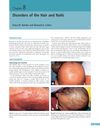
January 2013 in “Elsevier eBooks” The document reviews various hair and nail disorders, their causes, and treatments, emphasizing the need for proper diagnosis and the link between nail changes and systemic diseases.
 1 citations
,
August 2012
1 citations
,
August 2012 The document discusses various diseases of the outer ear, categorized by symptoms like redness, crusts, bumps, pus-filled lesions, lumps, ulcers, and hair loss.
 June 2021 in “International journal of research in dermatology”
 Shaving and avoiding brushing improved the patient's beard hair condition.
 59 citations
,
June 2008 in “Journal of The American Academy of Dermatology”
59 citations
,
June 2008 in “Journal of The American Academy of Dermatology” The article explains the genetic causes and symptoms of various hair disorders and highlights the need for more research to find treatments.
 12 citations
,
July 2016 in “Forensic science international”
12 citations
,
July 2016 in “Forensic science international” The research found that postmortem root bands in hair are likely caused by the breakdown of a specific part of the hair's inner structure after death.
 December 2023 in “Portuguese journal of dermatology and venereology”
 Trichoscopy can reliably distinguish between alopecia areata and trichotillomania.
 157 citations
,
June 2011
157 citations
,
June 2011 Dermatoscopy and videodermatoscopy are useful for diagnosing and monitoring various skin, hair, and nail conditions.
 126 citations
,
January 1987 in “Journal of The American Academy of Dermatology”
126 citations
,
January 1987 in “Journal of The American Academy of Dermatology” The document concludes that understanding hair structure is key to diagnosing hair abnormalities and recommends gentle hair care for management.
 69 citations
,
January 2015 in “Current problems in dermatology”
69 citations
,
January 2015 in “Current problems in dermatology” Trichoscopy is a quick, noninvasive method to diagnose hair and scalp disorders, often reducing the need for biopsies.
 68 citations
,
August 2012 in “Journal of the American Academy of Dermatology”
68 citations
,
August 2012 in “Journal of the American Academy of Dermatology” Dermatoscopy is a useful tool for diagnosing hair disorders and can help choose samples for more detailed analysis.
 66 citations
,
February 2013 in “Pediatric Dermatology”
66 citations
,
February 2013 in “Pediatric Dermatology” Dermoscopy improves diagnosis and treatment monitoring for children's skin infections, inflammations, and hair disorders.
 28 citations
,
January 2015 in “Skin appendage disorders”
28 citations
,
January 2015 in “Skin appendage disorders” Children with trichotillomania often pull hair from their scalp, and parents may not notice; stress can trigger it, and asking detailed questions helps in diagnosis and treatment.
 13 citations
,
February 2015 in “Actas Dermo-Sifiliográficas”
13 citations
,
February 2015 in “Actas Dermo-Sifiliográficas” The document concludes that recognizing specific histological features of different nonscarring alopecias is crucial for accurate diagnosis and understanding hair loss progression.
 8 citations
,
December 1981 in “Journal of The American Academy of Dermatology”
8 citations
,
December 1981 in “Journal of The American Academy of Dermatology” The document concludes that parathyroid diseases have a range of clinical features and outcomes, with some conditions being treatable and others having a high risk of mortality.
 June 2023 in “International journal of pharmaceutical quality assurance”
 Videodermoscopy is effective for diagnosing different types of non-scarring hair loss.

The document concludes that non-endocrine alopecia in pets varies in treatment effectiveness and often has a poor prognosis, especially in cats.