 25 citations
,
October 2018 in “PloS one”
25 citations
,
October 2018 in “PloS one” Key genes regulate hair follicle phase changes in Inner Mongolia cashmere goats.
6 citations
,
January 2011 in “European Journal of Dermatology” It's important to consider genetic hair disorders when diagnosing hair loss.
April 1996 in “Journal of Dermatological Science” 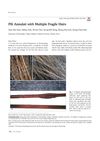 4 citations
,
January 2017 in “Annals of Dermatology”
4 citations
,
January 2017 in “Annals of Dermatology” Frequent hairdryer use may worsen hair fragility in people with Pili Annulati.
July 2022 in “Zenodo (CERN European Organization for Nuclear Research)”  8 citations
,
December 2020 in “Scientific reports”
8 citations
,
December 2020 in “Scientific reports” Selective breeding caused the unique curly hair in Mangalitza pigs.
10 citations
,
June 2024 in “Frontiers in Genetics” Different sheep breeds share similar genetic factors affecting wool fineness.
 4 citations
,
January 2011 in “Annals of Dermatology”
4 citations
,
January 2011 in “Annals of Dermatology” Researchers found a new mutation in the HR gene linked to a rare hair loss condition.
November 2025 in “Figshare” SQSTM1 is linked to increased risk of alopecia areata.
12 citations
,
July 2004 in “Molecular genetics and genomics” A new mouse mutation causes skin and hair defects due to a gene change.
88 citations
,
March 2004 in “Journal of Investigative Dermatology”  55 citations
,
November 2018 in “American journal of human genetics”
55 citations
,
November 2018 in “American journal of human genetics” Mutations in the LSS gene cause a rare type of hereditary hair loss.
 51 citations
,
September 2020 in “Cell Metabolism”
51 citations
,
September 2020 in “Cell Metabolism” Glutamine metabolism affects hair stem cell maintenance and their ability to change back to stem cells.
3 citations
,
August 2022 in “International Journal of Molecular Sciences” TSC2-/meth cells can cause skin lesions, hair growth, and lung issues, and may be treated with chromatin remodeling agents.
 October 2023 in “Psychiatry research. Case reports”
 A new HRAS gene variant may cause a range of symptoms including intellectual disability and psychiatric issues.
April 2016 in “Journal of Investigative Dermatology” Mutations in the TSPEAR gene cause a new form of ectodermal dysplasia affecting hair and tooth development.
April 2017 in “The journal of investigative dermatology/Journal of investigative dermatology” A girl with excessive hair growth had a genetic change on chromosome 17 that reduced the activity of two genes linked to hair growth.
July 2025 in “Journal of Investigative Dermatology” 50 citations
,
September 2012 in “Developmental Biology” Sprouty and FGF balance is crucial for normal feather shape and size.
 1 citations
,
August 2018 in “bioRxiv (Cold Spring Harbor Laboratory)”
1 citations
,
August 2018 in “bioRxiv (Cold Spring Harbor Laboratory)” A new mutation in the TMEM173 gene and a risk allele in IFIH1 cause a unique set of immune-related symptoms.
29 citations
,
October 2019 in “Journal of dermatological science” Studying premature aging syndromes helps understand human aging and suggests potential treatments.
 May 2015 in “Journal of the American Academy of Dermatology”
 Certain drugs and supplements may contribute to hair loss in the frontal hairline in older women.
 13 citations
,
August 2020 in “Frontiers in Cell and Developmental Biology”
13 citations
,
August 2020 in “Frontiers in Cell and Developmental Biology” Twist1 helps maintain important features of cells crucial for hair growth by working with Tcf4 and β-catenin.
28 citations
,
March 2014 in “Biological reviews/Biological reviews of the Cambridge Philosophical Society” The document concludes that hair curvature can be explained by the growth patterns caused by the shape and separation of cells in the hair follicle and is affected by specific molecular pathways.
 September 2025 in “Digital Commons - RU (Rockefeller University)”
 FOXC1 is essential for keeping hair follicle stem cells inactive and maintaining their environment for healthy hair growth.
19 citations
,
May 2008 in “Applied spectroscopy” Human hair has different protein structures in its cuticle and cortex.
42 citations
,
September 2003 in “Journal of Investigative Dermatology” A missing mK6irs1 gene causes hair loss in mice.
 March 2025 in “Experimental Dermatology”
 Overexpression of IKZF1 and Ikaros causes hair loss in mice similar to alopecia areata.
158 citations
,
February 2012 in “Journal of Investigative Dermatology” FGF18 helps keep hair in its resting phase, affecting hair growth cycles.