1 citations
,
September 2003 in “Praxis” Hair loss is a significant challenge with psychological effects, but treatments like minoxidil and finasteride are effective.
 18 citations
,
November 2012 in “Australasian Journal of Dermatology”
18 citations
,
November 2012 in “Australasian Journal of Dermatology” A 66-year-old man with a rare case of male frontal fibrosing alopecia did not regrow hair despite treatment.
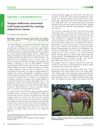 4 citations
,
January 2007 in “Australian Veterinary Journal”
4 citations
,
January 2007 in “Australian Veterinary Journal” A horse's sudden hair loss was caused by an allergic reaction to a coat conditioning powder.
 23 citations
,
April 2021 in “Journal of Clinical Medicine”
23 citations
,
April 2021 in “Journal of Clinical Medicine” Frontal Fibrosing Alopecia's cause is unclear, affects mainly postmenopausal women, and current treatments focus on stopping hair loss rather than regrowth.
 July 2024 in “Iranian journal of pathology”
 Frontal fibrosing alopecia mainly affects women over 50, causing hair loss and specific skin changes.
October 2017 in “Chinese Journal of Dermatology”  339 citations
,
February 2014 in “Journal of The American Academy of Dermatology”
339 citations
,
February 2014 in “Journal of The American Academy of Dermatology” Most patients with frontal fibrosing alopecia are postmenopausal women, and treatments like finasteride and dutasteride can improve or stabilize the condition.
 January 2022 in “Дерматологія та венерологія”
 Frontal fibrosing alopecia causes hair loss along the frontal hairline, mainly in postmenopausal women, and needs better treatments.
23 citations
,
December 1991 in “Annals of the New York Academy of Sciences” Balding scalps slow down hair growth.
 October 2024 in “Experimental Dermatology”
 The belief about hair shedding phases is likely incorrect and needs reevaluation.
 May 2015 in “Journal of The American Academy of Dermatology”
 Some people may temporarily lose more hair in certain areas after a hair transplant.
 January 2014 in “Springer eBooks”
 Chronic telogen effluvium is a condition where there is prolonged shedding of hair.
 December 2024 in “Australian Journal of General Practice”
 The woman's hair loss pattern doesn't match typical conditions like alopecia areata or female pattern hair loss.
 41 citations
,
July 2017 in “Journal of The American Academy of Dermatology”
41 citations
,
July 2017 in “Journal of The American Academy of Dermatology” Men with Frontal fibrosing alopecia typically lose hair on the front scalp and sometimes on sideburns and upper lip, with treatments showing varied success.
 107 citations
,
September 2002 in “Journal of Investigative Dermatology”
107 citations
,
September 2002 in “Journal of Investigative Dermatology” Researchers found that hair shedding happens mostly when new hair is growing and involves a unique process.
 14 citations
,
January 2006 in “Australasian journal of dermatology”
14 citations
,
January 2006 in “Australasian journal of dermatology” Alopecia areata can look like frontal fibrosing alopecia, making diagnosis hard.
 November 2025 in “SKIN The Journal of Cutaneous Medicine”
 "Dread shed" is common with minoxidil but less so with other hair loss treatments.
 March 2012 in “Journal of The American Academy of Dermatology”
 Dermoscopy helps diagnose different hair loss conditions, and characteristics vary among ethnicities and individual cases.
January 2024 in “Updates in clinical dermatology” Frontal fibrosing alopecia is a scarring hair loss condition mainly affecting postmenopausal women, with unclear causes.
 51 citations
,
January 2004 in “Skin Pharmacology and Physiology”
51 citations
,
January 2004 in “Skin Pharmacology and Physiology” The document explains hair growth and shedding, factors affecting it, and methods to evaluate hair loss, emphasizing the importance of skin biopsy for diagnosis.
8 citations
,
January 2002 in “Piel” Postmenopausal women may experience frontal hairline and eyebrow loss due to cicatricial fibrosis.
2 citations
,
August 2025 in “JAAD reviews.” Frontal fibrosing alopecia significantly affects men, often causing hair loss in eyebrows, beard, and sideburns.
 January 2025 in “Indian Journal of Dermatology”
 Frontal fibrosing alopecia is a challenging hair loss condition with no known cause or definitive treatment.
 16 citations
,
January 2007 in “Actas dermo-sifiliográficas/Actas dermo-sifiliográficas”
16 citations
,
January 2007 in “Actas dermo-sifiliográficas/Actas dermo-sifiliográficas” The document concludes that there are no reliable treatments for frontal fibrosing alopecia, with only temporary benefits from current options.
 2 citations
,
January 2017 in “Przegla̧d dermatologiczny”
2 citations
,
January 2017 in “Przegla̧d dermatologiczny” Two trichoscopic patterns found in hair loss: diffuse fibrotic and androgenetic alopecia, affecting treatment choice and regrowth chances.
July 2022 in “Zenodo (CERN European Organization for Nuclear Research)” January 2020 in “Hair therapy & transplantation” Telogen effluvium is a common hair loss where hair sheds due to stress but new hair still grows.
May 2016 in “DOAJ (DOAJ: Directory of Open Access Journals)” Asian women often experience distinct hair thinning at the top of the head.
 January 2018 in “Springer eBooks”
 Telogen Effluvium causes more hair loss because hair moves to the resting phase too soon.
 May 2023 in “Vestnik dermatologii i venerologii”
 Early-stage male pattern baldness shows two types of hair loss: one on the top of the head linked to hormonal changes, and another at the back of the head. The top hair loss responds well to specific treatment, while the back hair loss does not.