 46 citations
,
January 2015 in “Journal of The American Academy of Dermatology”
46 citations
,
January 2015 in “Journal of The American Academy of Dermatology” Trichoscopy helps diagnose and assess the severity of Frontal Fibrosing Alopecia.
 July 2025 in “Communications Biology”
 Rat vibrissae structure relates to their sensory function.
 1 citations
,
January 2014 in “Sen'i Gakkaishi”
1 citations
,
January 2014 in “Sen'i Gakkaishi” The new method reliably identifies and measures different animal hair fibers in textiles.
 April 2018 in “Journal of Investigative Dermatology”
 The conclusion is that a new method combining magnetic tweezers and traction force microscopy may help understand skin cell interactions and diseases.
 6 citations
,
April 2021 in “Scientific Reports”
6 citations
,
April 2021 in “Scientific Reports” Phytochrome A is crucial for normal metabolism and development in tomato seedlings under far-red light.
September 1989 in “PubMed” The method allows detailed observation of hair tissue structures.
26 citations
,
June 2016 in “Frontiers in Plant Science” Autofluorescence can sort plant cells without labeling.
29 citations
,
April 2011 in “Journal of Microscopy” The modified osmium method improves hair cortex staining for better visualization.
Isotretinoin reduced inflammation in tufted hair folliculitis, but hair tufting remained.
7 citations
,
March 2004 in “Journal of the American Academy of Dermatology” Tiger tail banding and hair abnormalities are reliable indicators for diagnosing trichothiodystrophy.
 April 2026 in “Diagnostics”
 PRP treatment improves chronic tendinopathy, and imaging biomarkers can track tendon changes.
1 citations
,
July 2024 in “Australasian Journal of Ultrasound in Medicine” Cutaneous ultrasound is a useful tool for diagnosing and assessing inflammation in tinea capitis.
 1 citations
,
January 2002
1 citations
,
January 2002 Hair shine can be measured by how it reflects laser light.
November 2025 in “Journal of Investigative Dermatology” 
Hair microscopy is a useful and affordable way to diagnose hair disorders.
August 2003 in “Special report” TrichoScan offers a painless way to analyze and manage hair loss.
9 citations
,
March 2005 in “International Journal of Cosmetic Science” The torsional method effectively evaluates hair damage and the performance of hair care ingredients.
July 2026 in “Dermatology Practical & Conceptual” Trichoscopy is important for diagnosing Folliculotropic Mycosis Fungoides on the scalp.
 July 2024 in “Dermatology Practical & Conceptual”
 LC-OCT helps accurately diagnose different types of infant hair loss without invasive methods.
9 citations
,
August 2020 in “Ecological indicators” Laser ablation ICP-MS is effective for tracking trace elements in polar bear hair over time.
 January 2025 in “Nature Communications”
 Large-scale reconstructions enhance understanding of vibrissal sensory mapping in the brain.
 1 citations
,
February 2018 in “Australasian journal of dermatology”
1 citations
,
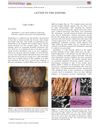
February 2018 in “Australasian journal of dermatology” Advanced imaging techniques are crucial for accurately diagnosing Monilethrix, a rare hair disorder.
 July 2018 in “Journal of The American Academy of Dermatology”
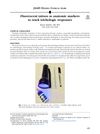
 Fluorescent tattoos are a good way to mark the scalp for hair treatments because they're accurate, invisible in normal light, and have low risk.
2 citations
,
February 2018 Raman spectroscopy can help identify cancerous skin tissue during surgery.
1 citations
,
August 1999 in “ACS symposium series” Polymer JR400 sticks to hair but washes off with detergent.
December 2021 in “Cosmetics” 35 citations
,
September 2011 in “The Journal of Dermatology” Trichoscopy helps accurately diagnose temporal triangular alopecia.
 2 citations
,
July 2017 in “IEEE Photonics Journal”
2 citations
,
July 2017 in “IEEE Photonics Journal” The study found that combining SHG and OCT effectively monitors skin wound healing in mice.
62 citations
,
December 2008 in “Journal of structural biology” Hair curvature in Japanese people is linked to specific cell types and filament arrangements in the hair cortex.
1 citations
,
January 2013 in “PubMed” Permanent wave treatment with thioglycolic acid changes hair structure by altering disulfide bonds.