28 citations
,
October 2014 in “Development” Fz3 and Fz6 can partially replace each other in tissue polarity and axon guidance.
May 2023 in “Zenodo (CERN European Organization for Nuclear Research)”  February 2024 in “Advanced Materials”
 OG6, a sugar-based material, can stimulate hair growth.
July 2024 in “Journal of Investigative Dermatology” The Fas/FasL pathway may play a role in alopecia areata.
 4 citations
,
January 2020 in “Skin appendage disorders”
4 citations
,
January 2020 in “Skin appendage disorders” A woman with an unusual pattern of hair loss was confirmed to have Frontal Fibrosing Alopecia and treated with specific medications.
 1 citations
,
November 1992 in “Indian Dermatology Online Journal”
1 citations
,
November 1992 in “Indian Dermatology Online Journal” FUE is a popular hair restoration method that uses body hair and leaves no scars.
October 2022 in “Hair Transplantation” The ISHRS standardized FUE terminology for global use in hair restoration.
November 2025 in “Journal of Investigative Dermatology” 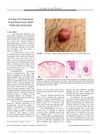 1 citations
,
February 2017 in “The American journal of dermatopathology/American journal of dermatopathology”
1 citations
,
February 2017 in “The American journal of dermatopathology/American journal of dermatopathology” A man with a skin nodule was diagnosed with a rare skin condition called cutaneous focal mucinosis, which can be confused with other skin cancers.
 4 citations
,
September 2010 in “Journal of Dermatological Science”
4 citations
,
September 2010 in “Journal of Dermatological Science” A new gene location for Keratosis follicularis squamosa was found on chromosome 7p14.3-7p12.1.
11 citations
,
January 2025 in “Marine Drugs” All extraction methods can produce similar quality fucoidan, but a holistic approach is needed for method selection.
2 citations
,
June 2021 in “Sultan Qaboos University medical journal” Familial frontal fibrosing alopecia is rare, mostly affects women, and often occurs between sisters or mother-daughter pairs.
 April 2018 in “Journal of Investigative Dermatology”
 Glycogen metabolism is important for energy and processes in human hair follicles, and hair follicles may produce glucose from lactate.
July 2026 in “Dermatology Practical & Conceptual” Trichoscopy is important for diagnosing Folliculotropic Mycosis Fungoides on the scalp.
January 2024 in “Updates in clinical dermatology” Frontal fibrosing alopecia is a scarring hair loss condition mainly affecting postmenopausal women, with unclear causes.
Fgf20 is crucial for hair follicle formation by influencing cell movement and growth.
5 citations
,
September 2023 in “International Journal of Molecular Sciences” FucoPol hydrogel membranes are promising for delivering drugs on the skin.
37 citations
,
December 2020 in “PLANT PHYSIOLOGY” A mutant FERONIA gene affects root hair growth at high temperatures.
92 citations
,
May 2004 in “Journal of Investigative Dermatology”  5 citations
,
June 2023 in “BMC genomics”
5 citations
,
June 2023 in “BMC genomics” A specific gene mutation causes long hair in Angora rabbits.
2 citations
,
October 2015 in “Mikrobiyoloji bülteni” A woman in Turkey with a scalp infection was cured using oral and topical antifungals after a recurrence due to not following the treatment properly.
28 citations
,
June 1995 in “The Journal of Dermatology” The flaky skin mouse mutation is a natural model for studying human psoriasis.
 119 citations
,
November 2014 in “Trends in Cell Biology”
119 citations
,
November 2014 in “Trends in Cell Biology” Fibroblast growth factor receptor signaling controls cell development and repair, and its malfunction can cause disorders and cancer, but it also offers potential for targeted therapies.
 1 citations
,
July 2023 in “Nature communications”
1 citations
,
July 2023 in “Nature communications” MOF controls key genes for skin development by regulating mitochondrial and ciliary functions.
23 citations
,
March 2019 in “Gene” Editing the FGF5 gene in sheep increases wool length, confirming its role in hair growth.
 January 2025 in “Indian Journal of Dermatology”
 Frontal fibrosing alopecia is a challenging hair loss condition with no known cause or definitive treatment.
6 citations
,
October 2011 in “InTech eBooks” Soybean seeds have the most carbohydrates at growth stage R 5.5.
 13 citations
,
March 2020 in “Genes”
13 citations
,
March 2020 in “Genes” Disrupting the FGF5 gene in rabbits leads to longer hair by extending the hair growth phase.
44 citations
,
July 1993 in “Journal of Investigative Dermatology”