 January 2025 in “BMJ Case Reports”
 Precocious puberty can signal familial adenomatous polyposis.
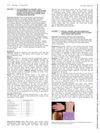
A TNFAIP3 gene mutation can cause unusual and varied symptoms of lupus and Sjogren's syndrome.
 January 2004 in “Enshou saisei”
 Follistatin is important for hair growth and could help treat hair loss.
5 citations
,
July 2014 in “Molecular Biology Reports”  58 citations
,
October 2016 in “Journal of Investigative Dermatology”
58 citations
,
October 2016 in “Journal of Investigative Dermatology” Activating Nrf2 protects human hair follicles from oxidative stress and helps prevent hair growth inhibition.
 8 citations
,
November 2018 in “Australasian Journal of Dermatology”
8 citations
,
November 2018 in “Australasian Journal of Dermatology” Frontal fibrosing alopecia in families shows similar signs to individual cases and may have a genetic link.
 April 2026 in “Human Genome Variation”
 The MBTPS2 gene variant c.970+5G>A is a common mutation causing IFAP syndrome.
 1 citations
,
April 2020 in “bioRxiv (Cold Spring Harbor Laboratory)”
1 citations
,
April 2020 in “bioRxiv (Cold Spring Harbor Laboratory)” Polyamines are important in deciding hair follicle stem cell behavior, affecting hair growth and loss.
July 2026 in “Scientific Reports” Felting wool changes its fatty acid makeup, affecting its structure and water resistance.
7 citations
,
January 2011 Collagen XVIII is crucial for maintaining tissue structure and function in the brain, kidneys, and hair.
 11 citations
,
September 2012 in “The journal of investigative dermatology/Journal of investigative dermatology”
11 citations
,
September 2012 in “The journal of investigative dermatology/Journal of investigative dermatology” A mutation in the KRT71 gene causes a hair disorder by disrupting hair follicle structure and texture.
 April 2023 in “Journal of Investigative Dermatology”
 Being allergic to linalool, a common fragrance ingredient, might contribute to developing frontal fibrosing alopecia.
 3 citations
,
December 2022 in “npj Regenerative Medicine”
3 citations
,
December 2022 in “npj Regenerative Medicine” HSPGs help control stem cell behavior, affecting hair growth and offering a target for hair loss treatments.
 48 citations
,
July 1996 in “Human & Experimental Toxicology”
48 citations
,
July 1996 in “Human & Experimental Toxicology” Human enzymes can detoxify harmful substances but might also increase their cancer risk.
8 citations
,
December 2003 in “Experimental Dermatology” Altering the keratin 17 gene in mice hair follicles caused temporary hair issues, but changes were minimal and short-lived.
88 citations
,
March 2004 in “Journal of Investigative Dermatology”  12 citations
,
March 1995 in “Journal of the American Chemical Society”
12 citations
,
March 1995 in “Journal of the American Chemical Society” Finasteride modifies 5-alpha-reductases through a two-step process, affecting inhibitor potency and possibly causing side effects.
January 2024 in “Updates in clinical dermatology” Frontal fibrosing alopecia is a scarring hair loss condition mainly affecting postmenopausal women, with unclear causes.
 1 citations
,
February 2023 in “All Life”
1 citations
,
February 2023 in “All Life” The research identified proteins that change as goat hair follicles begin to form, helping to understand how cashmere grows.
January 1976 in “Revista de Estudios Agrosociales” Frontal fibrosing alopecia and vitiligo might be linked by similar immune issues.
 13 citations
,
September 2019 in “Scientific Reports”
13 citations
,
September 2019 in “Scientific Reports” High levels of the protein Flightless I worsen ulcerative colitis symptoms in mice.
 30 citations
,
December 2017 in “Journal of The American Academy of Dermatology”
30 citations
,
December 2017 in “Journal of The American Academy of Dermatology” New criteria for diagnosing frontal fibrosing alopecia include specific scalp and eyebrow hair loss as major factors and other hair loss areas and hair analysis as minor factors.
January 2013 in “edoc (University of Basel)” TRF1 is crucial for creating and maintaining stem cells and marks both pluripotent and adult stem cells.
6 citations
,
September 2018 in “ACS applied bio materials” Calcium fatty acid deposits found in human hair can change its appearance and feel.
65 citations
,
July 1984 in “Journal of Investigative Dermatology” 12 citations
,
September 2022 in “Frontiers in Genetics” Enhancing CD8+ T cell function to induce ferroptosis in tumor cells may help treat skin melanoma.
 17 citations
,
June 2019 in “BMC genomics”
17 citations
,
June 2019 in “BMC genomics” Non-coding RNAs help control hair growth in cashmere goats.
January 2006 in “Linchuang pifuke zazhi” Stem cell factor and certain proteins help melanocytes from hair follicles move and attach better, aiding vitiligo repigmentation.
 1 citations
,
October 2022 in “Veterinary pathology”
1 citations
,
October 2022 in “Veterinary pathology” Some canine hair follicle tumors contain amyloid deposits, with a protein called CK5 involved in their formation.
 January 2022 in “bioRxiv (Cold Spring Harbor Laboratory)”
 Skin lesions in Carney complex are likely caused by a specific group of skin cells that promote pigment production due to a genetic mutation.