 November 2023 in “Facial Plastic Surgery”
 Follicular Unit Excision (FUE) is a popular, less invasive hair restoration method with high patient satisfaction when done correctly, despite some complications from untrained practitioners.
 14 citations
,
March 2017 in “Plastic and reconstructive surgery. Global open”
14 citations
,
March 2017 in “Plastic and reconstructive surgery. Global open” Hair follicle damage happens during hair transplants and can impact success; better surgical methods are needed.
 6 citations
,
May 2004 in “Facial Plastic Surgery Clinics of North America”
6 citations
,
May 2004 in “Facial Plastic Surgery Clinics of North America” By 2004, Follicular Unit Transplantation (FUT) was the most effective method for surgical hair restoration, while the newer Follicular Unit Extraction (FUE) had more disadvantages and was less recommended.
 October 2020 in “Springer eBooks”
 Hair restoration has evolved to use follicular units for more natural results, moving away from older methods like large plug grafts and scalp reductions.
 3 citations
,
May 2021 in “Indian Dermatology Online Journal”
3 citations
,
May 2021 in “Indian Dermatology Online Journal” FUE is a versatile hair transplant technique with many uses and good outcomes when performed with skill.
 1 citations
,
April 2020 in “Journal of Cosmetic Dermatology”
1 citations
,
April 2020 in “Journal of Cosmetic Dermatology” FUE megasession hair transplantation effectively treats large area hair loss with less discomfort and shorter operation time.
September 2025 in “Scientific periodicals of Ukraine” FUE with DHI effectively restores natural hair growth in difficult areas.
 13 citations
,
September 2002 in “Dermatologic Surgery”
13 citations
,
September 2002 in “Dermatologic Surgery” Effective repair of bad hair transplants requires skilled techniques and careful use of donor hair, with strategies like reimplantation and camouflage, and new methods to minimize scarring.
 13 citations
,
January 2013 in “Dermatologic Surgery”
13 citations
,
January 2013 in “Dermatologic Surgery” Experienced hair transplant surgeons suggest a limited number of hair follicles can be used for transplants, and recommend conservative methods to avoid scarring and depletion.
 4 citations
,
January 2012 in “International Society of Hair Restoration Surgery”
4 citations
,
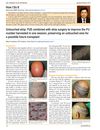
January 2012 in “International Society of Hair Restoration Surgery” Combining FUE and strip surgery increases hair harvested in one session and keeps options open for future transplants.
 May 2026 in “SAIMSARA Journal”
 Success in hair transplants depends on personalized techniques and careful planning.
 March 2026 in “Clinical Cosmetic and Investigational Dermatology”
 Effective hair removal is crucial for better cosmetic results in forehead flap reconstruction, with laser hair removal being the preferred method.

The FUE technique is a popular, less invasive option for hair transplant with quicker recovery and fewer scars compared to other methods.
 April 2021 in “Advances in Cosmetic Surgery”
 Hair restoration can be achieved through non-surgical treatments like minoxidil, antiandrogens, phototherapy, and PRP procedures, or through surgical methods like hair transplantation. Continued treatment is needed to maintain results, and full results are visible after 12-18 months.
 June 2020 in “Journal of cosmetic medicine”
 Eyebrow transplants use hair from the scalp or pubic area, with blonde hair looking more natural, and can leave scars depending on the method used.
Robotic FUE hair transplants are better for men because they are precise, safe, and look natural.
December 2024 in “Likarska sprava” Both FUE and DHI techniques are effective for eyebrow transplantation, with high patient satisfaction.
 November 2019 in “Journal of Aesthetic Nursing”
 The article concludes that a thorough diagnosis and treatment plan, including medications, non-invasive methods, or surgery, is important for managing hair loss, with a combination of minoxidil and finasteride being particularly effective.
 October 2010 in “Journal of Drugs in Dermatology”
 In 2010, Marco Toscani's team introduced a new scalpel for hair transplants that cuts parallel to hair follicles, reducing hair loss and improving on previous methods.

The DNS FUE technique offers discreet hair transplants with high satisfaction and low damage rates.
 March 2009 in “Medical & surgical dermatology”
 Women with androgenetic alopecia have fewer terminal hairs, phenol in nail surgery is safe, and a new hair transplant method is faster and less damaging.
 October 2023 in “Facial Plastic Surgery”
 Local anesthesia with a "ring block" is preferred for pain control during FUE hair transplant procedures.
October 2022 in “Hair Transplantation” Motorized FUE with blunt punches improved hair restoration by reducing damage during graft harvesting.
 October 2022 in “IntechOpen eBooks”
 Hair loss due to scarring can be treated by reducing inflammation, removing scar tissue, and transplanting hair. The Follicular Unit Extraction technique is effective but requires skill and time. Future focus should be on scar-less healing methods.
 November 2023 in “Facial Plastic Surgery”
 The document concludes that FUE hair restoration is often misleadingly advertised and raises ethical concerns regarding patient evaluation and business practices.
October 2022 in “Hair Transplantation” The ISHRS standardized FUE terminology for global use in hair restoration.
September 2004 in “Evidencia actualizacion en la práctica ambulatoria” Using finasteride and doxazosina together works better for treating benign prostatic hyperplasia than using just one.
 November 2025 in “Indian Journal of Plastic Surgery”
 The new technique increases hair graft yield and minimizes scarring in hair restoration.
 November 2023 in “Наука і техніка сьогодні”
 Ukraine offers cheaper hair restoration, but the USA leads in technology.
July 2020 in “Hair transplant forum international” Placing hair grafts in the scar is the best way to fix widened FUT donor scars.