January 2012 in “Heilongjiang xumu shouyi” EGF and KGF affect wool fineness in Gansu alpine Merino sheep.
 1 citations
,
February 2009 in “Journal of Investigative Dermatology”
1 citations
,
February 2009 in “Journal of Investigative Dermatology” Lipase H is important for hair follicle function and shaping hair fibers.
11 citations
,
August 1995 in “Journal of Investigative Dermatology” 15 citations
,
February 2011 in “Experimental Dermatology” Betamethasone dipropionate reduced skin thickness, fish oil increased it, and combined treatment had no significant effect.
 13 citations
,
July 2012 in “Pigment Cell & Melanoma Research”
13 citations
,
July 2012 in “Pigment Cell & Melanoma Research” A mutation in the Adam10 gene causes freckle-like spots on Hairless mice.
January 2005 in “China Surfactant Detergent & Cosmetics” Black mud boosts collagen, enhances hair growth, and smoothness in mice.
 10 citations
,
November 2012 in “International Journal of Dermatology”
10 citations
,
November 2012 in “International Journal of Dermatology” Certain diseases like AIDS and lupus can make African hair become silky.
 8 citations
,
December 2003 in “Materials Research-ibero-american Journal of Materials”
8 citations
,
December 2003 in “Materials Research-ibero-american Journal of Materials” Polyquaternium 7® builds up on hair, improving its look and feel, and AFM is good for measuring these changes.
 42 citations
,
September 2015 in “Gene”
42 citations
,
September 2015 in “Gene” FGF5s can block the effects of FGF5, which may help control hair growth in cashmere goats.
17 citations
,
July 1984 in “British journal of dermatology/British journal of dermatology, Supplement” The four patients have a unique type of ichthyosis affecting hair follicles.
 31 citations
,
November 2016 in “Cell Reports”
31 citations
,
November 2016 in “Cell Reports” Touch sensitivity in mouse skin decreases during hair growth due to changes in touch receptors.
Treating hair with 1M sodium hydroxide increases its friction, making it better for small medical knots.
Researchers made a mouse model with curly hair and hair loss by editing a gene.
January 2013 in “Shanghai Textile Science & Technology” Milk protein treatment reduces pilling in rabbit hair fabric.
7 citations
,
May 1988 in “International Journal of Dermatology” The patient's hair has unique structural differences with alternating bright and dark bands.
28 citations
,
February 2010 in “Experimental Dermatology” The frizzy mouse and hairless rat mutations are due to changes in the Prss8 gene.
January 2025 in “Animal Science Journal” Golden takin's hair structure is adapted to maintain body temperature in harsh winters.
 1 citations
,
November 2020 in “Research Square (Research Square)”
1 citations
,
November 2020 in “Research Square (Research Square)” The study found specific skin cells and genes that may affect the quality of cashmere in Liaoning Cashmere Goats.
 November 2023 in “Journal of animal science/Journal of animal science ... and ASAS reference compendium”
 SLICK cattle have better heat tolerance due to specific gene expression and pathway differences.
 April 2018 in “Journal of Investigative Dermatology”
 The keratin network in mouse skin changes during cornification and affects the skin's protective barrier.
8 citations
,
January 2014 in “Indian Dermatology Online Journal” Trichostasis spinulosa is a common but often unnoticed skin condition involving bundled vellus hairs, especially in people with darker skin or UV exposure.
 March 2005 in “International Journal of Cosmetic Science”
 A new method helps understand hair shine and various products improve hair care.
12 citations
,
January 2013 in “Indian dermatology online journal” The document reports a unique case of woolly hair with a combination of conditions not previously seen together.
37 citations
,
January 1997 in “Journal of Pharmaceutical Sciences” Hairless rats absorb substances through their skin more easily than hairy rats.
 1 citations
,
October 2021 in “Australasian Journal of Dermatology”
1 citations
,
October 2021 in “Australasian Journal of Dermatology” The document's conclusion cannot be provided because the document is not available or cannot be understood.
March 2004 in “Journal of Investigative Dermatology” Razor bumps are linked to a genetic variant, misoprostol helps erythromelalgia pain, steroid ointments don't affect skin rhythms, and certain antibodies are common in localized scleroderma.
 January 2012 in “International Journal of Trichology”
 Two siblings have a rare genetic condition causing curly, coarse hair.
 11 citations
,
June 2012 in “Acta histochemica”
11 citations
,
June 2012 in “Acta histochemica” Mice with a Gsdma3 gene mutation have thicker skin and longer hair follicle openings due to increased β-catenin levels.
 33 citations
,
August 2013 in “British Journal of Dermatology”
33 citations
,
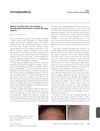
August 2013 in “British Journal of Dermatology” Lack of small, fine hair on the front hairline is a key sign of frontal fibrosing alopecia.
11 citations
,
November 2003 in “PubMed” Treatments with certain oils and resins make hair shinier, while zinc oxide and synthetic sebum make it duller.