 1 citations
,
January 2017 in “Springer eBooks”
1 citations
,
January 2017 in “Springer eBooks” Flavonoids and Nod factors are key for legume plant growth and could help in sustainable farming.
18 citations
,
July 2010 in “Journal of the American Academy of Dermatology” Folliculotropic mycosis fungoides can look like alopecia areata.
 22 citations
,
August 2006 in “Critical Reviews in Plant Sciences”
22 citations
,
August 2006 in “Critical Reviews in Plant Sciences” The tropical legume Sesbania rostrata can form nodules in waterlogged conditions using a different method that involves plant hormones and specific genes.
 September 2022 in “Piretc”
 The document's conclusion cannot be provided because the document is not accessible or understandable.
4 citations
,
January 2020  January 2025 in “Journal of Case Reports and Scientific Images”
 Early diagnosis and treatment are crucial for managing Folliculotropic Mycosis Fungoides on the scalp.
 65 citations
,
January 2005 in “American journal of clinical dermatology”
65 citations
,
January 2005 in “American journal of clinical dermatology” Children with scalp fungal infections need proper diagnosis and treatment, usually with antifungal medications, and newer drugs may offer quicker recovery.
January 2026 in “Dermatologic Therapy” Folliculotropic Mycosis Fungoides requires stage-based treatment, with early stages using skin therapies and advanced stages needing aggressive treatments.
January 2024 in “Research Portal Denmark” H+-ATPase is crucial for plant growth and can be influenced by microbial compounds, affecting root hair development.
84 citations
,
January 1987 in “The Pediatric Infectious Disease Journal” Griseofulvin is more effective than ketoconazole for treating tinea capitis in children.
2 citations
,
November 2025 in “Plant Molecular Biology”  12 citations
,
March 2010 in “Revista iberoamericana de micología”
12 citations
,
March 2010 in “Revista iberoamericana de micología” The cat died from a hard-to-treat fungal infection despite various treatments.
109 citations
,
February 2018 in “CB/Current biology” ERULUS controls root hair growth by regulating cell wall composition and pectin activity.
Nod factor can trigger changes in legume root hairs with just one molecule.
 June 2026 in “New Phytologist”
 Iron-dependent hormones help wheat roots adapt to temperature stress.
2 citations
,
September 2025 in “BMC Genomics” Maize root hairs adapt differently to mild and severe cold, with mild stress allowing some growth and severe stress stopping growth to focus on defense.
 September 2024 in “Cermin Dunia Kedokteran”
 Improving medical training is key to eradicating frambusia by 2030.
 February 2024 in “Planta”
 TRM21 helps control flavonoid production and root hair growth in Arabidopsis thaliana.
449 citations
,
December 2005 in “The Plant Cell” BIK1 gene helps plants resist some pathogens but makes them more vulnerable to others.
January 1976 in “Revista de Estudios Agrosociales” Frontal fibrosing alopecia and vitiligo might be linked by similar immune issues.
5 citations
,
September 2008 in “Journal of the Chinese Medical Association” A kidney transplant patient got a fungal infection from her dogs, but treatment improved her condition and hair grew back.
29 citations
,
December 1994 in “Soil Biology and Biochemistry” Inoculating Arabidopsis with Azospirillum brasilense significantly increases root hair length.
Arabidopsis Formin 2 stabilizes actin filaments to aid cell-to-cell trafficking.
 4 citations
,
February 2012 in “Chinese Science Bulletin”
4 citations
,
February 2012 in “Chinese Science Bulletin” The MtAnn3 gene affects root hair growth and is influenced by cytokinin.
 September 2023 in “Plant journal”
 A protein called GIS3 is important for the growth of root hairs in Arabidopsis by controlling two genes with the help of certain growth signals.
 September 2023 in “Journal of the American Academy of Dermatology”
 Oral terbinafine is more effective than griseofulvin for treating certain scalp infections in children.
 1 citations
,
February 2023 in “Plant disease”
1 citations
,
February 2023 in “Plant disease” 'Eclipta prostrata' plants in Taiwan are infected with 'Candidatus Phytoplasma aurantifolia'.
 17 citations
,
January 2009 in “Nippon Ishinkin Gakkai Zasshi”
17 citations
,
January 2009 in “Nippon Ishinkin Gakkai Zasshi” A 10-year-old boy recovered from a scalp infection caused by a fungus after treatment with itraconazole.
2 citations
,
January 2006 in “Indian Journal of Veterinary Pathology” Trichophyton mentagrophytes causes skin issues and nutrient deficiencies in young sheep, especially in winter.
 June 2024 in “Okayama University Scientific Achievement Repository (Okayama University)”
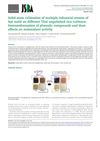
 Koji mold on unpolished Thai-colored rice boosts antioxidant activity more than on other rice types.