 2 citations
,
March 2022 in “Modern Rheumatology Case Reports”
2 citations
,
March 2022 in “Modern Rheumatology Case Reports” A medicine called tofacitinib worked to treat a hair loss condition linked with a muscle and skin disease.
 9 citations
,
May 2021 in “International Journal of Dermatology”
9 citations
,
May 2021 in “International Journal of Dermatology” The trial showed that a new under-the-tongue treatment for severe hair loss was somewhat effective in a small group of people.
 April 2016 in “Journal of the American Academy of Dermatology”
 Tofacitinib helped a person with total body hair loss grow hair again without bad side effects.
 November 2005 in “Reactions Weekly”
 A man treated with gefitinib for lung cancer grew new hair on his bald scalp.
November 2025 in “Phytomedicine” Modified Changfa Zirong Powder improves hair growth in androgenetic alopecia.
12 citations
,
May 2017 in “Journal of pharmaceutical and biomedical analysis” The method shows that zinc pyrithione and climbazole from anti-dandruff shampoo effectively reach the scalp.
 September 2024 in “Journal of the American Academy of Dermatology”
 Phenoxyethanol in hair growth products may be linked to frontal fibrosing alopecia.
7 citations
,
December 2023 in “International Journal of Molecular Sciences” Forsythiaside A helps protect cells and liver from damage by reducing oxidative stress and boosting antioxidants.
 October 2020 in “International Journal of Research in Dermatology”
 The review suggests more research is needed to understand Frontal fibrosing alopecia, a condition causing hairline recession in postmenopausal women.
 339 citations
,
February 2014 in “Journal of The American Academy of Dermatology”
339 citations
,
February 2014 in “Journal of The American Academy of Dermatology” Most patients with frontal fibrosing alopecia are postmenopausal women, and treatments like finasteride and dutasteride can improve or stabilize the condition.
 January 2026 in “Current Issues in Molecular Biology”
 FGF-7 helps hair grow by activating hair follicles and is a promising target for hair loss treatments.
 1 citations
,
September 2016 in “Journal of Dermatological Science”
1 citations
,
September 2016 in “Journal of Dermatological Science” FGF18 treatment during hair's resting phase can protect against hair loss from radiation.
The research developed new fortilin protein constructs for potential heart disease treatments.
 20 citations
,
January 2014 in “Journal of the European Academy of Dermatology and Venereology”
20 citations
,
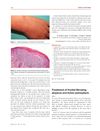
January 2014 in “Journal of the European Academy of Dermatology and Venereology” The critique highlights an error in a review about hair loss treatment, stressing the need for accurate information and caution due to poor evidence quality.
1 citations
,
May 2020 in “bioRxiv (Cold Spring Harbor Laboratory)” The fer-ts mutation in plants prevents root hair growth at high temperatures.
August 2025 in “Biomolecules” Fibroblast growth factors could be a better, safer treatment for hair loss than current options.
 33 citations
,
January 2015 in “Journal of Cosmetic Dermatology”
33 citations
,
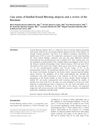
January 2015 in “Journal of Cosmetic Dermatology” Familial frontal fibrosing alopecia affects premenopausal women too, and early diagnosis is important, but no proven medication exists yet.
 December 2021 in “Research Square (Research Square)”
 Hair follicle sampling is a feasible method to measure FMRP and FMR1 mRNA levels in children.
13 citations
,
February 2017 in “Clinical rheumatology” Tofacitinib may help treat nail dystrophy, especially when other treatments fail.
25 citations
,
September 2005 in “Journal of Investigative Dermatology Symposium Proceedings” Adding zinc to pyrithione zinc improves its effectiveness against scalp conditions like dandruff.
 September 2022 in “XXXIX Congresso Brasileiro de Reumatologia”
 Tofacitinib may effectively treat skin symptoms in difficult cases of dermatomyositis.
4 citations
,
April 2019 in “DOAJ (DOAJ: Directory of Open Access Journals)” 5-α-reductase inhibitors, intralesional steroids, and hydroxychloroquine are the most effective treatments for frontal fibrosing alopecia.
 August 2021 in “Annals of Agricultural and Environmental Medicine”
 The article concludes that understanding Frontal Fibrosing Alopecia (FFA) is crucial for effective treatment, which includes medication like 5α-reductase inhibitors and hydroxychloroquine.
6 citations
,
May 2022 in “Pharmaceutics” Zinc pyrithione dissolves quickly on the skin and in hair follicles, especially in smaller particles.
July 2020 in “DOAJ (DOAJ: Directory of Open Access Journals)” Excessive sun protection might contribute to frontal fibrosing alopecia.
 January 2025 in “Indian Journal of Dermatology”
 Frontal fibrosing alopecia is a challenging hair loss condition with no known cause or definitive treatment.
 January 2012 in “Yearbook of Dermatology and Dermatologic Surgery”
 Taking finasteride daily can effectively and safely increase hair density and thickness for women with hair loss.
29 citations
,
June 2015 in “Kidney International” Disrupting the Flcn gene in mice causes early kidney cysts and tumors, which can be treated with rapamycin.