April 2023 in “bioRxiv (Cold Spring Harbor Laboratory)” Gap junctions help control feather pattern formation by enabling cell communication.
 2 citations
,
December 2022 in “Pharmaceutics”
2 citations
,
December 2022 in “Pharmaceutics” The enzyme pyruvate kinase M2 helps hair regrowth and could be a potential treatment for hair loss.
 August 2012 in “Nature Cell Biology”
 A pathway helps maintain long telomeres in both stem and cancer cells.
 November 2022 in “Journal of Investigative Dermatology”
 Scientists found a new type of skin cell that could help with skin repair and these cells work better with a certain protein.
January 2014 in “生命科学(ISSN1934-7391)” A certain gene variation can affect protein production and is linked to male pattern baldness.
 6 citations
,
January 2020 in “Czech Journal of Animal Science”
6 citations
,
January 2020 in “Czech Journal of Animal Science” The FAT1 gene and its variations can help improve wool quality in Chinese Merino sheep through selective breeding.
3 citations
,
April 2021 in “Oncology Times” Trodelvy™ helped some patients with advanced breast cancer, but had side effects.
 January 2022 in “Social Science Research Network”
 Pyruvate Kinase M2 helps hair grow by linking energy production and a key hair growth pathway.
March 2026 in “ACS Applied Materials & Interfaces” MCP@G improves diabetic wound healing by reducing stress and promoting tissue repair.
 October 2025 in “Clinical Cosmetic and Investigational Dermatology”
 Targeting specific cell interactions may help treat skin fibrosis.
2 citations
,
July 2021 in “UNC Libraries” Mutations at Val-889 and Arg-752 disrupt key interactions in androgen receptor dimerization.
13 citations
,
July 2014 in “Cell stem cell” Stem cells can be primed to respond faster to injury through mTORC1 signaling, enhancing muscle regeneration.
1 citations
,
September 2020 in “Journal of dermatology” Researchers found a new mutation in the LIPH gene of a woman with a rare hair condition.
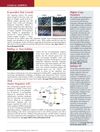 July 2016 in “Experimental Dermatology”
 New treatments for hair growth and psoriasis may be possible, and gene differences could affect baldness and the severity of skin conditions.
A specific gene change in APCDD1 increases the risk of hair loss.
January 2012 in “Zhongguo nongye Kexue” The technology can create transgenic cashmere goats with improved wool quality.
 April 2023 in “Journal of The American Academy of Dermatology”
 Some drugs linked to growth hormones may increase the chance of hair loss in women.
A rare genetic mutation causes Woodhouse-Sakati syndrome symptoms.
Smad4 is crucial for muscle repair, especially in aging, by promoting cell growth over differentiation.
76 citations
,
January 1998 in “Mammalian Genome”  43 citations
,
March 2009 in “Journal of Cellular and Molecular Medicine”
43 citations
,
March 2009 in “Journal of Cellular and Molecular Medicine” TGF-β2 plays a key role in human hair growth and development.
July 2026 in “Pediatric Allergy and Immunology”  8 citations
,
September 2022 in “Human genomics”
8 citations
,
September 2022 in “Human genomics” Key genes and pathways involved in thyroid eye disease were identified, aiding potential treatment and diagnosis.
5 citations
,
January 2025 in “Science Advances” 5α-reductase 2 is crucial for stress response in male rats.
June 2020 in “Zenodo (CERN European Organization for Nuclear Research)” The DNMT3B -579G>T polymorphism may increase the risk of colorectal cancer.
 June 2023 in “Journal of biological chemistry/The Journal of biological chemistry”
 Sdr16c5 and Sdr16c6 genes regulate a key point in lipid production that affects eye and skin gland function.
 February 2024 in “Future science OA”
 Loss of the Y chromosome and UTY gene activity increases cancer risk in men.
 82 citations
,
September 2018 in “Nature Communications”
82 citations
,
September 2018 in “Nature Communications” A certain smell receptor in hair follicles can affect hair growth when activated by a synthetic sandalwood scent.
8 citations
,
October 2012 in “Transgenic Research” Overexpressing the human H-ferritin gene in mice causes mild growth delay and temporary hair loss.
151 citations
,
August 2011 in “The EMBO Journal” The enzyme PA-PLA1α is important for proper hair follicle development.