 January 2022 in “Skin appendage disorders”
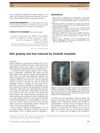
 A woman with alopecia totalis regrew dark hair in bands after using a corticosteroid ointment.
 February 2022 in “Faculty Opinions – Post-Publication Peer Review of the Biomedical Literature”
 Low-dose oral minoxidil is a promising, safe treatment for various hair diseases, improving hair thickness and density, but more research is needed on long-term side effects and treatment duration.
 July 1995 in “Journal of Dermatological Science”
 Cyclosporine starts hair growth faster, while minoxidil makes it last longer.
 April 2018 in “Journal of Investigative Dermatology”
 STIM1 is essential for sweat secretion.
 10 citations
,
December 2019 in “International journal of medicinal chemistry”
10 citations
,
December 2019 in “International journal of medicinal chemistry” Chemicals from the plant Dicerocaryum senecioides were found to safely speed up and increase hair growth in mice.
6 citations
,
July 2015 in “JAAD Case Reports” Doxycycline can effectively treat hair loss caused by EGFR inhibitors.
10 citations
,
February 1976 in “The Journal of Dermatology” γ‐Oryzanol ointment increases sebaceous gland activity and sebum production.
 4 citations
,
May 2020 in “Medicine in Drug Discovery”
4 citations
,
May 2020 in “Medicine in Drug Discovery” The study developed a method to detect minoxidil and its sulfate form, found that minoxidil sulfate is temperature-sensitive, and identified a way to potentially increase its stability for hair loss treatment.
Combining bromelain with finasteride improves hair regrowth and reduces inflammation in alopecia.
 December 2021 in “Journal of Applied Biological Chemistry”
 Toothpaste containing α-tocopherol acetate, l-menthol, and stevioside can promote hair growth in mice.
 3 citations
,
January 2000
3 citations
,
January 2000 Some alternative therapies for vitiligo show promise but need more research.
19 citations
,
September 2021 in “British journal of dermatology/British journal of dermatology, Supplement” Activating PPAR-γ signalling can protect hair follicle stem cells from damage caused by chemotherapy.
May 2024 in “Reactions weekly”  51 citations
,
May 2010 in “Journal of Drug Targeting”
51 citations
,
May 2010 in “Journal of Drug Targeting” Transcutol-containing vesicles improve minoxidil's skin penetration and hair growth promotion.
 44 citations
,
February 2015 in “Journal of the American Academy of Dermatology”
44 citations
,
February 2015 in “Journal of the American Academy of Dermatology” Combining diphenylcyclopropenone with anthralin is more effective for hair regrowth in alopecia areata than using diphenylcyclopropenone alone, but may cause more side effects.
October 2021 in “Journal of Investigative Dermatology” Pink berry extract effectively treats scalp issues from frequent head covering.
December 2015 in “OPAL (Open@LaTrobe) (La Trobe University)” Minoxidil sulfate significantly improved hair growth in mice.
October 2025 in “Annals of Medicine and Surgery” Retinoids may improve hair growth in androgenic alopecia when used with other treatments.
 September 2023 in “International Journal of Applied Pharmaceutics”
 The formulated gel is a promising treatment for alopecia areata.
 April 2026 in “Zenodo (CERN European Organization for Nuclear Research)”
 Nanocarrier systems could improve hair loss treatments by delivering drugs more effectively.
6 citations
,
April 1993 in “Journal of Dermatological Science” Certain substances can strongly inhibit DNA synthesis in hair cells.
13 citations
,
September 2007 in “Journal of dermatological science”  December 2024 in “Biological and Pharmaceutical Bulletin”
 Gum arabic improves minoxidil delivery to hair follicles, enhancing hair growth.
September 2014 in “Emergency Medicine News” The man's skin condition improved with sun protection and topical steroids, but UV exposure still caused flare-ups.
 February 2023 in “International Journal of Pharmaceutics”
 A new version of minoxidil, a hair loss treatment, was made using nanotechnology. This version, called minoxidil cubosomes, works better and causes fewer skin reactions than the old version. It also penetrates and stays in the skin better, promoting hair regrowth. It's safe and could be a good alternative to current treatments.
 7 citations
,
December 2013 in “The Journal of Dermatology”
7 citations
,
December 2013 in “The Journal of Dermatology” A woman's hair turned gray and fell out after starting a cancer drug called imatinib mesylate.
 January 2026 in “Journal of Community Medicine and Health Solutions”
 PP405 shows promise as a new, effective treatment for hair loss with minimal side effects.
 23 citations
,
October 2006 in “Journal of Dermatological Science”
23 citations
,
October 2006 in “Journal of Dermatological Science” Ethosomal minoxidil improves hair growth by penetrating deeper into skin and shortening hair cycle.
July 2021 in “Indian journal of drugs in dermatology” Combining minoxidil with MS injections leads to better hair regrowth in men.
 18 citations
,
January 1997 in “British Journal of Dermatology”
18 citations
,
January 1997 in “British Journal of Dermatology” 5% topical minoxidil can cause severe body hair growth, which disappears after stopping treatment.