57 citations
,
August 2006 in “Journal of the American Academy of Dermatology” Gefitinib can cause hair loss without scarring.
 44 citations
,
April 2006 in “Expert opinion on drug safety”
44 citations
,
April 2006 in “Expert opinion on drug safety” Gefitinib can cause skin problems, diarrhea, and nausea, but rarely causes severe lung disease or hair loss.
36 citations
,
January 2012 in “Dermatology” Stopping gefitinib improved scalp condition in a woman with lung cancer.
21 citations
,
June 2017 in “Case Reports in Dermatology” Reducing gefitinib dosage improved hair loss, but scarring remained.
7 citations
,
January 2009 in “BMJ Case Reports” Gefitinib can cause slower, finer, brittle, and curly scalp hair.
6 citations
,
May 2013 in “Journal of Clinical Oncology” Combining Ficlatuzumab and Gefitinib can cause severe hair loss.
 5 citations
,
January 2021 in “Dermatology Online Journal”
5 citations
,
January 2021 in “Dermatology Online Journal” An 84-year-old man developed a rare scalp condition from a cancer drug but continued treatment as it was otherwise well tolerated.
4 citations
,
October 2019 in “Skin Appendage Disorders” Gefitinib can cause hair and eyebrow darkening.
4 citations
,
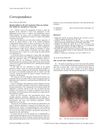
March 2007 in “British Journal of Dermatology” Gefitinib therapy can cause unusual hair growth on the nose.
 2 citations
,
June 2005 in “Clinical Oncology”
2 citations
,
June 2005 in “Clinical Oncology” A man's bald spot grew hair after starting cancer treatment with gefitinib.
1 citations
,
September 2015 Gefitinib treatment led to unexpected hair growth in two lung cancer patients.
1 citations
,
December 2012 in “Journal of dermatological science” Combining ficlatuzumab and gefitinib can cause severe scarring hair loss.
November 2023 in “Journal of Skin and Sexually Transmitted Diseases” Gefitinib can cause scalp skin issues and permanent hair loss.
 January 2023 in “Applied sciences”
 Gefitinib and Sasam-Kyeongokgo together significantly reduce cancer growth and improve immune response in mice.
January 2013 in “대한피부과학회지” Gefitinib can cause rare scarring hair loss.
 November 2005 in “Reactions Weekly”
 A man treated with gefitinib for lung cancer grew new hair on his bald scalp.
508 citations
,
June 2009 in “Current drug metabolism” Tyrosine kinase inhibitors effectively treat cancers but often cause skin and other side effects.
91 citations
,
April 2006 in “PubMed” EGFR-targeting cancer drugs can cause skin rashes and other side effects.
32 citations
,
April 2011 in “Journal of the American Academy of Dermatology” Erlotinib may cause scarring hair loss.
 20 citations
,
July 2013 in “PLoS ONE”
20 citations
,
July 2013 in “PLoS ONE” Targeting EGFR may help reduce hair loss from chemotherapy.
 8 citations
,
June 2019 in “Journal of Ginseng Research”
8 citations
,
June 2019 in “Journal of Ginseng Research” Gintonin-enriched fraction promotes hair growth and could be a potential alopecia treatment.
8 citations
,
December 2007 in “Journal of Thoracic Oncology” Erlotinib can cause significant but temporary hair loss in lung cancer patients.
3 citations
,
January 2019 in “Indian Journal of Drugs in Dermatology” Certain cancer drugs can cause skin issues like rashes and itching.
3 citations
,
August 2013 in “Journal of the American Academy of Dermatology” A new method quickly detects hair changes from EGFR inhibitors using a microscope.
 2 citations
,
January 2011 in “Springer eBooks”
2 citations
,
January 2011 in “Springer eBooks” Finasteride is a medicine used to treat enlarged prostate and prostate cancer, and it works by changing how testosterone works in the body.
 June 2024 in “Journal of Clinical Oncology”
 EGFR-TKIs can cause unexpected skin, nail, and hair issues.
 January 2022 in “Dermatology Review”
 EGFR inhibitors can cause unusual localized hair growth.
 3 citations
,
May 2022 in “Oncogene”
3 citations
,
May 2022 in “Oncogene” Vav2 and Vav3 proteins help control skin stem cell numbers and activity in both healthy and cancerous cells.
12 citations
,
December 2010 in “Journal of thoracic oncology” New treatments for non-small cell lung cancer are being tested, with some already in use, focusing on immune response and targeting cancer cells, but side effects vary.
54 citations
,
September 2012 in “Acta ophthalmologica” Cancer treatments can cause various eye problems, so eye doctors should know how to diagnose and treat these early.