A harbor seal's skin disease was cured after 8 months of treatment.
May 2005 in “Journal of the American Academy of Dermatology” PCOS may be linked to spina bifida in young females.
12 citations
,
May 2006 in “Journal of Neurology Neurosurgery & Psychiatry” Neuromyotonia and morphoea can occur together in the same body areas.
10 citations
,
July 2014 in “Annals of Saudi Medicine” A 30-year-old man with rare skin conditions improved with antibiotics and surgery, hinting at a link to rosacea.
 91 citations
,
July 2004 in “BMJ. British medical journal”
91 citations
,
July 2004 in “BMJ. British medical journal” The document concludes that molluscum contagiosum is a common, benign skin infection in children, often healing without scarring.
July 2019 in “Zenodo (CERN European Organization for Nuclear Research)” Follicular mucinosis in a 15-year-old is usually harmless but needs monitoring for possible lymphoma.
4 citations
,
October 2023 in “Case Reports in Dermatology” Majocchi’s granuloma should be considered when rashes don't improve with typical treatments.
 3 citations
,
May 2019 in “BMJ case reports”
3 citations
,
May 2019 in “BMJ case reports” A boy with severe immune deficiency and Epstein-Barr virus died from high-grade B-cell lymphoma.
 9 citations
,
July 2010 in “British Journal of Dermatology”
9 citations
,
July 2010 in “British Journal of Dermatology” The document suggests a rare skin condition might be caused by a genetic phenomenon.
 14 citations
,
January 2016 in “Experimental and molecular pathology”
14 citations
,
January 2016 in “Experimental and molecular pathology” Giving immune serum from vaccinated mice to mice without T cells prevents infection and tumor growth.
29 citations
,
July 2008 in “British Journal of Dermatology” The patient had paraneoplastic pemphigus without mucosal involvement.
 December 2021 in “International journal of research - granthaalayah”
 A young woman had a rare, usually non-cancerous tumor on her face that was initially mistaken for a different condition.
9 citations
,
June 2011 in “American Journal of Dermatopathology” Molluscum contagiosum can occur in epidermoid cysts, especially with prolonged steroid use.
 November 2011 in “APMIS. Acta pathologica, microbiologica et immunologica Scandinavica./APMIS”
 Polyomavirus A2 infection in newborn mice caused hair follicle tumors.
14 citations
,
July 2004 in “Australasian Journal of Dermatology” Follicular mycosis fungoides can look like a B-cell lymphoma, making diagnosis difficult.
March 2005 in “Journal of the American Academy of Dermatology” Recognizing minor skin lesions can help identify serious cancer syndromes.
2 citations
,
September 2018 in “JAAD case reports” A rare type of skin cancer with mucosal involvement was partially treated but eventually relapsed.
 20 citations
,
March 1985 in “Journal of The American Academy of Dermatology”
20 citations
,
March 1985 in “Journal of The American Academy of Dermatology” Genetic factors alone might not cause pemphigus vulgaris; other factors like birth complications and puberty may trigger it.
 1 citations
,
September 2013 in “The Journal of Dermatology”
1 citations
,
September 2013 in “The Journal of Dermatology” An 8-year-old girl developed a rare skin condition in a linear pattern on one side of her body after a lung infection, which improved with treatment.
45 citations
,
March 1998 in “Journal of the American Academy of Dermatology” Majocchi's granuloma can occur in kidney transplant patients on tacrolimus and can be treated with antifungal medication.
December 2018 in “Bioscience Journal” Leporacarus gibbus mite was found in a domestic rabbit in Espírito Santo, Brazil, for the first time.
October 2025 in “Brazilian Journal of Veterinary Research and Animal Science” Neotropical porcupines can get co-infected with poxvirus and Toxoplasma gondii.
14 citations
,
June 1989 in “Journal of dermatology” Three siblings had both Vohwinkel's disease and congenital alopecia, with no effective treatment.
July 2023 in “Indian Journal of Sexually Transmitted Diseases and AIDS” "Moth-eaten alopecia" can be a sign of secondary syphilis, treatable with penicillin.
 October 2025 in “Pediatric Dermatology”
 A 16-year-old boy's facial condition improved with doxycycline, suggesting an immune response to hair follicle damage.
September 2023 in “Journal of the American Academy of Dermatology” Bullous pemphigoid can look like erythema multiforme, so awareness is needed for proper treatment.
 October 2022 in “Boletín médico del Hospital infantil de México/Boletín médico del Hospital Infantil de México”
 The patient has a rare skin condition that shows features of two known disorders.
 1 citations
,
October 2023 in “Journal of the Pakistan Medical Association”
1 citations
,
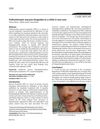
October 2023 in “Journal of the Pakistan Medical Association” Folliculotropic mycosis fungoides can occur in children and is diagnosed with specific tests, but often stays in early stages with treatment.
 April 2023 in “The journal of investigative dermatology/Journal of investigative dermatology”
 Folliculotropic mycosis fungoides has unique molecular features and cell interactions that could guide targeted therapy.