 January 2022 in “Figshare”
 Melatonin affects when and how certain genes work during the different stages of goat hair growth.
 January 2022 in “Figshare”
 Melatonin affects when and how certain genes work during the growth of goat hair follicles.
 January 2022 in “Figshare”
 Melatonin affects when and how goat hair follicle genes turn on and off during growth cycles.
 January 2022 in “Figshare”
 Melatonin affects when and how goat hair grows by changing gene activity at different stages.
 June 2021 in “bioRxiv (Cold Spring Harbor Laboratory)”
 Gene therapy in mice increased lifespan and improved health without causing cancer.
March 2021 in “Medico-Legal Update” The androgen receptor gene doesn't affect women with recurrent spontaneous abortions, but having a mutant genotype might protect against it.
 January 2021 in “Journal of cosmetology & trichology”
 Ageratum conyzoides L. extract may effectively and safely treat hair loss.
 August 2020 in “Pakistan Journal of Zoology”
 A new mutation in the Hairless gene causes hair loss in two Pakistani families.
October 2019 in “Al Mustansiriyah Journal of Pharmaceutical Sciences” The CTLA-4 gene polymorphism does not affect polycystic ovarian syndrome.
 October 2018 in “InTech eBooks”
 The gene Foxn1 is important for hair growth, and understanding it may lead to new alopecia treatments.
 September 2018 in “Fertility and Sterility”
 African American women have a higher risk of preterm delivery than Caucasian women, and inflammatory stimuli affect gene expression in cells related to PCOS, showing a heightened inflammatory state in women with PCOS.
 March 2018 in “Suez Canal University Medical Journal”
 NKG2D gene polymorphism doesn't affect SLE risk but may influence symptoms like rash and hair loss.
 January 2018 in “Genetic engineering & biotechnology news”
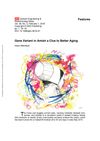
 A genetic mutation linked to longer life and less disease was found in the Amish, and a drug is being developed to replicate these benefits.
 January 2018 in “bioRxiv (Cold Spring Harbor Laboratory)”
 Researchers found key regions in the mouse hairless gene that control its activity in skin and brain cells, affecting hair follicle function.
 April 2017 in “Journal of Investigative Dermatology”
 Targeted siRNA therapy may be a promising treatment for KID syndrome by reducing mutant gene expression and improving cell communication.
 January 2017 in “NASA Technical Reports Server (NASA)”
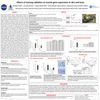
 Early changes in skin gene expression can predict later bone mass loss after radiation exposure.
 January 2017 in “Jikken doubutsu ihou/Jikken doubutsu/Experimental animals/Jikken Dobutsu”
 Mice with a changed Hr gene lose and regrow hair due to changes in the gene's activity.
April 2016 in “The journal of investigative dermatology/Journal of investigative dermatology” The ALADIN score can predict how well patients with alopecia areata will respond to JAK inhibitor treatments.
April 2016 in “The journal of investigative dermatology/Journal of investigative dermatology” Sebaceous gland atrophy and abnormal function may contribute to hair loss in psoriasis.
 March 2016 in “Institutional Repositories DataBase (IRDB)”
 Collagen peptides may promote hair growth by activating certain genes in the skin.
 January 2016 in “International journal of reproduction, contraception, obstetrics and gynecology”
 A certain gene variation is linked to a higher risk of polycystic ovarian syndrome in South Indian women.
 November 2014 in “Elsevier eBooks”
 Gene mutations can cause problems in male genital development.
January 2014 in “China Feed” Higher expression of the keratin-associated protein 8.1 gene in Liaoning cashmere goats is linked to finer cashmere fibers.
 March 2013 in “Molecular & Cellular Toxicology/Molecular & cellular toxicology”
 m-Aminophenol in hair dye can cause skin cell toxicity and stress responses.
Melatonin reduces BMP2 gene expression in goat hair follicles during the resting period.
August 2011 in “Reproductive Toxicology”  April 2008 in “Expert review of dermatology”
 Mutations in the P2RY5 gene cause hereditary woolly hair.
January 2005 in “Linchuang pifuke zazhi” The technique successfully promoted hair growth and skin renewal in mice.
January 2005 in “mediaTUM – the media and publications repository of the Technical University Munich (Technical University Munich)” Vitamin D and glucocorticoids affect bone growth, metabolism, and immune response.
 August 2004 in “Journal of the American College of Surgeons”
 Several genes, including Hox-7A, Stra6, and Lim-1, are involved in normal palate formation.