 4 citations
,
January 2021 in “Journal of Clinical Medical Research”
4 citations
,
January 2021 in “Journal of Clinical Medical Research” c-Kit is important for heart regeneration and cancer development.
June 2025 in “Molecular Genetics & Genomic Medicine” Severe genetic variants in children with a specific adrenal condition match predicted symptoms well, but milder variants do not.
24 citations
,
March 2022 in “Genome biology” scINSIGHT accurately identifies cell clusters and gene patterns in complex data.
 January 2025 in “Dermatology Practical & Conceptual”
 A new genetic model may improve treatment and diagnosis for certain inherited skin diseases.
July 2025 in “Genome biology” HT-scCAT-seq helps understand gene regulation in embryonic skin development.
 22 citations
,
August 2013 in “PLOS ONE”
22 citations
,
August 2013 in “PLOS ONE” The method safely and efficiently delivers genes to the skin but may not work for conditions needing high levels of gene products.

Understanding genetics is crucial for treating heart and skin diseases.
10 citations
,
December 2023 in “International Journal of Nanomedicine” Cell membrane-coated nanoparticles could improve gene therapy by enhancing delivery and targeting of nucleic acids.
 5 citations
,
October 2014 in “Methods”
5 citations
,
October 2014 in “Methods” The document explains how to create detailed biological pathways using genomic data and tools, with examples of hair and breast development.
April 2017 in “The journal of investigative dermatology/Journal of investigative dermatology” The study identified key genes and pathways linked to hair disorders, aiding precision medicine.
5 citations
,
December 2022 in “Genes” Genetic differences affect how people respond to COVID-19.
 1 citations
,
October 1996 in “Journal of Cutaneous Medicine and Surgery”
1 citations
,
October 1996 in “Journal of Cutaneous Medicine and Surgery” Gene therapy shows promise for treating skin disorders and cancer, but faces technical challenges.
2 citations
,
January 2010 July 2024 in “Journal of Investigative Dermatology” CRISPR/Cas9 and prime editing can potentially fix skin disorder genes safely and effectively.
 May 2023 in “Elsevier eBooks”
 The document's conclusion cannot be provided because the document is not readable or understandable.
73 citations
,
April 2006 in “BioTechniques” Protein microarrays are highly sensitive tools useful for disease diagnosis and studying proteins.
 1 citations
,
October 2017 in “Circulation”
1 citations
,
October 2017 in “Circulation” A new technology showed that the SOX9 gene might control heart scar formation after injury, suggesting new treatment possibilities.
 1 citations
,
October 2022 in “Molecular therapy”
1 citations
,
October 2022 in “Molecular therapy” The FDA approved the first gene therapy for a blood disorder after overcoming early challenges and demonstrating patient benefits.
August 2011 in “Reproductive Toxicology” 19 citations
,
May 2016 in “Biology Direct” A new method, iSiMPRe, effectively identifies key protein regions in cancer genes, highlighting potential drug targets.
 33 citations
,
January 2018 in “International Journal of Biological Sciences”
33 citations
,
January 2018 in “International Journal of Biological Sciences” CRISPR-Cas9 can successfully edit genes in large mammals like Cashmere goats.
10 citations
,
October 2018 in “Journal of molecular and cellular cardiology/Journal of Molecular and Cellular Cardiology” The gene NM_026333 slows down aging by affecting the NCX1 pathway and could be targeted for anti-aging treatments.
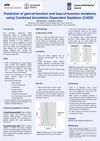 1 citations
,
September 2017
1 citations
,
September 2017 C-scores can help predict gain-of-function and loss-of-function mutations.
 January 2014 in “Genes and Cells”
 Genetically modified cells improved skin wound healing in rats.
May 2005 in “Comparative and Functional Genomics” 130 citations
,
January 2000 in “Nature biotechnology” NCBP3, SDHA, and PTPRA are the best genes for normalizing goat skin experiments.
117 citations
,
September 2003 in “Molecular & cellular proteomics” The technology can help diagnose and subtype autoimmune diseases by identifying specific autoantibodies.
13 citations
,
February 2025 in “Nature Communications” A new neural network helps identify key regulators in cell changes, aiding in understanding diseases and finding new treatments.
12 citations
,
January 2000 in “Biochemical and Biophysical Research Communications” The study mapped keratin 15 and 19 genes, aiding future genetic disorder research.