 October 2018 in “InTech eBooks”
 The most effective treatments for hair loss are minoxidil, finasteride, PRP, and hair transplants, with steroids and immunosuppressants for autoimmune types.
 January 2018 in “Springer eBooks”
 Lasers are less favored for hair transplant surgery but show promise for hair growth in controlled trials.

The article concludes that understanding the causes of hair loss and using continuous treatments like minoxidil and finasteride can help manage it, despite potential side effects.
 July 2015 in “Cambridge University Press eBooks”
 The document concludes that treatments for female hair loss and excess body hair are available, but managing expectations is important.
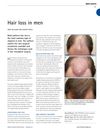 May 2013 in “Trends in Urology & Men's Health”
 Male-pattern hair loss is normal, often involves hormone effects on hair follicles, and can be treated with medication or surgery, but new treatments are being researched.
 November 2025 in “Nanoscale Advances”
 Inorganic nanoparticle-based scaffolds can improve wound healing by fighting bacteria and helping tissue grow.
 July 2025 in “Indian Journal of Forensic Medicine & Toxicology”
 DNA phenotyping can predict physical traits like eye, hair, and skin color, improving forensic investigations.
 July 2024 in “ADMET & DMPK”
 Surface-modified nanostructured lipid carriers can improve hair growth treatments.
 July 2018 in “Elsevier eBooks”
 Lichen Planopilaris is a hair loss condition best treated early with various medications, including hydroxychloroquine, to prevent permanent baldness.
 June 2018 in “International journal of trend in scientific research and development”
 The review explains how hair products work and the science of different hair types to help improve hair care research.
 November 2020 in “Postepy Dermatologii I Alergologii”
 Sulfotransferase SULT1A1 activity may predict minoxidil treatment success for hair loss.
 August 2020 in “International Journal of Clinical Practice”
 No link between hair loss and blood groups or Rhesus factor.

Topical minoxidil helps treat hair loss in teens, but more research needed for safe options.
 233 citations
,
February 2018 in “Polymers”
233 citations
,
February 2018 in “Polymers” Chitin and chitosan are useful in cosmetics for oral care, haircare, and skincare, including UV protection and strength improvement.
 141 citations
,
September 2016 in “European Journal of Dermatology”
141 citations
,
September 2016 in “European Journal of Dermatology” Taxane chemotherapy can cause skin, hair, and nail side effects, which are often under-reported and can affect patient quality of life.
 111 citations
,
August 2002 in “Journal of Medicinal Chemistry”
111 citations
,
August 2002 in “Journal of Medicinal Chemistry” New compounds were made that block an enzyme linked to breast cancer better than existing treatments.
 58 citations
,
March 2013 in “Human Reproduction Update”
58 citations
,
March 2013 in “Human Reproduction Update” Products should be called 'sperm-safe' only after thorough, well-designed tests.
 53 citations
,
June 2017 in “Skin appendage disorders”
53 citations
,
June 2017 in “Skin appendage disorders” PRP treatment helps hair growth in most cases, but more research needed.
 52 citations
,
January 2020 in “Scientific Reports”
52 citations
,
January 2020 in “Scientific Reports” NLCs with manual massage greatly improve clobetasol delivery to hair follicles.
 51 citations
,
September 2015 in “Medical Clinics of North America”
51 citations
,
September 2015 in “Medical Clinics of North America” The conclusion is that acne, alopecia, and hyperhidrosis are common skin issues with various treatments available, and accurate diagnosis is key for effective management.
 44 citations
,
September 2015 in “Annals of Oncology”
44 citations
,
September 2015 in “Annals of Oncology” Targeted cancer therapies have a significant but lower risk of causing hair loss compared to chemotherapy.
 42 citations
,
July 2015 in “Journal of The American Academy of Dermatology”
42 citations
,
July 2015 in “Journal of The American Academy of Dermatology” The conclusion is that oral contraceptives and antiandrogens can treat hirsutism and acne in women with cutaneous hyperandrogenism, but more research is needed for effective treatments, especially for hair loss.
 42 citations
,
April 2012 in “Seminars in Oncology”
42 citations
,
April 2012 in “Seminars in Oncology” Targeted cancer therapies often cause skin problems that need careful management to improve patient quality of life and treatment success.
 40 citations
,
October 2012 in “British Journal of Dermatology”
40 citations
,
October 2012 in “British Journal of Dermatology” Minoxidil helps regrow hair in female pattern hair loss, but more research needed for other treatments.
 39 citations
,
January 2019 in “Journal of Dermatological Treatment”
39 citations
,
January 2019 in “Journal of Dermatological Treatment” Ketoconazole cream is effective for skin conditions like seborrheic dermatitis and may help with hair loss and other skin issues, with generally mild side effects.
 35 citations
,
May 2012 in “Cochrane Database of Systematic Reviews”
35 citations
,
May 2012 in “Cochrane Database of Systematic Reviews” Minoxidil effectively treats female pattern hair loss.
 30 citations
,
October 2014 in “Journal of The American Academy of Dermatology”
30 citations
,
October 2014 in “Journal of The American Academy of Dermatology” A team approach is crucial for managing PCOS, with dermatologists playing a key role.
 25 citations
,
July 2019 in “Experimental Dermatology”
25 citations
,
July 2019 in “Experimental Dermatology” Cholesterol balance is important for hair health, and problems with it can lead to hair loss conditions.
 25 citations
,
May 2018 in “Clinical & Translational Oncology”
25 citations
,
May 2018 in “Clinical & Translational Oncology” New melanoma treatments can cause skin side effects, including skin cancer and rashes, but combining treatments may reduce these risks.
 21 citations
,
May 2016 in “The Cochrane library”
21 citations
,
May 2016 in “The Cochrane library” Topical minoxidil helps treat female pattern hair loss, but more research needed for other treatments.