 May 2024 in “Frontiers in medicine”
 A genetic mutation in the LIPH gene causes tightly curled hair that stops growing in some Japanese individuals.
8 citations
,
May 2025 in “Biomolecules” Forensic genetics can now predict physical traits and lifestyle habits, with future advancements expected from new technologies.
 7 citations
,
March 2022 in “Frontiers in Genetics”
7 citations
,
March 2022 in “Frontiers in Genetics” The research found specific genes that may cause longer hair in Tianzhu White Yak.
 62 citations
,
March 2008 in “American Journal of Human Genetics”
62 citations
,
March 2008 in “American Journal of Human Genetics” Hair loss gene found on chromosome 3q26.
 196 citations
,
March 2016 in “Nature Communications”
196 citations
,
March 2016 in “Nature Communications” Genetic factors influence hair traits like shape, color, and greying in Latin Americans.
2 citations
,
March 2007 in “The journal of investigative dermatology/Journal of investigative dermatology” A new type of hereditary hair loss in a Chinese family is linked to chromosome 2p25.1–2p23.2.
 7 citations
,
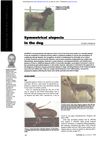
July 1999 in “In Practice”
7 citations
,
July 1999 in “In Practice” The conclusion is that a systematic approach is key for treating symmetrical alopecia in dogs, but treatment may not always be necessary.
75 citations
,
September 2007 in “Journal of Heredity” FGF5 gene mutations cause long hair in domestic cats.
 29 citations
,
September 2012 in “Dermatologic Clinics”
29 citations
,
September 2012 in “Dermatologic Clinics” Hair disorders are caused by a complex mix of biology, genetics, hormones, and environmental factors, affecting hair growth and leading to conditions like alopecia.
1 citations
,
January 2022 in “Annals of Dermatology” A new mutation in the MBTPS2 gene causes a mild form of IFAP syndrome.
 1 citations
,
September 2015 in “Clinics in Dermatology”
1 citations
,
September 2015 in “Clinics in Dermatology” The guide helps doctors diagnose hair problems by suggesting a thorough patient history, physical exams, and various diagnostic tools.
Wild African goats have genetic adaptations for surviving harsh desert conditions.
11 citations
,
December 2013 in “Clinical and experimental dermatology” A child with skin and heart issues had rare genetic mutations affecting skin and heart cell cohesion.
143 citations
,
January 2007 in “The American Journal of Human Genetics” Certain genes on chromosomes 6, 10, 16, and 18 may increase the risk of alopecia areata.
 2 citations
,
August 2022 in “The journal of investigative dermatology/Journal of investigative dermatology”
2 citations
,
August 2022 in “The journal of investigative dermatology/Journal of investigative dermatology” A specific mutation in the K25 gene causes a rare genetic disorder with curly hair at birth and later hair loss, along with dental issues.
2 citations
,
May 2020 in “Journal of the American Academy of Dermatology” Hair shaft changes may be linked to CCCA, but their role is unclear.
June 2020 in “Journal of Investigative Dermatology” Hair shaft malformation contributes to Central Centrifugal Cicatricial Alopecia.
 January 2025 in “JCEM Case Reports”
 Ketoconazole improved symptoms of ACTH-independent Cushing syndrome despite inconclusive initial scans.
 51 citations
,
January 2007 in “Animal Genetics”
51 citations
,
January 2007 in “Animal Genetics” The gene for slick hair in Senepol cattle is located on chromosome 20 and may involve the SRD5A2 gene.
7 citations
,
June 2018 in “Journal of the American Academy of Dermatology” The document suggests finding a simpler, cheaper way to diagnose Uncombable Hair Syndrome.
June 2010 in “Chinese Journal of Dermatology” A new gene mutation is linked to monilethrix in the studied family.
January 2023 in “Indian Dermatology Online Journal” Uncombable hair syndrome is linked to Zellweger syndrome.
 2 citations
,
March 2021 in “bioRxiv (Cold Spring Harbor Laboratory)”
2 citations
,
March 2021 in “bioRxiv (Cold Spring Harbor Laboratory)” Hairless mammals have genetic changes in both their protein-coding and regulatory sequences related to hair.
 November 2023 in “Zenodo (CERN European Organization for Nuclear Research)”
 The dataset includes detailed genetic information from mouse skin cells before and after injury.
 November 2023 in “Zenodo (CERN European Organization for Nuclear Research)”
 The dataset includes detailed genetic information from mouse skin cells before and after injury.
2 citations
,
January 1987 in “PubMed” Woolly hair syndrome is a genetic condition causing frizzy, fragile hair.
99 citations
,
May 2013 in “Familial cancer” People with Birt-Hogg-Dubé syndrome often have lung problems and delayed diagnosis, and better recognition of CT scan signs could improve diagnosis and management.
August 2025 in “BMC Genomics” Certain genes contribute to stronger hooves in barefoot racing horses.
4 citations
,
August 2013 in “Chinese Medical Journal” A specific gene mutation in KRT86 is linked to hair disorder in a Chinese Han family.
 April 2025 in “International Journal of General Medicine”
 The G allele of IFITM3 rs12252 is linked to more severe COVID-19.