 197 citations
,
June 2009 in “American journal of human genetics”
197 citations
,
June 2009 in “American journal of human genetics” WNT10A mutations often cause ectodermal dysplasias, with males showing more tooth issues than females.
January 2009 in “Repositório Científico do Instituto Politécnico de Viseu (Instituto Politécnico de Viseu)” The skin lesion was diagnosed as a matrical cyst with unusual features.
Mutations in specific genes cause different types of ectodermal dysplasias.
A 12-year-old girl was misdiagnosed with alopecia areata but actually had a nevus sebaceus with a genetic mutation.
18 citations
,
February 2001 in “Der Hautarzt” A woman with myotonic dystrophy had multiple skin tumors on her scalp, suggesting a genetic link.
 3 citations
,
August 2010 in “Anais brasileiros de dermatologia/Anais Brasileiros de Dermatologia”
3 citations
,
August 2010 in “Anais brasileiros de dermatologia/Anais Brasileiros de Dermatologia” A rare genetic disease caused severe, worsening hair loss from early childhood with poor treatment results.

Researchers found a genetic link for hereditary hair loss but need more analysis to identify the exact gene.
 September 2019 in “Journal of Investigative Dermatology”
 Dermal Papilla Cells grown in 3D and with stem cells better mimic natural hair growth conditions than cells grown in 2D.
 September 2019 in “Journal of Investigative Dermatology”
 The 3D-SeboSkin model effectively simulates Hidradenitis suppurativa and is useful for future research.
 March 2016 in “Journal of the European Academy of Dermatology and Venereology”
 The April 2016 JEADV issue covered various dermatology topics, including psoriasis, psoriatic arthritis, mTOR inhibitors, autoimmune diseases, photodynamic therapy, viral DNA in skin diseases, chronic hand eczema, and female hair loss.
56 citations
,
October 2010 in “Pediatric Clinics of North America” Epidermal nevi are skin cell clusters linked to various syndromes.
2 citations
,
October 1931 in “Archives of Dermatology and Syphilology” A rare scalp infection in a child developed into a kerion with additional skin symptoms.
36 citations
,
January 1994 in “Cell and Tissue Research” August 2023 in “Journal of Investigative Dermatology” Skin organoids can regenerate hair by forming specific cell units with certain signals.
25 citations
,
January 2004 in “The International Journal of Developmental Biology” Research on skin disorders in humans and mice has improved understanding of hair and skin development.
September 2013 in “Helda (University of Helsinki)” Mutations in specific genes cause certain congenital defects in dogs, aiding in understanding similar human diseases.
61 citations
,
March 1966 in “Archives of Dermatology” Nevoid basal cell carcinomas start in the skin and hair follicles.
22 citations
,
May 2007 in “Molecular Biotechnology” 38 citations
,
June 2005 in “International Journal of Dermatology” A man with nevus comedonicus syndrome had multiple skin issues, including basal cell carcinomas, which improved with treatment.
 19 citations
,
November 1993 in “Mammalian Genome”
19 citations
,
November 1993 in “Mammalian Genome” A gene mutation in mice causes permanent hair loss and skin issues.
 8 citations
,
April 2010 in “JEADV. Journal of the European Academy of Dermatology and Venereology/Journal of the European Academy of Dermatology and Venereology”
8 citations
,
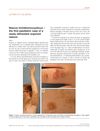
April 2010 in “JEADV. Journal of the European Academy of Dermatology and Venereology/Journal of the European Academy of Dermatology and Venereology” The first pediatric case of naevus trichilemmocysticus was documented.
 5 citations
,
September 1986 in “Pediatric Dermatology”
5 citations
,
September 1986 in “Pediatric Dermatology” A family showed a new condition with inherited hair loss and skin changes, possibly due to one genetic disorder.
7 citations
,
August 2008 in “Immunogenetics” A gene mutation in mice causes increased mast cells and disorganized hair follicles in their skin.
The naked mutation in mice causes hair loss and helps identify keratin genes.
April 1977 in “Pediatric Research” 2 citations
,
June 2013 in “Journal of Dermatological Case Reports” Olmsted syndrome is a rare skin disorder causing thickened skin and other symptoms.
74 citations
,
October 2012 in “The American Journal of Human Genetics” Mutations in the HOXC13 gene cause hair and nail development issues.
87 citations
,
July 2009 in “Journal of Cell Science” Deleting the CDSN gene causes severe skin and hair problems, leading to death.
 September 2016 in “Journal of Dermatological Science”
 A specific mutation known for causing cancer is also found to cause a skin condition in a young girl.
 July 2025 in “Clinical Dermatology Review”
 A rare family case of multiple benign hair follicle tumors was identified, highlighting the need to distinguish them from similar conditions.