53 citations
,
July 2021 in “International Journal of Molecular Sciences” Geranium pyrenaicum extracts show potential for cancer, antiviral, and enzyme inhibition treatments.
 May 2024 in “Research Journal of Pharmacy and Technology”
 New, simple, and cost-effective methods can accurately measure Minoxidil in medicines.
 3 citations
,
October 1979 in “Laboratory animals”
3 citations
,
October 1979 in “Laboratory animals” Hairless rats are good for testing anti-inflammatory drugs, similar to haired rats, without needing to remove fur.
 4 citations
,
November 2018 in “Journal of Pharmaceutical and Biomedical Analysis”
4 citations
,
November 2018 in “Journal of Pharmaceutical and Biomedical Analysis” Roselle flower extracts can protect against free radical damage in UV-irradiated antibiotics.
June 1958 in “Mycopathologia” Selective chemical epilation effectively treats tinea capitis without harmful side effects.
 April 2024 in “Chemical engineering journal”
 The new hydrogel made from thymol and glycyrrhizin helps heal MRSA-infected wounds in rats effectively.
January 2016 in “Yanwaishang zhiye yanbing zazhi” Atropine and neosynephrine effectively prevent floppy iris syndrome during cataract surgery.
10 citations
,
January 2012 in “Case reports in medicine” Diphencyprone can cause unexpected and possibly permanent vitiligo.
 17 citations
,
April 2002 in “Contact Dermatitis”
17 citations
,
April 2002 in “Contact Dermatitis” Minoxidil 5% caused skin discoloration in a man using it for hair loss.
 2 citations
,
September 2021 in “International Journal of Ayurvedic Medicine”
2 citations
,
September 2021 in “International Journal of Ayurvedic Medicine” Despite adverse effects, people continue using hair dyes for aesthetic reasons, highlighting the need for safer options.
 March 2026 in “INTERANTIONAL JOURNAL OF SCIENTIFIC RESEARCH IN ENGINEERING AND MANAGEMENT”
 Herbal hair dyes are safer and eco-friendly compared to synthetic dyes.
 6 citations
,
May 2009 in “Cell transplantation”
6 citations
,
May 2009 in “Cell transplantation” Green tea component EGCG helps keep rat skin grafts viable longer.
17 citations
,
January 2015 in “Dermatology online journal” A patient's grey hair regained color during treatment with adalimumab.
4 citations
,
February 2025 in “Pharmaceuticals” Voglibose may help treat skin hyperpigmentation safely.
2 citations
,
January 2011 in “Feed Review” Adding 0.029% iron glycine chelate to piglet diets improves growth and hair color.
 February 2023 in “Indian journal of private psychiatry/Indian Journal of Private Psychiatry”
 Valproic acid can rarely cause reversible nail discoloration.
6 citations
,
March 2022 in “IET Image Processing” Targeting the narrowest part of the anterior chamber angle may help prevent pupil block in glaucoma.
32 citations
,
January 2012 in “Chinese Medicine” Urtica dioica (stinging nettle) is a potential natural antioxidant for medicinal and cosmetic use.
 9 citations
,
November 2017 in “Journal of Glaucoma”
9 citations
,
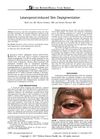
November 2017 in “Journal of Glaucoma” Latanoprost eye drops may cause skin depigmentation.
82 citations
,
May 2005 in “Dermatologic therapy” Laser hair removal has advanced to effectively reduce hair for various skin types and hair colors.
 7 citations
,
October 2006 in “Medical hypotheses”
7 citations
,
October 2006 in “Medical hypotheses” UV light might cause excessive hair growth by increasing PGE2 in the skin.
August 2022 in “Dermatologic Therapy”  June 2024 in “Skin Research and Technology”
 Red fluorescence in AGA scalps is linked to different microbes.
 60 citations
,
January 2004 in “The journal of investigative dermatology/Journal of investigative dermatology”
60 citations
,
January 2004 in “The journal of investigative dermatology/Journal of investigative dermatology” Applying a specific inhibitor lightens skin and hair color.
27 citations
,
January 2017 in “Journal of clinical and diagnostic research” A woman poisoned with thallium was successfully treated with activated charcoal and Prussian blue.
Urtica dioica L. extract may help treat skin fungus but is less effective than standard treatment.
1 citations
,
January 2022 in “Contrast Media & Molecular Imaging” Levofloxacin and metronidazole reduce inflammation and speed up healing in gingival wounds.
5 citations
,
June 2015 in “Chinese journal of natural medicines/Zhongguo tianran yaowu/Chinese Journal of Natural Medicines” Tripterygium wilfordii multiglycoside effectively reduced prostate enlargement in rats without harmful effects.
The new minoxidil gel reduces runoff and improves eyebrow hair growth.
10 citations
,
September 1994 in “International Journal of Dermatology” Three Iranian men had reddish-brown facial pigmentation with no effective treatment.