 1 citations
,
June 2020 in “bioRxiv (Cold Spring Harbor Laboratory)”
1 citations
,
June 2020 in “bioRxiv (Cold Spring Harbor Laboratory)” Fetal skin has unique immune cells different from adult skin.
36 citations
,
December 2004 in “British Journal of Dermatology” The cyst had unusual keratin spherules and resembled bone marrow.
 March 2024 in “IP Indian journal of clinical and experimental dermatology”
 Giant solitary trichoepithelioma is a rare, usually non-cancerous hair follicle tumor that can sometimes turn into skin cancer.
11 citations
,
January 2010 in “Dermatology Research and Practice” Desmosomes are crucial for human skin development, increasing in density as the skin matures.
6 citations
,
November 1984 in “Acta Dermato Venereologica” Hair follicles and sweat glands show different keratin staining patterns.
10 citations
,
November 1964 in “Zentralblatt für Veterinärmedizin Reihe A” Benign epithelial tumors in dogs don't spread or become cancerous.
 35 citations
,
May 2021 in “Nature communications”
35 citations
,
May 2021 in “Nature communications” The skin's basement membrane has specialized structures and molecules for different tissue interactions, important for hair growth and attachment.
2 citations
,
December 2021 in “Research Square”  9 citations
,
March 2013 in “Expert opinion on biological therapy”
9 citations
,
March 2013 in “Expert opinion on biological therapy” Epidermal stem cells have potential for personalized regenerative medicine but need careful handling to avoid cancer.
 309 citations
,
May 1993 in “Journal of The American Academy of Dermatology”
309 citations
,
May 1993 in “Journal of The American Academy of Dermatology” Horizontal scalp biopsy sections effectively diagnose and predict MPAA, with follicular density and inflammation impacting hair regrowth.
 13 citations
,
August 2012 in “Journal of the American Academy of Dermatology”
13 citations
,
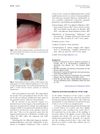
August 2012 in “Journal of the American Academy of Dermatology” A rare scalp condition causing hair loss and cysts in young men can be treated effectively with a specific steroid injection.
7 citations
,
January 2021 in “bioRxiv (Cold Spring Harbor Laboratory)” Skin cells control immune cell placement, helping the skin respond better to challenges.
 15 citations
,
September 2007 in “Cell & tissue research/Cell and tissue research”
15 citations
,
September 2007 in “Cell & tissue research/Cell and tissue research” Embryonic and adult stem cells are valuable for improving skin grafts and cell therapy.
Nipple area expansion in mice needs both pregnancy hormones and mechanical strain.
24 citations
,
December 1957 in “Experimental Cell Research” The glassy layer of hair follicles has different fibril sizes and arrangements in guinea pigs and young mice.
5 citations
,
February 2014 in “PloS one” Eyelid cells share signaling components but differ in pathway activity.
4 citations
,
October 2021 in “bioRxiv (Cold Spring Harbor Laboratory)” G2 stem cells control calcium signaling for skin regeneration.
21 citations
,
April 2000 in “Journal of Cutaneous Pathology” The hamartoma is an abnormal hair growth with limited development in the upper hair follicle.
37 citations
,
October 2009 in “Veterinary Dermatology” Canine hair follicles contain stem-like cells with high growth potential.
87 citations
,
January 1999 in “British Journal of Dermatology” Trichoblastic fibroma and basal cell carcinoma are similar but different from trichoepithelioma.

Hair follicle stem cells are crucial for touch sensation and proper nerve structure in mice.
 April 2018 in “The journal of investigative dermatology/Journal of investigative dermatology”
 GATA6 is important for maintaining and differentiating cells in a key area of human skin.
35 citations
,
April 1998 in “PubMed” Activated erbB-2 in mice skin causes severe skin and hair abnormalities.
22 citations
,
May 2007 in “Molecular Biotechnology” 26 citations
,
June 2004 in “Clinical Genetics” The keratin 5 mutation in a family with epidermolysis bullosa simplex was due to mosaicism, not a new mutation.
292 citations
,
October 1985 in “The Journal of Cell Biology” Keratins and filaggrin change as fetal skin develops, marking key stages of skin formation.
3 citations
,
January 1989 in “The Nishinihon Journal of Dermatology” A hair cyst can become cancerous, showing specific keratins from the hair sheath.
 November 2013 in “Elsevier eBooks”
 Skin and hair renewal is maintained by both fast and slow cycling stem cells, with hair regrowth primarily driven by specific stem cells in the hair follicle bulge. These cells can also help heal wounds and potentially treat hair loss.
 192 citations
,
March 2017 in “Cell host & microbe”
192 citations
,
March 2017 in “Cell host & microbe” Hair follicle development and microbes help regulatory T cells gather in newborn skin.
47 citations
,
February 2014 in “Journal of Cutaneous Pathology” Matrical tumors share a common growth mechanism involving the Wnt pathway and consistent PHLDA1 expression.