10 citations
,
November 2018 in “bioRxiv (Cold Spring Harbor Laboratory)” New laser particles can track thousands of cells in 3D models, improving single-cell analysis.
1 citations
,
July 2006 in “Journal of Investigative Dermatology” A 4kb fragment of the desmocollin 3 promoter targets gene expression to specific skin and hair follicle areas.
26 citations
,
June 2016 in “Frontiers in Plant Science” Autofluorescence can sort plant cells without labeling.
5 citations
,
September 2021 in “Journal of Molecular Histology” LHX2, with other markers, can identify hair placodes in rats.
44 citations
,
April 2013 in “Proceedings of the National Academy of Sciences of the United States of America” FGF13 gene changes cause excessive hair growth in a rare condition.
58 citations
,
February 2013 in “Journal of Biological Chemistry” LGR5 mainly stays inside cells, moving to the trans-Golgi network, and this process is important for its role in cell signaling.
6 citations
,
January 2022 in “BIO-PROTOCOL” The protocol allows easy imaging of dividing cells in C. elegans and can be used for other organisms.
May 2009 in “OPAL (Open@LaTrobe) (La Trobe University)” Suppressing the HGPS mutation may improve symptoms and suggest reversibility.
9 citations
,
October 2017 in “Frontiers in plant science” The peach gene CTG134 helps control the interaction between auxin and ethylene, which could lead to new agricultural chemicals.
January 2009 in “Xumu shouyi xuebao” Sheep cells were successfully modified to include a spider silk protein gene.
11 citations
,
October 2014 in “Gene” Researchers identified a new variant of the FGF5 gene in sheep that affects hair length.
33 citations
,
September 1990 in “Proceedings of the National Academy of Sciences” The study showed that a specific DNA sequence can control gene expression in hair growth areas of mice.
Normal cells stain well with fluorescent globulin, but tumor cells do not.
16 citations
,
July 1996 in “Journal of Investigative Dermatology” 14 citations
,
July 1994 in “Journal of Investigative Dermatology” 1 citations
,
October 2020 in “Research Square (Research Square)” A genetic variant in goats is linked to cashmere growth.
23 citations
,
March 2019 in “Gene” Editing the FGF5 gene in sheep increases wool length, confirming its role in hair growth.
 June 2021 in “bioRxiv (Cold Spring Harbor Laboratory)”
 The gene Tfap2b is essential for creating a type of stem cell in zebrafish that can become different pigment cells.
46 citations
,
May 1995 in “Proceedings of the National Academy of Sciences” A specific gene region can control targeted and responsive gene expression in mice, useful for skin disorder treatments.
 May 2012 in “The Journal of Nuclear Medicine”
 Hair stem cells were tracked in mice using a special imaging technique, showing that it's possible to monitor hair growth this way.
36 citations
,
February 1998 in “Journal of Anatomy” Fibre optic confocal imaging can visualize skin layers, blood vessels, and nerves in live mice.
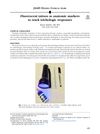 July 2018 in “Journal of The American Academy of Dermatology”
 Fluorescent tattoos are a good way to mark the scalp for hair treatments because they're accurate, invisible in normal light, and have low risk.
September 2016 in “Journal of dermatological science” FGF18 helps hair follicles resist radiation by stopping hair growth cycles.
47 citations
,
May 1994 in “Experimental Brain Research” The mystacial pad's innervation in adult rats is more complex than previously thought.
1 citations
,
January 2019 in “PubMed” cgVEGF164 boosts hair follicle growth in mice.
 1 citations
,
April 2022 in “Regenerative Therapy”
1 citations
,
April 2022 in “Regenerative Therapy” Activating the GDNF-GFRα1-RET signaling pathway could potentially promote skin and limb regeneration in humans and could be used to treat hair loss and promote wound healing.
39 citations
,
January 2020 in “Frontiers in Genetics” PDGFC gene may help select goats with desirable curly wool traits.
 20 citations
,
January 2017 in “Scientific reports”
20 citations
,
January 2017 in “Scientific reports” Whale genes show changes that help them live in water, like less hair and better flippers.
4 citations
,
January 1993 in “Clinical Chemistry and Laboratory Medicine (CCLM)” The new method is 1000 times more sensitive for measuring hair growth.
December 2020 in “Research Square (Research Square)” A genetic change in the FGF5 gene affects hair growth in cashmere goats.