4 citations
,
April 2004 in “Medical veritas” Zinc can reverse hair loss caused by the anthrax vaccine.
July 2026 in “The Journal of Immunology” T cells show stress responses in alopecia areata, suggesting potential treatment targets.
 30 citations
,
June 2016 in “Journal of Human Genetics”
30 citations
,
June 2016 in “Journal of Human Genetics” Researchers found genetic mutations causing hypohidrotic ectodermal dysplasia in 88% of studied patients and identified new mutations and genetic variations affecting the disease.
 April 2024 in “The journal of investigative dermatology/Journal of investigative dermatology”
 ASH2L is essential for skin and hair development.
 76 citations
,
September 1992 in “Endocrinology”
76 citations
,
September 1992 in “Endocrinology” The human type II 5α-reductase gene has a specific structure important for understanding certain medical conditions.
2 citations
,
September 1998 in “Der Hautarzt” A gene mutation causes a rare hereditary hair loss, offering potential for new treatments.
 88 citations
,
July 2019 in “International Journal of Molecular Sciences”
88 citations
,
July 2019 in “International Journal of Molecular Sciences” Using human fat tissue derived stem cells in micrografts can safely and effectively increase hair density in people with hair loss.
34 citations
,
March 2009 in “British journal of dermatology/British journal of dermatology, Supplement” Vitamin C derivative helps hair grow longer by making cells produce a growth factor through a specific cellular pathway.
Natural α-hydroxyl acids cause skin exfoliation by activating TRPV3 channels.
 April 2017 in “Journal of Investigative Dermatology” August 2019 in “Carolina Digital Repository (University of North Carolina at Chapel Hill)”
 DHT enhances androgen receptor activity more than testosterone, and MAGE-11 influences this activity through specific interactions.
52 citations
,
May 2006 in “Journal of Structural Biology” Keratin-associated proteins help link filaments and affect keratin's strength.
 32 citations
,
June 2013 in “Journal of Investigative Dermatology”
32 citations
,
June 2013 in “Journal of Investigative Dermatology” Mice without certain skin proteins had abnormal skin and hair development.
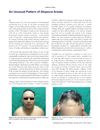 January 2014 in “International Journal of Trichology”
 A man had an unusual type of hair loss that didn't match known patterns and didn't improve with treatment.
April 2023 in “Journal of Investigative Dermatology” TGFβ-2 may cause hair loss in androgenetic alopecia.
14 citations
,
January 1977 in “PubMed” The hair keratin variant is mostly found in Caucasians.
 October 2021 in “The Egyptian Journal of Hospital Medicine”
 Alopecia areata causes patchy hair loss and involves immune system disruptions.
September 2016 in “Journal of dermatological science” The conclusion is that the variation in hair thinness in patients is mostly due to the amount of underdeveloped hairs, and treatments that thicken fine hairs might work for those with mild to severe conditions.
July 2026 in “Pediatric Allergy and Immunology” 3 citations
,
March 2016 in “Experimental Dermatology” A mutation in the hairless gene speeds up severe itchy skin in mice on a special diet.
4 citations
,
March 2024 in “Developmental Dynamics” ALX4 is crucial for normal craniofacial and hair development, with specific roles in different cell types.
 September 2023 in “Frontiers in cell and developmental biology”
 Vav2 changes how hair follicle stem cells' genes work as they age, which might improve regeneration but also raise cancer risk.
NCBP3, SDHA, and PTPRA are the best genes for normalizing goat skin experiments.
4 citations
,
April 1989 in “The Journal of Dermatology” Trichohyalin granules help inner root sheath cells in hair follicles harden by integrating with keratin filaments.
 February 2025 in “International Journal of Cosmetic Science”
 A new amino acid derivative, ATS, improves hair texture and moisture, making it easier to straighten curly hair.
 19 citations
,
November 1993 in “Mammalian Genome”
19 citations
,
November 1993 in “Mammalian Genome” A gene mutation in mice causes permanent hair loss and skin issues.
A new treatment using conjugated linoleic acid in nanovesicles can rejuvenate hair follicles and improve hair growth in androgenic alopecia.
February 2026 in “Psychoneuroendocrinology” Hair cortisol concentration partly reflects HPA axis regulation but doesn't capture all its complexities.
 8 citations
,
April 2011 in “Surgery today”
8 citations
,
April 2011 in “Surgery today” A substance called sodium zinc dihydrolipoylhistidinate can significantly reduce hair loss caused by chemotherapy in rats.
 14 citations
,
September 2007 in “Steroids”
14 citations
,
September 2007 in “Steroids” The study concluded that androstendione and DHEA are important for diagnosing high male hormone levels in women with excessive hair growth.