 33 citations
,
March 2013 in “Journal of Investigative Dermatology”
33 citations
,
March 2013 in “Journal of Investigative Dermatology” Human hair follicle stem cells show signs of low oxygen levels, which may be important for hair growth and preventing baldness.
2 citations
,
October 2024 in “Indian Journal of Orthopaedics”  14 citations
,
January 2012 in “Proteins”
14 citations
,
January 2012 in “Proteins” Electrostatic interactions mainly stabilize the binding of peptides to hair keratin.
50 citations
,
February 2016 in “Journal of Investigative Dermatology” A mutation in the KRT25 gene causes a rare hair disorder with thin, woolly hair.
94 citations
,
July 2003 in “Journal of biological chemistry/The Journal of biological chemistry” EGF controls hair growth by regulating hair follicles' growth phases.
19 citations
,
September 2007 in “The Journal of Steroid Biochemistry and Molecular Biology” Glucocorticoid receptors help regulate genes important for skin health and hair growth.
1 citations
,
July 2006 in “Journal of Investigative Dermatology” A 4kb fragment of the desmocollin 3 promoter targets gene expression to specific skin and hair follicle areas.
 19 citations
,
November 1971 in “Clinica Chimica Acta”
19 citations
,
November 1971 in “Clinica Chimica Acta” The document concludes that measuring γ-glutamyl transpeptidase activity is more accurate with a higher substrate concentration and using diluted acetic acid to stop the reaction.
June 2014 in “Toxicologie analytique et clinique/Annales de toxicologie analytique” Older age increases positive hair alcohol test results, and chest hair is a good alternative for testing; season affects results, with higher levels in winter.
42 citations
,
September 2003 in “Journal of Investigative Dermatology” A missing mK6irs1 gene causes hair loss in mice.
Certain genes may influence hair loss differently in men and women.
6 citations
,
January 2006 in “Journal of dermatological science” Runx1 helps control the KAP5 gene in human hair follicles.
January 2026 in “International Journal of Biological Macromolecules” Keratin in people with androgenetic alopecia shows specific changes that could help develop new treatments.
 1 citations
,
April 2022 in “Regenerative Therapy”
1 citations
,
April 2022 in “Regenerative Therapy” Activating the GDNF-GFRα1-RET signaling pathway could potentially promote skin and limb regeneration in humans and could be used to treat hair loss and promote wound healing.
 356 citations
,
December 1986 in “The journal of cell biology/The Journal of cell biology”
356 citations
,
December 1986 in “The journal of cell biology/The Journal of cell biology” Hair and nail cells share similar proteins, indicating a common differentiation pathway.

K15 and Id3 are important in hair follicle regeneration, with K15 increasing in early stages and Id3 responding later.
Keratinocytes can reduce the survival of certain melanoma cells, suggesting new therapy paths.
 November 2022 in “bioRxiv (Cold Spring Harbor Laboratory)”
 MOF controls skin development by regulating genes for mitochondria and cilia.
35 citations
,
September 2006 in “American Journal Of Pathology” Odontogenic keratocysts are caused by abnormal Hedgehog signaling and can lead to tooth and bone issues.
193 citations
,
June 1990 in “Journal of Investigative Dermatology” 29 citations
,
July 2015 in “Journal of Medical Genetics” A genetic variant in the KRT25 gene causes tightly curled hair.
2 citations
,
February 2012 in “PubMed” Gp₄G promotes hair growth and improves skin health.
4 citations
,
June 2022 in “ACS applied materials & interfaces” New wig coating technique makes them more durable, UV resistant, and less static.
82 citations
,
March 1992 in “Journal of Investigative Dermatology”  June 2026 in “Research Square”
 THBS4 helps hair grow by activating hair follicle stem cells.
 April 2023 in “Journal of Investigative Dermatology”
 Human TMEM2 does not break down hyaluronan but helps control its metabolism.
 7 citations
,
September 2014 in “European Journal of Dermatology”
7 citations
,
September 2014 in “European Journal of Dermatology” Thicker hair grows faster; hair loss patients have slower growth.
 June 2013 in “Faculty Opinions – Post-Publication Peer Review of the Biomedical Literature”
 A substance called FGF9 from certain immune cells can trigger new hair growth during wound healing in mice, but humans may not have the same response due to fewer of these cells.
 5 citations
,
September 2013 in “The Journal of Dermatology”
5 citations
,
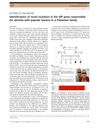
September 2013 in “The Journal of Dermatology” Researchers found a new mutation in the HR gene causing hair loss and skin bumps in a Pakistani family.