 July 2024 in “International Journal of Dermatology Venereology and Leprosy Sciences”
 Trichoscopy is a useful, painless tool for diagnosing and monitoring children's hair and scalp issues.
 February 2024 in “Journal of dermatology research reviews & reports”
 A 50-year-old woman with breast cancer developed an autoimmune skin disorder, highlighting the need for thorough checks and team-based treatment.
 June 2023 in “Research Square (Research Square)”
 Hyaluronic acid and polycaprolactone improve skin regeneration, with polycaprolactone having a stronger effect on healing and tissue repair.
 April 2023 in “Clinical theriogenology”
 The dog's skin condition improved after removing a tumor that was causing hormone imbalances.

A woman in Sri Lanka was diagnosed with lupus after presenting with protein loss from the gut and other symptoms.
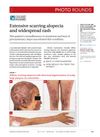 March 2022 in “The Journal of Family Practice”
 Following treatment plans is crucial to prevent worsening skin and hair conditions.
 January 2020 in “International Journal of PharmTech Research”
 A man with severe leprosy developed painless ulcers and numbness, treated successfully with multiple drugs and vitamins.
 September 2019 in “Philippine Journal of Internal Medicine”
 Early immunosuppressive therapy leads to favorable outcomes in Filipino lupus patients with myocarditis.
 April 2019 in “Journal of Investigative Dermatology”
 Differences in growth factors in platelet-rich plasma therapy for hair loss can vary between patients and can be influenced by the devices used, possibly leading to inconsistent results.

Cornification is the process where living skin cells die to create a protective barrier, and problems with it can cause skin diseases.
 April 2017 in “InTech eBooks”
 Many people with hair loss experience scalp pain known as trichodynia, but the causes are unclear and treatments vary.

Better models and evaluation methods for alopecia areata are needed.
 December 2013 in “Macedonian Journal of Medical Sciences”
 Ovarian steroid cell tumors should be considered in adults with hirsutism and high testosterone, with surgery as the main treatment.
 January 2012 in “Springer eBooks”
 Lupus can cause different skin problems, and treatments like quitting smoking and using certain creams or medicines can help.
 July 2003 in “Journal of Cutaneous Medicine and Surgery”
 Certain drugs can cause lupus, stopping these drugs is the main treatment. NB-UVB phototherapy clears psoriasis faster when applied three times a week. Monoclonal antibodies and oral pimecrolimus are effective in treating psoriasis. Smoking and drinking are linked to psoriasis in men. No direct link between low iron and hair loss was found. Vaccines are effective against genital herpes and human papillomavirus type 16.
 July 2003 in “Journal of Cutaneous Medicine and Surgery”
 Blood pressure drugs can cause skin lupus, early treatment is key for baby herpes and diabetic foot ulcers, a certain vaccine works against genital herpes and HPV in women, more frequent light therapy helps psoriasis, smoking and drinking can worsen psoriasis, a cream clears up a type of skin cancer, and low iron levels don't cause chronic hair loss.
 July 2003 in “Journal of Cutaneous Medicine and Surgery”
 Various skin conditions can be treated effectively with different methods, such as discontinuing certain drugs, using specific vaccines, applying creams, and changing lifestyle habits like smoking and drinking.
 July 2003 in “Journal of Cutaneous Medicine and Surgery”
 The document concludes that various treatments for skin conditions are effective, but some require further research, and certain factors like gender and lifestyle can influence disease outcomes.
 July 2003 in “Journal of Cutaneous Medicine and Surgery”
 Stopping certain drugs can improve skin conditions, arsenicosis affects over half of a Bangladeshi village, males are more vulnerable, and certain treatments are effective for warts, acne, and psoriasis. Smoking and drinking are linked to psoriasis in men, a cream helps with a type of skin cancer, and low iron levels don't directly cause chronic hair loss in women.
 July 2003 in “Journal of Cutaneous Medicine and Surgery”
 High blood pressure drugs often cause skin lupus, stopping the drug usually helps. A vaccine helps prevent genital herpes and HPV-16. More frequent light therapy clears psoriasis faster. No link was found between low iron and chronic hair loss.
 July 2003 in “Journal of Cutaneous Medicine and Surgery”
 Treating psoriasis with UVB light three times a week is faster than twice a week, and certain medications and lifestyle factors affect psoriasis treatment outcomes.
 July 2003 in “Journal of Cutaneous Medicine and Surgery”
 Skin problems are common in Bangladesh due to arsenic, prompt treatment of diabetic foot ulcers is crucial, maternal transmission causes most neonatal herpes, treatments for pediatric vasculitis are effective, the chickenpox vaccine works, more frequent UVB therapy helps psoriasis, certain jobs increase hand dermatitis risk, monoclonal antibodies treat psoriasis well, lifestyle affects psoriasis, alefacept improves psoriasis, imiquimod cream partially clears basal cell carcinoma, and iron may not help chronic hair loss.
 July 2003 in “Journal of Cutaneous Medicine and Surgery”
 Blood pressure drugs can cause skin lupus, but it improves after stopping the drug. The glycoprotein D vaccine works against genital herpes in some women, and the HPV-16 vaccine reduces HPV-16 infection and related diseases. More frequent light therapy clears psoriasis faster. A cream called imiquimod effectively treats a type of skin cancer. Iron supplements don't necessarily help with chronic hair loss in women.
 July 2003 in “Journal of Cutaneous Medicine and Surgery”
 Some medications can improve skin conditions, while lifestyle factors like smoking and drinking may worsen them; treatments like monoclonal antibodies and imiquimod cream show promise for certain skin diseases.
 May 1991 in “Current problems in dermatology”
 Skin issues can indicate immune system problems.
 January 1989 in “Clinical and Experimental Dermatology”
 The symposium concluded that hair growth involves complex processes, including the hair follicle life cycle, the role of the dermal papilla, hair strength, pigmentation, and the impact of diseases and treatments like minoxidil on hair and skin.

Ovol2 is crucial for hair growth and skin healing by controlling cell movement and growth.

Dermal stem cells help regenerate hair follicles and heal skin wounds.
 39 citations
,
November 2013 in “European journal of pharmaceutics and biopharmaceutics”
39 citations
,
November 2013 in “European journal of pharmaceutics and biopharmaceutics” Massage increases how deep both rigid and flexible liposomes can go into skin, with flexible ones going deeper, and covering the skin (occlusion) helps rigid ones more.
 16 citations
,
August 2007 in “Histopathology”
16 citations
,
August 2007 in “Histopathology” A woman's rare adrenal tumor caused high testosterone and cortisol levels, which normalized after the tumor was removed.