 5 citations
,
April 2014 in “The American Journal of Dermatopathology”
5 citations
,
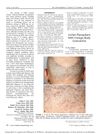
April 2014 in “The American Journal of Dermatopathology” Foreign-body granuloma may be a marker for late-stage Lichen Planopilaris and should be considered in diagnosis.
Combining PRP with low-level laser therapy is better for hair growth than PRP alone.
July 2024 in “Journal of Investigative Dermatology” JW0061 may be a new treatment for hair loss by promoting hair growth through WNT signaling.
 May 2017 in “bioRxiv (Cold Spring Harbor Laboratory)”
 The peach gene pCTG134 helps control the interaction between auxin and ethylene hormones during fruit ripening.
11 citations
,
October 2014 in “Gene” Researchers identified a new variant of the FGF5 gene in sheep that affects hair length.
May 2026 in “SKIN The Journal of Cutaneous Medicine” The supplement gummy and serum safely improve hair growth in women with hair loss.
April 2026 in “Spectrochimica Acta Part A Molecular and Biomolecular Spectroscopy”  October 2017 in “Anesthesia and Pain Medicine”
 Repeated left stellate ganglion blocks may improve skin elasticity, water content, and hair follicle density on the treated side.
 8 citations
,
November 2019 in “Dermatologic Clinics”
8 citations
,
November 2019 in “Dermatologic Clinics” AGA treatments like minoxidil and LLLLT are safe and effective for gender minority patients.
 July 2026 in “npj Regenerative Medicine”
 Gli2 and Serpinh1 are key for skin wound healing by helping fibroblasts close wounds.
2 citations
,
June 2013 in “Journal of Clinical Pathology” The LMNA mutation affects skin structure even in asymptomatic carriers.
32 citations
,
July 2003 in “Histochemistry and Cell Biology” ![Asl Us Soos [Glycyrrhiza Glabra (Linn)]: An Evidence-Based Review on Its Phytopharmacological, Therapeutic Potential and Gastroduodenal Ulcer Activity](/images/assets/6967bbcb-3ed8-4b8e-a417-ed1c34019505/small/62125.jpg) January 2026 in “International Journal of Unani and Integrative Medicine”
January 2026 in “International Journal of Unani and Integrative Medicine” Licorice can effectively treat stomach ulcers and may work as well as or better than some standard drugs.
April 2022 in “Microbiology and Immunology” A specific DNA pattern in Malassezia restricta may be linked to hair loss in men.
3 citations
,
January 2022 in “Burns & Trauma” CTHRC1 helps sweat glands recover by rebuilding nearby blood vessels.
7 citations
,
April 2024 in “Skin Research and Technology” ChatGPT effectively addresses psoriasis concerns but can't replace doctors.
December 2025 in “ILDS-DEV” 
LGF injections may improve early Peyronie's disease by reducing penile curvature and plaque size.
58 citations
,
July 2005 in “Molecular and Cellular Biology” A specific gene segment can make mouse skin cells glow, helping study hair growth and gene effects.
November 2025 in “The Journal of Immunology” BTNL2 helps protect hair follicles from immune attacks, which could aid in treating alopecia areata.
 8 citations
,
January 2008 in “Pediatric dermatology”
8 citations
,
January 2008 in “Pediatric dermatology” Hair gels may cause split ends in children.
 May 2025 in “Anadolu Kliniği Tıp Bilimleri Dergisi”
 Gene variations may increase oxidative stress in male pattern baldness.
28 citations
,
November 2009 in “European Journal of Neuroscience” Progesterone and allopregnanolone increase glycine release in rat brain cells.
Amino acid storage proteins are essential for maintaining stem cells in female fruit flies.
178 citations
,
April 2011 in “Journal of Clinical Investigation” Basal cell carcinomas in mice can start from hair follicle stem cells and other skin cell types, depending on signaling levels.
 January 2009 in “Elsevier eBooks”
 Low level laser therapy may help with hair loss.
 November 2023 in “Journal of medical and health studies”
 Combining low-level laser therapy with scalp microneedling and a clobetasol solution significantly improves androgenetic alopecia.
September 2025 in “Current Oncology” LncRNAs may help improve brain cancer treatment and diagnosis.
January 2019 in “Springer eBooks” PLGA nanospheres in cosmetics improve skin and hair treatment effectiveness.
2 citations
,
October 2024 in “Journal of Cosmetic Dermatology” Thioglycolate compounds in brow lamination can cause skin irritation and other health issues.