 November 2011 in “Advanced Materials Research”
 Adding 1% hair fibers to brake materials improves friction and wear, making them more effective.
 January 2024 in “Research Portal Denmark”
 Artificial hair fibers improve drug delivery accuracy through skin models.
Knocking out the FGF5 gene in sheep increased wool production and hair-follicle density.
 1 citations
,
January 2022 in “Journal of Oleo Science”
1 citations
,
January 2022 in “Journal of Oleo Science” Phyllanthus emblica extract in transfersomes is a promising treatment for hair growth.
 December 2025 in “Frontiers in Veterinary Science”
 Liaoning cashmere goats grow more cashmere by boosting fat production, supporting hair structure, and controlling inflammation.
13 citations
,
October 2016 in “Acta Biochimica et Biophysica Sinica” GhPLDα1 helps thicken cotton fiber walls by boosting cellulose production.
 March 2026 in “Frontiers in Veterinary Science”
 All-trans retinoic acid slows cell growth and increases cell death in goat hair follicles through a specific pathway.
62 citations
,
June 1993 in “Archives of Dermatological Research”  December 2021 in “Jurnal ilmiah Manuntung”
 The best hair growth results were achieved with a hair tonic containing 5% gotu kola extract and 0.04% garlic extract.
 September 2017 in “Journal of Investigative Dermatology”
 Aging causes sweat glands to shrink, leading to skin issues, and blue light can help hair grow.
 54 citations
,
January 2018 in “Scientific reports”
54 citations
,
January 2018 in “Scientific reports” Human hair contains diverse proteins, including keratins and histones, which could help assess hair health and aging.
 1 citations
,
October 2001 in “Journal of Wood Science”
1 citations
,
October 2001 in “Journal of Wood Science” Some extracts from woods and fungi can promote hair growth better than a known hair growth substance.
March 2021 in “Faculty Opinions – Post-Publication Peer Review of the Biomedical Literature” Fat tissue around hair follicles releases a growth factor that helps hair grow and develop color.
 74 citations
,
October 1998 in “Journal of biological chemistry/The Journal of biological chemistry”
74 citations
,
October 1998 in “Journal of biological chemistry/The Journal of biological chemistry” The 190-kbp domain contains all human type I hair keratin genes, showing their organization and evolution.
1 citations
,
February 1991 in “Journal of Biological Chemistry” 20 citations
,
July 2005 in “Experimental dermatology” The fuzzy gene is crucial for controlling hair growth cycles.
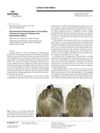 5 citations
,
January 2015 in “Skin appendage disorders”
5 citations
,
January 2015 in “Skin appendage disorders” Colored hair-thickening fibers can help hide hair loss in some people with Epidermolysis Bullosa but may cause scalp irritation.
 December 2022 in “Deleted Journal”
 Sheep wool keratin solution safely and effectively promotes hair growth.
9 citations
,
June 2024 in “BMC Genomics” Wool color in Gangba sheep is influenced by multiple genes and genetic mechanisms.
 7 citations
,
August 2020 in “Animal biotechnology”
7 citations
,
August 2020 in “Animal biotechnology” A specific RNA in cashmere goats helps improve hair growth by interacting with certain molecules.
September 1989 in “PubMed” The method allows detailed observation of hair tissue structures.
December 2020 in “Zenodo (CERN European Organization for Nuclear Research)” Certain herbs like stinging nettle, Indian gooseberry, and St. John's Wort can help improve hair growth and health.
January 1994 in “Journal of the society of cosmetic chemists” 3 citations
,
January 2014 Green tea extract hair tonic is stable at room temperature, promotes hair growth better than minoxidil, and is safe for use.

Caucasian and Mediterranean hair is denser and varies in color and texture compared to African and Asian hair.
17 citations
,
September 2005 in “International Journal of Dermatology” African hair is more fragile due to its unique shape and internal structure.
1 citations
,
May 2025 in “BMC Genomics” lncRNAs may help control cashmere goat hair growth by responding to light changes.
 August 2023 in “Research Square (Research Square)”
 Two microRNAs affect hair follicle development in sheep by targeting specific genes.
 65 citations
,
August 2007 in “Experimental Dermatology”
65 citations
,
August 2007 in “Experimental Dermatology” Human hair follicles can make and process prostaglandins, which may affect hair growth.
Glypican-1 is important for hair follicle blood vessel growth and could be a target for treating hair loss.