 9 citations
,
August 2014 in “European journal of ophthalmology”
9 citations
,
August 2014 in “European journal of ophthalmology” PGF2α receptors in human eyelids are found in specific parts of hair follicles, explaining eyelash changes with glaucoma treatment.
1 citations
,
January 2016 in “Acta histochemica” Black sheep have higher levels of Gnαs and Gnα11 proteins, which may affect their coat color.
 December 2023 in “The journal of cell biology/The Journal of cell biology”
 The mTurq2-Col4a1 mouse model shows how the basement membrane develops in live mammals.
11 citations
,
January 2021 in “British Journal of Dermatology” Mutations in the AP1B1 gene cause a new syndrome with skin, hearing, and developmental issues.
25 citations
,
October 2002 in “The journal of investigative dermatology/Journal of investigative dermatology” Mouse profilaggrin helps in skin cell differentiation and may be involved in calcium signaling.
 April 2023 in “Journal of Investigative Dermatology”
 The specific skin disease variant p.(Arg2000Trp) in plectin can cause a wide range of symptoms, which should be considered when diagnosing patients.
1 citations
,
October 2023 in “European Journal of Dermatology” Combining hair transplantation with PRP is more effective for treating hair loss than hair transplantation alone.
 November 2023 in “The journal of investigative dermatology/Journal of investigative dermatology”
 Removing MCPIP1 from myeloid cells in mice leads to hair loss and prevents skin tumors but causes pigmented spots.
33 citations
,
January 2008 in “Journal of Molecular Neuroscience” 5 citations
,
April 2022 in “The journal of investigative dermatology/Journal of investigative dermatology” A new therapy for a skin blistering condition has not been developed yet.
 1 citations
,
December 2018 in “Journal of genetic medicine”
1 citations
,
December 2018 in “Journal of genetic medicine” A small change in the TRPS1 gene leads to a less severe form of a syndrome affecting hair, nose, and finger development.
September 2025 in “OPAL (Open@LaTrobe) (La Trobe University)” Angiopoietin-1 helps hair follicle cells survive and grow, potentially treating hair loss.
43 citations
,
December 2012 in “The Journal of Steroid Biochemistry and Molecular Biology” Progesterone protects neurons from damage by converting to allopregnanolone, which works through GABAA receptors.
 4 citations
,
January 2004 in “Biological and Pharmaceutical Bulletin”
4 citations
,
January 2004 in “Biological and Pharmaceutical Bulletin” AgK114 protein helps in hamster skin injury recovery.
October 2017 in “Journal of Investigative Dermatology” Pemphigus vulgaris involves specific immune cells and B cells that produce antibodies causing skin blisters.
2 citations
,
February 2022 in “bioRxiv (Cold Spring Harbor Laboratory)” Impaired LEF1 activation speeds up skin cell development in Hutchinson-Gilford Progeria Syndrome.
 98 citations
,
June 2001 in “Journal of biological chemistry/The Journal of biological chemistry”
98 citations
,
June 2001 in “Journal of biological chemistry/The Journal of biological chemistry” A cluster of sulfur-rich hair protein genes was found on chromosome 17.
 15 citations
,
May 2003 in “The Laryngoscope”
15 citations
,
May 2003 in “The Laryngoscope” FGF-1 causes spiral ganglion neurites to branch more.
 January 2012 in “Journal of Investigative Dermatology”
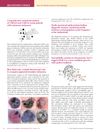
 Some Greek melanoma patients have gene mutations linked to increased cancer risk, a new color feature helps diagnose melanoma, the incidence of a skin condition in the Netherlands is rare, and a gene possibly affects male-pattern baldness.
January 2007 in “Queen Mary Research Online (Queen Mary University of London)” GLI and EGF signalling affect Basal Cell Carcinoma development and could be therapeutic targets.
2 citations
,
June 2021 in “Bezmialem Science” The best speed for preparing platelet-rich plasma with PRPBAG® is 1800 rpm.
29 citations
,
January 2013 in “The journal of investigative dermatology/Journal of investigative dermatology” P-cadherin is crucial for hair follicle pigmentation but not skin pigmentation.
3 citations
,
April 2023 in “Veterinary sciences” Researchers found genes that may explain why some pigs grow winter hair, which could help breed cold-resistant pigs.
99 citations
,
August 1998 in “Pain” Blocking GABA(A) receptors increases neuron sensitivity, showing GABA and glycine have different roles in pain.
 27 citations
,
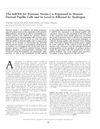
September 1999 in “Journal of Investigative Dermatology”
27 citations
,
September 1999 in “Journal of Investigative Dermatology” Human skin cells contain Protease Nexin-1, and male hormones can decrease its levels, potentially affecting hair growth.
 January 2025 in “Dermatology Reports”
 Early and accurate diagnosis is crucial for managing rare genetic disorders like this localized variant of junctional epidermolysis bullosa.
 1 citations
,
June 2023 in “Animals”
1 citations
,
June 2023 in “Animals” CRABP2 helps increase the growth of cells important for hair growth by activating a specific growth pathway.
 April 2010 in “The Journal of Urology”
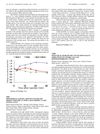
 Human prostate cells produce more WISP1/CCN4 when there's not enough oxygen.
January 2022 in “International journal of dermatology and venereology” A Chinese man with KID syndrome had a new mutation in the GJB2 gene.
8 citations
,
June 2004 in “Journal of Investigative Dermatology” Certain peptides can prevent hair loss in young rats caused by a cancer drug.