September 2016 in “Journal of Dermatological Science” Polarizing light microscopy can easily and reliably diagnose congenital keratinizing disorders like Netherton syndrome.
 115 citations
,
October 2009 in “The Journal of clinical endocrinology and metabolism/Journal of clinical endocrinology & metabolism”
115 citations
,
October 2009 in “The Journal of clinical endocrinology and metabolism/Journal of clinical endocrinology & metabolism” The research found that Atypical Progeroid Syndrome has unique symptoms and is not caused by the buildup of a certain mutant protein.
11 citations
,
November 2019 in “The FASEB Journal” A mutation in the MAP2 gene causes reduced hair follicle density, leading to hairlessness.
August 2024 in “American Journal of Medical Genetics Part A” Variants in the CCDC47 gene are linked to trichohepatoneurodevelopmental syndrome.
February 2024 in “Biomedicines” Pregnant women with PCOS have higher levels of Neurokinin B in the placenta, especially with female babies.
21 citations
,
September 2003 in “Journal of Clinical Investigation” Overexpressing noggin in mice causes severe osteoporosis.
 October 2023 in “Case reports in dermatological medicine”
 A Jordanian family with Clouston syndrome has a common GJB6 gene mutation.
February 2018 in “Archivio Istituzionale della Ricerca (Universita Degli Studi Di Milano)” Ferroportin in macrophages is crucial for hair growth and skin healing by managing iron distribution.
June 2026 in “Indian Dermatology Online Journal” A supernumerary nipple was correctly identified using dermoscopy, avoiding misdiagnosis.
 16 citations
,
March 2016 in “The journal of investigative dermatology/Journal of investigative dermatology”
16 citations
,
March 2016 in “The journal of investigative dermatology/Journal of investigative dermatology” The Notch signaling pathway helps in mouse hair development through a noncanonical mechanism that does not rely on RBPj or transcription.
18 citations
,
December 2016 in “European journal of pharmacology” A new compound slows cancer cell growth and causes cell death by blocking cell cycle progression and increasing cell-damaging molecules.
 65 citations
,
June 2003 in “EMBO journal”
65 citations
,
June 2003 in “EMBO journal” Noggin overexpression delays eyelid opening by affecting cell death and skin cell development.
January 1998 in “The Nishinihon Journal of Dermatology” A 7-year-old girl was diagnosed with Netherton's Syndrome, shown by skin and hair symptoms.
26 citations
,
April 2011 in “British Journal of Dermatology” New mutations in the DSG4 gene cause a rare hair condition.
 March 2023 in “Biomedicine & Pharmacotherapy”
 GPR40 agonists help hair growth through the protein ANGPTL4.
January 2025 in “EXPERIMENTAL ANIMALS” Gamma-ray exposure improves genome editing efficiency in mice using the i-GONAD method.
1 citations
,
October 2025 in “Gels” Nanogels with hydrophobic modifications improve oral drug delivery for intestinal disease treatment.
July 2026 in “Scientific Data” Distinct molecular signatures in goat hair cells relate to growth, follicle type, and sex, aiding cashmere improvement.
 1 citations
,
September 2025 in “Cureus”
1 citations
,
September 2025 in “Cureus” ChatGPT-5 can pass the endocrinology exam but isn't fully reliable for clinical decisions yet.
50 citations
,
March 2018 in “BMC Genomics” Non-coding RNAs help control hair growth cycles in cashmere goats, suggesting ways to improve cashmere production.
January 2026 in “Biochemical Pharmacology” 5 citations
,
May 2023 in “Frontiers in Cell and Developmental Biology” Integrin α6 helps identify different neural crest cell types in the skin.
6 citations
,
March 2014 in “Livestock science” Researchers created a genetic library from a cashmere goat's skin and found new genes linked to hair growth.
 10 citations
,
June 2005 in “The journal of investigative dermatology/Journal of investigative dermatology”
10 citations
,
June 2005 in “The journal of investigative dermatology/Journal of investigative dermatology” FP-1 is a key protein in rat hair growth, active only during the growth phase.
 28 citations
,
May 2019 in “Life Sciences”
28 citations
,
May 2019 in “Life Sciences” Ginsenoside Rb1 from Panax ginseng helps mink hair grow by activating certain cell signals.
 22 citations
,
June 2012 in “Journal of Investigative Dermatology”
22 citations
,
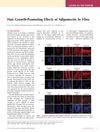
June 2012 in “Journal of Investigative Dermatology” Adiponectin may stimulate hair growth and could be a potential treatment for promoting hair growth.
 7 citations
,
September 2024 in “BMC Genomics”
7 citations
,
September 2024 in “BMC Genomics” Two genes, ERBB4 and ROR1, may cause the unique pigmentation in Lanping black-boned sheep.
9 citations
,
May 2019 in “Medicine” The C-allele and CC-genotype in the PTPN22 gene lower the risk of alopecia areata.
 10 citations
,
December 2021 in “Frontiers in cell and developmental biology”
10 citations
,
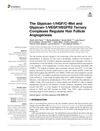
December 2021 in “Frontiers in cell and developmental biology” Glypican-1 is important for blood vessel growth in hair follicles and could help treat hair loss.
51 citations
,
January 1997 in “PubMed” GABEB is a less severe skin condition caused by a gene mutation affecting collagen, leading to blisters and other symptoms.