July 2023 in “Clinical Cosmetic and Investigational Dermatology” Accurate diagnosis of granular parakeratosis is crucial for effective treatment and improvement.
6 citations
,
July 2017 in “Clinical and Experimental Dermatology” Four new cases confirmed the unique features of follicular porokeratosis.
28 citations
,
August 1992 in “Differentiation” A new pair of mouse keratins, 65 kD and 48 kD, are found in specific skin areas and are linked to a unique skin differentiation type.
January 1995 in “Seoul National University Open Repository (Seoul National University)” SSO helps in skin protection and keratinization.
 October 2024 in “Dermatology Practical & Conceptual”
 Porokeratosis should be considered for scalp lesions, with new treatments like topical cholesterol/lovastatin offering promise.
 48 citations
,
May 1991 in “The journal of investigative dermatology/Journal of investigative dermatology”
48 citations
,
May 1991 in “The journal of investigative dermatology/Journal of investigative dermatology” Trichohyalin is also found in the outer layers of normal human skin.
 8 citations
,
November 2015 in “The American journal of dermatopathology/American journal of dermatopathology”
8 citations
,
November 2015 in “The American journal of dermatopathology/American journal of dermatopathology” Punctate follicular porokeratosis is a skin condition with specific features seen in hair follicles.
 10 citations
,
April 2013 in “Veterinary dermatology”
10 citations
,
April 2013 in “Veterinary dermatology” A new skin disease in four Labrador retrievers responded well to immunosuppressive treatment.
1 citations
,
July 2006 in “Journal of Investigative Dermatology” A 4kb fragment of the desmocollin 3 promoter targets gene expression to specific skin and hair follicle areas.
January 2025 in “Clinical Case Reports” Follicular porokeratosis may be linked to diabetes and can lead to hair loss.
 2 citations
,
April 2010 in “The Open Dermatology Journal”
2 citations
,
April 2010 in “The Open Dermatology Journal” Corneodesmosin is essential for skin and hair health, and its dysfunction can lead to skin and hair disorders.
 111 citations
,
November 2007 in “Clinics in Dermatology”
111 citations
,
November 2007 in “Clinics in Dermatology” Psoriasis skin changes are complex and might need several biopsies for a clear diagnosis.
 108 citations
,
July 2002 in “Molecular and cellular biology”
108 citations
,
July 2002 in “Molecular and cellular biology” Overexpressing Dsg3 in mice skin causes excessive cell growth and abnormal skin development.
 April 2017 in “Journal of Investigative Dermatology”
 Cholecystokinin may help reduce skin inflammation in psoriasis.
 36 citations
,
November 2000 in “Journal of the American Academy of Dermatology”
36 citations
,
November 2000 in “Journal of the American Academy of Dermatology” A woman with dermatomyositis showed rare skin symptoms, was treated successfully, and her case suggests checking for cancer in similar patients.
 9 citations
,
November 2000 in “Journal of the American Academy of Dermatology”
9 citations
,
November 2000 in “Journal of the American Academy of Dermatology” A woman with a rare type of dermatomyositis improved with low-dose prednisone and methotrexate.
61 citations
,
January 2011 in “PloS one” Notch signaling is essential for healthy skin and hair follicle maintenance.
11 citations
,
January 1977 in “Archives of dermatological research” Mouse tail skin has different keratinization near hair follicles and scales.
5 citations
,
September 1991 in “Veterinary dermatology” Pygmy goats with seborrhoeic dermatitis showed skin symptoms and temporary improvement with corticosteroids, but the cause and inheritance of the disease remain unknown.
February 2022 in “Authorea (Authorea)” PAON shows skin patterns due to genetic mosaicism.
 1 citations
,
April 2017 in “Journal of Investigative Dermatology”
1 citations
,
April 2017 in “Journal of Investigative Dermatology” Topical glucocorticoids thin the skin and change collagen structure.
13 citations
,
August 1991 in “The Journal of the American Osteopathic Association” Inflammation may play a role in causing androgenetic alopecia.
10 citations
,
September 1994 in “International Journal of Dermatology” Three Iranian men had reddish-brown facial pigmentation with no effective treatment.
 January 2015 in “Indian Journal of Dermatology, Venereology and Leprology”
 The document concludes that various skin conditions have specific characteristics and treatments, and highlights the importance of vitamin D in managing these dermatological issues.
 40 citations
,
January 2016 in “Elsevier eBooks”
40 citations
,
January 2016 in “Elsevier eBooks” The skin is the largest organ, protecting the body, regulating temperature, and producing hormones.
 23 citations
,
September 2014 in “JEADV. Journal of the European Academy of Dermatology and Venereology/Journal of the European Academy of Dermatology and Venereology”
23 citations
,
September 2014 in “JEADV. Journal of the European Academy of Dermatology and Venereology/Journal of the European Academy of Dermatology and Venereology” Laser treatments are the most effective for porokeratotic adnexal ostial nevus.
 8 citations
,
April 2010 in “JEADV. Journal of the European Academy of Dermatology and Venereology/Journal of the European Academy of Dermatology and Venereology”
8 citations
,
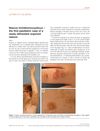
April 2010 in “JEADV. Journal of the European Academy of Dermatology and Venereology/Journal of the European Academy of Dermatology and Venereology” The first pediatric case of naevus trichilemmocysticus was documented.
 5 citations
,
January 2017 in “Anais brasileiros de dermatologia/Anais Brasileiros de Dermatologia”
5 citations
,
January 2017 in “Anais brasileiros de dermatologia/Anais Brasileiros de Dermatologia” Porokeratotic eccrine and hair follicle nevus is a very rare skin disorder possibly caused by a GJB2 gene mutation.
 4 citations
,
January 2012 in “Chemical Immunology”
4 citations
,
January 2012 in “Chemical Immunology” Some drugs, especially biologics, can cause skin reactions that look like other skin diseases, and stopping the drug usually helps clear up these reactions.

A rare skin condition in a 17-year-old was diagnosed late, stressing the need for careful evaluation and genetic testing.