Search
for
Sort by
Research
30-60 / 1000+ results
research Home Remedies in Dermatology
Many people use home remedies for skin conditions, but there's limited scientific evidence to support their effectiveness.
research Antimalarial therapy for granuloma annulare: Results of a retrospective analysis
Antimalarial drugs, especially chloroquine, can effectively treat granuloma annulare.
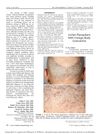
research Lichen Planopilaris With Foreign-Body Granuloma
Foreign-body granuloma may be a marker for late-stage Lichen Planopilaris and should be considered in diagnosis.
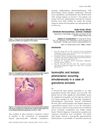
research Isomorphic and isotopic phenomenon occurring simultaneously in a case of granuloma annulare
A patient with granuloma annulare experienced both isotopic and isomorphic responses, with skin lesions responding to steroids but relapsing after stopping treatment.
research Hydroxychloroquine for granuloma annulare: A case report on secondary hair growth in alopecia universalis
Hydroxychloroquine may help hair regrowth in alopecia universalis.
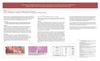
research A Case Report of Granuloma Faciale of the Scalp Arising in the Setting of Advanced Androgenetic Alopecia With a Review of Extrafacial Granuloma Faciale Occurring on the Scalp
Granuloma faciale can occur on the scalp, especially in people with advanced hair loss, and may improve with treatment.
research Granuloma Annulare Mimicking Alopecia Mucinosa in a Child: An Atypical Presentation
Biopsy is crucial to correctly diagnose granuloma annulare, which can mimic other conditions like alopecia mucinosa.

research Granuloma annulare with alopecia areata in a 6-year-old girl: a case report
A young girl with skin and scalp conditions showed some improvement with treatment.
research Resolution of refractory generalized granuloma annulare after treatment with alitretinoin
Alitretinoin helped clear up a skin condition called generalized granuloma annulare in an elderly man.
research Generalized granuloma annulare: A therapeutic challenge. Our experience in 12 patients
Treating generalized granuloma annulare is difficult, with PUVA being the most effective option, but relapses are common.
research Differential Expression of miR-93 and miR-21 in Granulosa Cells and Follicular Fluid of Polycystic Ovary Syndrome Associating with Different Phenotypes
The study found that certain microRNAs are higher in the cells and lower in the fluid of women with a specific type of polycystic ovary syndrome, and one microRNA could potentially help diagnose the condition.
research Management of Visible Granulomas Following Periorbital Injection of Poly-L-Lactic Acid
Surgical excision is an effective treatment for persistent nodules from poly-L-lactic acid injections.
research Higher PDCD4 expression is associated with obesity, insulin resistance, lipid metabolism disorders, and granulosa cell apoptosis in polycystic ovary syndrome
More PDCD4 is linked to obesity, insulin problems, and cell death in ovaries for those with polycystic ovary syndrome.
research Expression of AKT1 along with AKT2 in granulosa-lutein cells of hyperandrogenic PCOS patients
The study found that women with hyperandrogenic PCOS have higher levels of AKT1 and AKT2 proteins in their cells, which may lead to cell dysfunction.

research Role of OCT4 in the Regulation of FSH-Induced Granulosa Cells Growth in Female Mice
OCT4 helps granulosa cell growth in early-stage follicles, and FSH increases OCT4 through specific pathways.
research Glycolytic Dysfunction in Granulosa Cells and Its Contribution to Metabolic Dysfunction in Polycystic Ovary Syndrome
Targeting glycolysis may help treat PCOS by improving insulin sensitivity and ovarian function.
research Paxillin regulates androgen receptor expression associated with granulosa cell focal adhesions
Paxillin may help manage androgen-related disorders like PCOS by stabilizing androgen receptor proteins.
research GRANULOSA‐THECA CELL TUMOR IN A ONE‐YEAR‐OLD INFANT
A rare ovarian tumor caused early puberty signs in a 1-year-old girl, but surgery reduced hormone levels.
research Connection between granulosa cell pyroptosis and oocyte endoplasmic reticulum stress in a mouse model of polycystic ovary syndrome
Reducing granulosa cell pyroptosis may improve oocyte maturation in PCOS.
research PMON225 Androgen excess in pre-menopausal women due to Granulosa Cell tumor: A case report.
Removing the ovarian tumor improved the woman's hormonal symptoms.
research P‐88 Endocrine dermatosis and granulosa cell tumour in a red panda
The red panda's hair loss was caused by an endocrine issue linked to ovarian tumors.
research Dermatophytic Granuloma Caused by Microsporum canis in a Heart-Lung Recipient
Fluconazole is the preferred treatment for deep skin infections in immunocompromised patients.
research Methotrexate treatment of generalized granuloma annulare: a retrospective case series
Methotrexate improved skin condition in 64% of patients with generalized granuloma annulare.
research Eosinophilic granulomas in two dogs
Two dogs in Korea were diagnosed with a rare skin condition usually seen in cats.
research Complexo granuloma eosinofílico felino: Relato de caso
The cat's skin condition improved significantly with medication, with no relapse.
research A case of widespread actinic granuloma with associated drug-induced lupus erythematosus
A man developed a rare skin condition and drug-induced lupus, highlighting the need for biopsy in diagnosing skin issues caused by sunlight.
research BH10 Granulomatous scarring alopecia associated with rheumatoid arthritis: a case report with distinct folliculocentric granulomas histologically mimicking granulomatous alopecia areata
A woman with rheumatoid arthritis had a unique type of scarring hair loss not caused by infection, requiring early treatment to avoid permanent hair loss.
research New-onset Majocchi’s granuloma in two kidney transplant recipients under tacrolimus treatment
Majocchi's granuloma can occur in kidney transplant patients on tacrolimus and can be treated with antifungal medication.
research Homozygous ALOXE3 Nonsense Variant Identified in a Patient with Non-Bullous Congenital Ichthyosiform Erythroderma Complicated by Superimposed Bullous Majocchi’s Granuloma: The Consequences of Skin Barrier Dysfunction
A specific gene variant causes severe skin issues and increases infection risk, requiring careful medical monitoring.