186 citations
,
October 1957 in “A M A Archives of Dermatology” Alopecia mucinosa is a challenging condition with unclear diagnosis and treatment.
86 citations
,
June 2018 in “Cochrane library” Mycophenolate mofetil may improve lupus nephritis remission more than cyclophosphamide but with uncertain safety.
12 citations
,
August 1988 in “Histopathology” The tumor likely shows dual neural crest differentiation.
July 2023 in “International Journal of Rheumatic Diseases” Ulcerative sarcoidosis in body folds is rare and improved with prednisone and hydroxychloroquine.
2 citations
,
July 2011 in “International Journal of Dermatology” EPF can occur without visible pustules.
3 citations
,
April 2021 in “Journal of Clinical Medicine” Further research is needed to understand lymph node involvement in axillary hidradenitis suppurativa.
 September 2017 in “Journal of Investigative Dermatology”
 The study found that sweat glands normally suppress immune responses, but this is disrupted in certain skin diseases, possibly contributing to their development.
September 2024 in “The Journal of Dermatology” Nevus comedonicus can sometimes grow terminal hair, challenging previous beliefs.
2 citations
,
January 2022 in “JAAD Case Reports” The rash resolved after stopping ponatinib.
January 2025 in “Indian Dermatology Online Journal” Mycosis fungoides can have unusual symptoms and may be misdiagnosed, but specific cell markers might suggest a lower risk of worsening.
Dissecting cellulitis and folliculitis keloidalis cause intense inflammation without bacterial infection.
9 citations
,
February 2002 in “International Journal of Dermatology” The patient's symptoms improved with treatment but recurred when the steroid dose was reduced, requiring ongoing therapy.
80 citations
,
January 1995 in “The Nephron journals/Nephron journals” The treatment was effective for lupus nephritis with manageable side effects.
7 citations
,
January 2013 in “Ophthalmic plastic and reconstructive surgery” A 79-year-old man was diagnosed with a rare skin condition called nevus comedonicus on his eyelids.
July 1979 in “Archives of Dermatology” A 68-year-old woman with benign mucous membrane pemphigoid has eye, mouth, and skin issues, including thick plaques and nail changes.
April 2018 in “Veterinary Pathology” Tigers had a skin condition causing hair loss and inflammation, but the cause is unknown and treatment didn't work.
64 citations
,
August 1977 in “PubMed” Skin changes help detect graft-versus-host reaction early after bone marrow transplants.
 May 2014 in “Clinical and Experimental Dermatology”
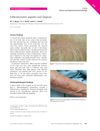
 A 70-year-old woman with a rare skin condition improved after treatment with topical steroids and acitretin.
 April 2023 in “The journal of investigative dermatology/Journal of investigative dermatology”
 Folliculotropic mycosis fungoides has unique molecular features and cell interactions that could guide targeted therapy.
 8 citations
,
January 2007 in “International journal of experimental pathology”
8 citations
,
January 2007 in “International journal of experimental pathology” Hairless HRS/J mice resist Bacillus anthracis skin infections due to high numbers of immune cells, not because they lack hair follicles.
September 2021 in “Pediatrics in review” The girl's leg lesion was a fungal infection that improved with antifungal medication but kept coming back before finally clearing up after 5 years.
November 2024 in “Rheumatology Advances in Practice” Visceral leishmaniasis can mimic rheumatoid arthritis symptoms, especially in immunocompromised patients.
 3 citations
,
January 2019 in “Annals of Dermatology”
3 citations
,
January 2019 in “Annals of Dermatology” The study concluded that careful examination is key to differentiate between lipidized fibrous histiocytoma and juvenile xanthogranuloma.
7 citations
,
December 2016 in “Journal of the American Academy of Dermatology” NKG2D+CD4+ T cells are higher in alopecia areata patients and may be involved in the disease.
16 citations
,
April 2017 in “Pediatric Dermatology” Oral isotretinoin effectively treated the man's painful scalp condition and hair loss.
 15 citations
,
January 2014 in “Dermatology”
15 citations
,
January 2014 in “Dermatology” Some patients with a type of skin lymphoma can experience a rare, non-scarring hair loss that looks like another hair loss condition but has distinct features.
January 1990 in “대한피부과학회지” Peanut agglutinin staining helps differentiate malignant melanoma from nevocellular nevus.
January 1998 in “The Nishinihon Journal of Dermatology” A 7-year-old girl was diagnosed with Netherton's Syndrome, shown by skin and hair symptoms.
28 citations
,
July 1980 in “British Journal of Dermatology” The hair disorder was caused by abnormal protein formation, making hair easily damaged.
 17 citations
,
May 1987 in “Clinical and Experimental Dermatology”
17 citations
,
May 1987 in “Clinical and Experimental Dermatology” A patient with Sézary syndrome showed improvement after treatment and the study suggested follicular mucinosis might indicate future lymphoma risk.