Olive leaves extract may help treat benign prostatic hyperplasia (BPH).
 January 2025 in “Bright Sky Publications eBooks”
 Balanced diets and informed food choices are crucial for better health.
 August 2024 in “Journal of the Korean Society of Cosmetology”
 Wild peach leaf extract improves hair strength, thickness, and shine after dyeing.
 January 2024 in “International Journal of Pharmacognosy and Pharmaceutical Research”
 Plant molecules like caffeine and ginsenosides can boost hair growth naturally.
 May 2023 in “Jurnal Sains Insani”
 Shaykh Abbas Kuta Karang significantly advanced Malay medical knowledge with his detailed manuscript.
 May 2021 in “Boletín latinoamericano y del Caribe de plantas medicinales y aromáticas”
 Microsechium helleri extract has antioxidant, anti-inflammatory, antidiabetic, and heart-protective benefits.
The workshop promoted better medicine use and health practices through global collaboration.
The workshop successfully promoted better medicine use and international collaboration.
 202 citations
,
August 2017 in “Nature cell biology”
202 citations
,
August 2017 in “Nature cell biology” Lactate production is important for activating hair growth stem cells.
 132 citations
,
January 2017 in “International Journal of Molecular Sciences”
132 citations
,
January 2017 in “International Journal of Molecular Sciences” Fat-derived stem cells show promise for skin repair and reducing aging signs but need more research for consistent results.
 59 citations
,
August 2014 in “International Journal of Biological Macromolecules”
59 citations
,
August 2014 in “International Journal of Biological Macromolecules” The study found an efficient method to extract antioxidants from Hibiscus leaves.
 48 citations
,
July 2001 in “Clinics in Dermatology”
48 citations
,
July 2001 in “Clinics in Dermatology” Cosmetics enhance beauty, fix defects, and intimidate enemies, with varying cultural standards and alternative methods.
 45 citations
,
August 2019 in “Dermatologic Therapy”
45 citations
,
August 2019 in “Dermatologic Therapy” Hair loss treatments work better with lifestyle changes.
 36 citations
,
January 2019 in “Nature communications”
36 citations
,
January 2019 in “Nature communications” High lactate dehydrogenase activity is not necessary for the growth of squamous cell carcinoma.
 33 citations
,
May 2013 in “Andrologia”
33 citations
,
May 2013 in “Andrologia” Some herbs show promise as antiandrogenic agents.
 21 citations
,
May 2016 in “The Cochrane library”
21 citations
,
May 2016 in “The Cochrane library” Topical minoxidil helps treat female pattern hair loss, but more research needed for other treatments.
 14 citations
,
April 2021 in “Biology”
14 citations
,
April 2021 in “Biology” Thai rice bran extracts, especially from Tubtim Chumphae rice, can significantly reduce the activity of hair loss genes, with x-tocopherol showing potential as an anti-hair loss product.
 13 citations
,
June 2016 in “Asian Pacific Journal of Cancer Prevention”
13 citations
,
June 2016 in “Asian Pacific Journal of Cancer Prevention” Cured meats in Nigeria have high cadmium levels, posing health risks.
 4 citations
,
August 2014 in “Dermatology and Therapy”
4 citations
,
August 2014 in “Dermatology and Therapy” LOYON® is a safe and effective way to reduce cradle cap in infants and children.
 3 citations
,
May 2016 in “International Journal of Research in Ayurveda and Pharmacy”
3 citations
,
May 2016 in “International Journal of Research in Ayurveda and Pharmacy” Ayurveda, using herbs like ginger, garlic, and turmeric, can reduce chemo-radiotherapy side effects in cancer patients.
 2 citations
,
January 2024 in “Journal of Pharmacognosy and Phytochemistry”
2 citations
,
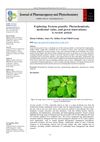
January 2024 in “Journal of Pharmacognosy and Phytochemistry” Teak has valuable compounds for medicine, cosmetics, and industry, with potential in cancer treatment and biodiesel production.
 2 citations
,
July 2020 in “Journal of Applied Pharmaceutical Science”
2 citations
,
July 2020 in “Journal of Applied Pharmaceutical Science” Natural ingredients can improve skin and hair, but more research is needed.
 1 citations
,
January 2024 in “Asian Journal of Microbiology Biotechnology and Environmental Sciences”
1 citations
,
January 2024 in “Asian Journal of Microbiology Biotechnology and Environmental Sciences” Tea-producing countries are creating new tea-based products to boost profits and meet global demand.
 1 citations
,
August 2023 in “Frontiers in immunology”
1 citations
,
August 2023 in “Frontiers in immunology” Traditional Chinese medicinal foods may help manage long-term post-COVID symptoms.
 1 citations
,
December 2022 in “Journal of applied biological chemistry”
1 citations
,
December 2022 in “Journal of applied biological chemistry” TRP-hair essence protects hair from heat damage, maintains color, and strengthens hair.
 1 citations
,
December 2022 in “Türk tarım - gıda bilim ve teknoloji dergisi”
1 citations
,
December 2022 in “Türk tarım - gıda bilim ve teknoloji dergisi” Diversifying tea products can boost profits and meet global market demands.
 1 citations
,
October 2022
1 citations
,
October 2022 OTEC power output is higher in summer due to greater temperature differences.
 1 citations
,
June 2013 in “Clinics in dermatology”
1 citations
,
June 2013 in “Clinics in dermatology” Herbs may be safer and effective for treating hair loss.
 June 2026 in “International Journal of Drug Delivery Technology”
 Herbal remedies show promise for managing premature hair greying but need more research.
 May 2026 in “Commagene Journal of Biology”
 Anti-aging peptides can improve skin appearance but need better delivery methods and more research.